Nato mulling role in Strait of Hormuz, says top commander
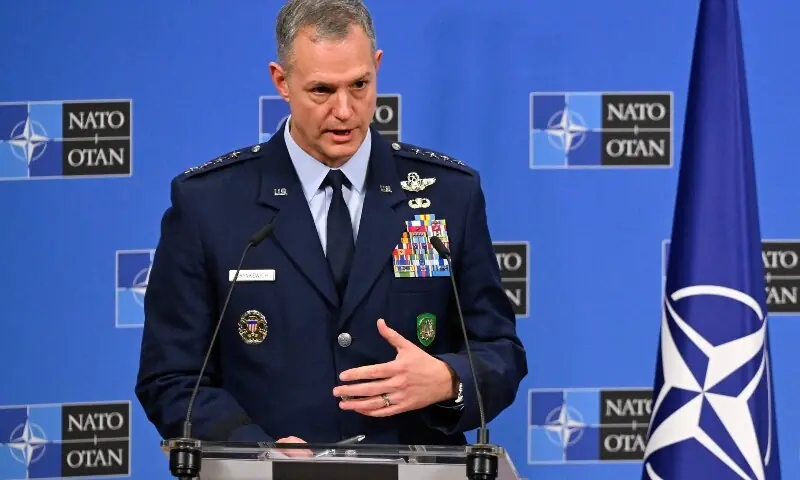

BRUSSELS: Nato’s top commander said on Tuesday he was “thinking” about how the alliance could help in the Strait of Hormuz, but no formal planning had begun yet.
“Am I thinking about it? Absolutely. But there’s no planning yet until the political decision is taken,” US General Alexus Grynkewich, Nato’s Supreme Allied Commander Europe, told journalists.
US President Donald Trump has blasted Washington’s European allies in Nato for their response to his war on Iran — which has seen the crucial waterway closed.
European countries spearheaded by Britain and France have been scrambling to put together a possible plan for how they could help keep the strait open if the war ends.
So far US-led alliance Nato has steered clear of seeking any direct involvement in the conflict — despite pressure from Trump.
“Each nation is considering their response, with many, including Belgium, France, Germany, Italy, and the United Kingdom, sailing ships to the region,” Grynkewich said.
“We all agree it’s in our interest to ensure freedom of navigation in international waters.” European diplomats at Nato have played down the prospect of the alliance playing a major role in the strait given internal divisions. But they say it could be involved in some way in any eventual operations led by France or Britain if they materialise.
The closure of the Strait of Hormuz has had a major impact on global energy prices and is already taking a toll on economies in Europe.
US troop cuts
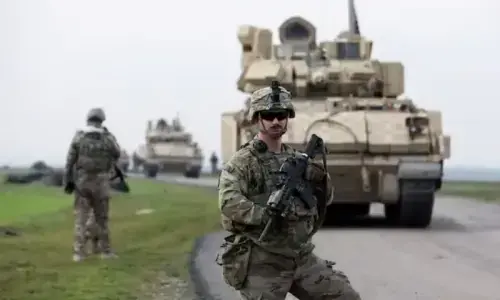
The US will pull more troops from Europe but the process will stretch over years to give allies time to develop capabilities to replace them, the Nato commander said.
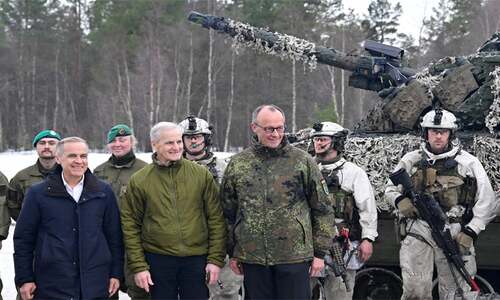
President Donald Trump’s administration has decided to withdraw some 5,000 troops from Germany and cancel deployment of long-range Tomahawk missiles. European officials were surprised by the timing of the troop announcement and by US officials linking it to German Chancellor Friedrich Merz’s criticism of the US strategy in the Iran war.
Speaking to reporters after a meeting of Nato military chiefs in Brussels, Grynkewich said the decision was the only such move he was aware of “in the near-term” and would not affect the alliance’s ability to execute its defence plans.
European governments say they have heeded Trump’s call to spend more on defence and take more responsibility for the continent’s security. But they fear a hasty withdrawal of US troops and weapons could leave Europe vulnerable to a military attack from Russia, although Moscow denies any such intention.
Drawdown plan
Grynkewich said there would be further withdrawals of US troops in Europe, which number roughly 80,000, but that would happen as European forces grow to fill the gap.
“As the European pillar of the alliance gets stronger, this allows the US to reduce its presence in Europe and limit itself to providing only those critical capabilities that allies cannot yet provide,” said Grynkewich. “I can’t really give you an exact timeline; it’s going to be an ongoing process for several years,” he added.
While Europe would take more responsibility for conventional defence, this would happen “with continued critical backing from American capabilities, which are being adjusted,” Grynkewich said.
Nato relies on the US for a range of critical capabilities such as command and control systems, satellite-based intelligence and communications, strategic bombers and the US nuclear umbrella, officials and analysts say.
Published in Dawn, May 20th, 2026