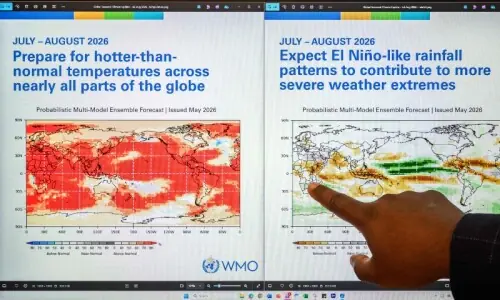
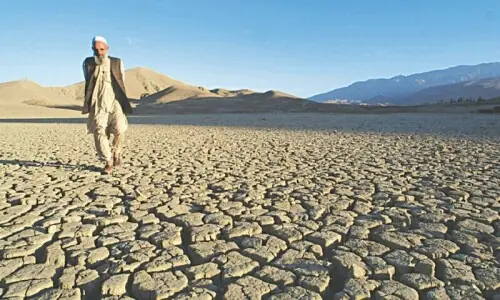
Below-normal rainfall, above-normal temperatures expected in most parts of country from June to August: PMD


The Pakistan Meteorological Department (PMD) on Wednesday forecast below-normal rainfall and above-normal temperatures across most parts of the country during the months of June to August.
The PMD said in its outlook that the Indian Ocean Dipole (IOD) is currently in a neutral phase and is expected to shift to a positive phase by July 2026, while the El Nino–Southern Oscillation (ENSO) has moved into a positive phase (El Nino) and is expected to strengthen further during the season.
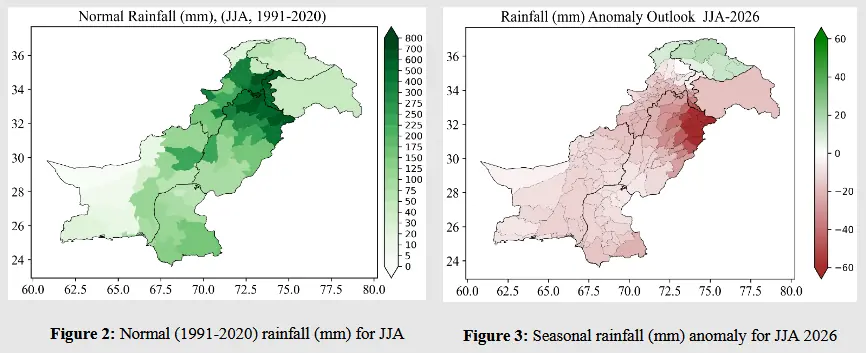
In view of these conditions, the PMD said that “normal to below-normal” rainfall was expected over most parts of the country during the June–July–August (JJA) season, with the largest negative departures likely over the northeastern parts of Punjab.
The findings were reinforced by the Met Office’s probability outlook, which indicated a high probability of below-normal rainfall across most of Pakistan, particularly Punjab, Sindh, southern Khyber Pakhtunkhwa and most of Balochistan.
“In contrast, near-normal to slightly above-normal rainfall is anticipated over the northern regions, including Gilgit-Baltistan, adjoining areas of northern KP, and Kashmir,” it added.
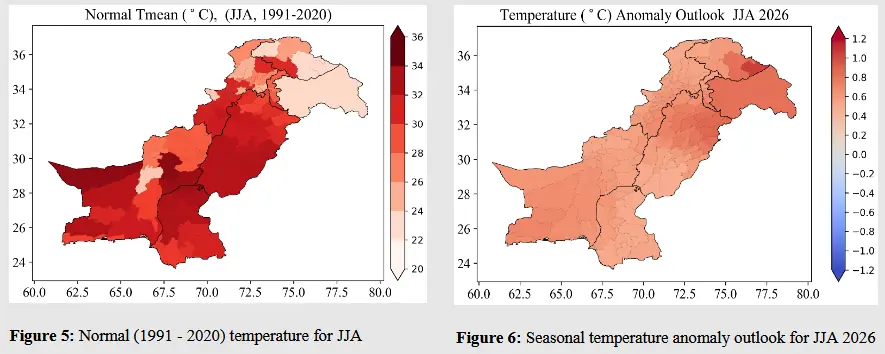
Meanwhile, mean temperatures are expected to remain above normal throughout the country during the JJA season, with maximum departure over the northeastern parts of the country — particularly eastern GB, Kashmir and adjoining areas of northern Punjab.
The probabilistic temperature outlook indicated the likelihood of “above-normal temperatures across much of the country, with the highest likelihood over Sindh, southeastern Balochistan, and central to northeastern parts of Punjab”.
In contrast, western GB is projected to tend towards below-normal temperatures, it added.
The PMD warned that lower levels of rainfall were likely to cause “moisture stress for Kharif sowing and early crop development, reduced rain-fed agricultural productivity, and increase in irrigation demand”.
Excess precipitation in upper catchment areas is likely to improve reservoir water levels, supporting sufficient water availability for agriculture and the power sector, it added.
It also highlighted the increased likelihood of flash floods and landslides, particularly in mountainous and flood-prone regions of northern Pakistan, due to the higher levels of rainfall, and warned of urban flooding in low-lying areas of major cities across the four provinces.
Meanwhile, high temperatures and humid conditions due to intermittent rainfall episodes, particularly in the southern regions, may increase the risk of vector-borne diseases such as dengue, it said.
Indicating a likelihood of heatwave development particularly over the plains of southern Punjab and Sindh, it warned that sharp temperature gradients could cause “strong winds, dust storms, and hailstorms, which may adversely affect crops and infrastructure, reduce visibility, and disrupt transportation”.
The PMD also warned that elevated temperatures in GB and Kashmir are expected to enhance snowmelt, potentially increasing glacier-related hazards such as glacial lake outburst floods (GLOFs) and raising river water levels.
Timely monitoring and control measures were essential to avoid accelerated pest and disease development in crops, it added.