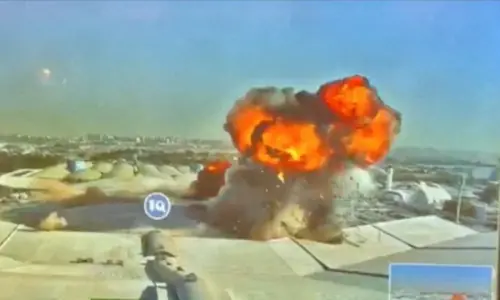
THE latest exchange of fire between the US and Iran raises the question: at what point does a ceasefire cease to be one? American forces say they intercepted Iranian drones near the Strait of Hormuz before striking Iranian radar installations. Tehran responded with missiles and drones aimed at Gulf states hosting US forces. Both sides accuse the other of violating the truce that was supposed to halt the conflict in April, yet neither appears willing to abandon negotiations altogether.
Ceasefires are meant to reduce tensions and create space for diplomacy. When military exchanges become a recurring feature, that distinction begins to lose meaning. The danger is not only the violence, but the gradual erosion of confidence that disputes can still be resolved at the negotiating table.
Yet neither Washington nor Tehran seems prepared to walk away from talks. Discussions over sanctions relief, frozen Iranian assets and regional security arrangements are reportedly continuing despite the latest violence. Progress, however, remains elusive. Iran says there has been little tangible movement, while the US continues to rely on military pressure to strengthen its negotiating position.
Such an approach may yield short-term leverage but deepens mistrust. Every strike invites retaliation, and every retaliation creates fresh obstacles to compromise. Meanwhile, the conflict is becoming more complicated on several fronts. In Washington, lawmakers have sought to limit the administration’s ability to continue military action without congressional approval.
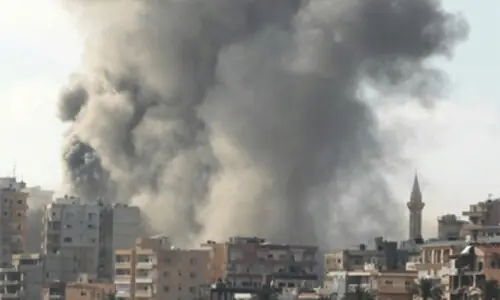
In the region, violence on other fronts continues to cast a shadow over efforts towards a broader settlement. Complicating matters further is Lebanon. Iran has increasingly linked the fate of the ceasefire to developments there, warning that Israeli military operations against Hezbollah threaten the broader framework that ended the fighting. Whether Washington accepts that interpretation is almost beside the point. What matters is that the number of potential triggers for a wider crisis has expanded.
The Strait of Hormuz is no longer the only arena capable of derailing diplomacy. A confrontation in southern Lebanon or another clash involving US forces in the Gulf could have consequences far beyond its immediate theatre. The greatest danger today is not a deliberate decision by Washington or Tehran to return to war. It is that the ceasefire is no longer confined to their relationship alone. Its survival is increasingly tied to developments across the region, making it ever more fragile.
Published in Dawn, June 8th, 2026