BUDGET 2026-27 : Multiple risks looms over next-year budget, finance ministry warns

• $40 price spike per oil barrel risks adding 0.8pc to deficit
• Natural disasters threaten 1.5pc fiscal hit
• Tax exemptions, concessions risk a 1.3pc budget hole
• 10pc tax collection shortfall costs 0.7pc of GDP
• Loss-making state entities drain an extra 0.4pc
ISLAMABAD: The government has warned of key risks to next year’s budget outlook, such as global oil price hikes, sluggish GDP growth, revenue shortfalls, increased debt servicing costs, state-owned entities’ poor performance, and unforeseen natural disasters and climate impacts.
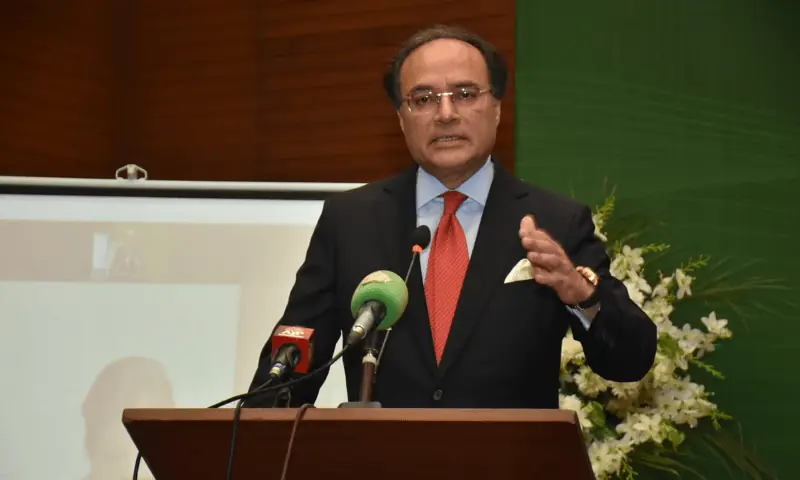
In a written statement of fiscal risks to parliament, required under the Public Finance Management Act 2019, Finance Minister Muhammad Aurangzeb and Finance Secretary Imdad Ullah Bosal presented these risks in seven major categories.
They quantified their possible impacts on the fiscal deficit across macroeconomic, revenue, debt, state-owned entities, climate change, natural disasters, and commodity financing areas.
The risk statement proposes mitigation measures to support fiscal discipline, strengthen risk management, and enhance the resilience of public finances in the event of one or more risks actually materialising.
Finance ministry identified significant fiscal vulnerabilities associated with a potential rise in global oil prices, particularly in the context of the current Middle East conflict, which may likely result in a contraction of petroleum levy receipts and an increase in energy-related subsidies.
“A likely decision to waive full price pass-through to domestic consumers would result in a decline in petroleum levy receipts,” it noted.
To protect domestic consumers, particularly low-income households, the government would need to raise subsidies. Rising international oil prices, specifically a $40 per barrel increase, are projected to add 0.8pc of GDP to the fiscal deficit in the 2026-2027 fiscal year. Aurangzeb said a significant part of the more than 1.035 trillion rupees in special grants secured from the provinces has been set aside to cope with the conflict’s second- and third-round impacts.
Macroeconomic risks mainly arise from a slowdown in economic activity, which could lead to weaker-than-expected real GDP growth and affect the fiscal stance.
A 1pc point decline in real GDP growth could lower government revenues through reduced tax collections, while also increasing expenditure pressures, particularly on social safety nets.
“The combined impact is estimated to widen the fiscal deficit by around 0.2pc of GDP in FY2026-27,” the ministry added. “Under this scenario, upward pressure on inflation and exchange rate depreciation could further strain public finances.”
Revenue collection remains exposed to lower tax elasticity, an economic slowdown, shortfalls in non-tax receipts, and structural challenges in reducing the tax gap. If tax revenue grows 10pc lower than budget estimates, it could result in a reduction of 0.7pc of GDP.
Revenue risks could also arise from a 30pc decline in State Bank of Pakistan surplus profits, which could increase the deficit by 0.3pc of GDP.
Similarly, a 20pc shortfall in petroleum levy collection could add 0.2pc of GDP. Furthermore, tax expenditures remain a structural risk; expanded exemptions and concessions could widen the fiscal deficit by 1.3pc of GDP.
Debt servicing costs were identified as another key vulnerability due to exposure to interest rate changes, exchange rate movement, and refinancing pressures. A 200-basis-point rise in domestic interest rates and a 100-basis-point rise in external rates could increase interest payments, widening the deficit by 0.4pc of GDP. Under higher refinancing risks and greater reliance on short-term instruments, the deficit could increase by up to 0.8pc of GDP.
State-owned entities pose risks through lower dividend payments and higher government support. A 6pc shortfall in dividends is estimated to widen the deficit by 0.02pc of GDP. However, if financial support reaches 1.5pc of GDP, it could increase the deficit by 0.4pc of GDP.
On climate change, the ministry said a mitigation pathway aligned with RCP 2.6 could raise spending on green infrastructure and adaptation, increasing the deficit by 0.2pc of GDP. However, under a high-emission RCP 8.5 scenario, the near-term impact is limited at 0.01pc of GDP in FY2027, though risks could rise over time due to more frequent shocks.
Natural disasters remain one of the largest risks. Without dedicated disaster risk financing mechanisms, an average disaster event could increase the fiscal deficit to 1.5pc of GDP.
Finally, guarantees issued for commodity financing operations expose the government to vulnerabilities. Assuming a 25pc probability of guarantees’ actualisation, the deficit could increase by 0.1pc of GDP.
Published in Dawn, June 15th, 2026