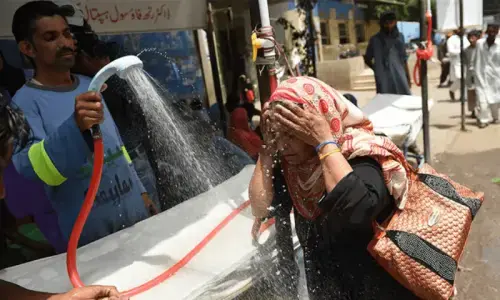
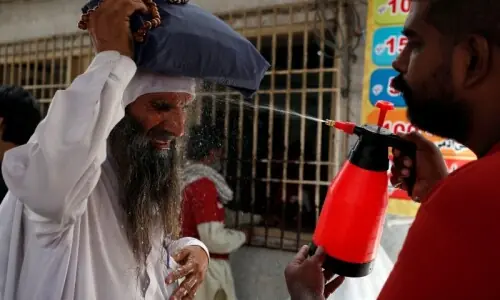
Hospitals in KP asked to set up heat stroke units
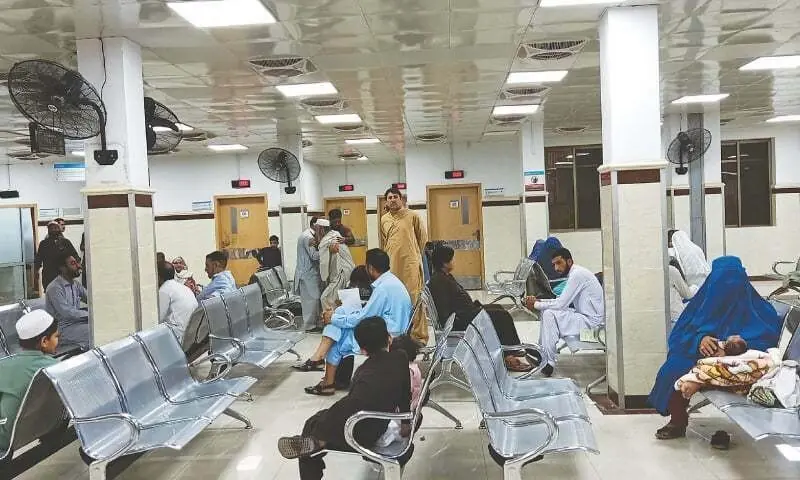

PESHAWAR: Health department has instructed hospitals in Khyber Pakhtunkhwa to establish heat wave emergency units for proper management of the victims of sun stroke due to soaring temperature.
An advisory, issued to all district health officers, medical superintendents and medical directors of medical teaching institutions by the directorate general health services, said that in view of the climatic extremes and escalating global warming, rising temperatures led to a significant increase in heat-related illnesses, posing a serious public health risk particularly to elderly, children, pregnant women, athletes, infants and individuals with pre-existing medical conditions.
It said that heat stroke could cause death or permanent organ damage or disability if not treated properly and in timely manner. It said that hospitals were required to set up wards laced with essential medicines, intravenous fluids, cooling equipment and other items for effective management of heat-related emergencies.
Hospitals have been directed to ensure round-the-clock readiness of emergency units throughout the peak summer season as climatic changes were resulting in increased morbidity and mortality due to heat stroke, warranting immediate measures to prevent and treat heat-related illnesses.
Rising temperatures have led to significant increase in heat-related illnesses
Severe heat waves in recent years, resulting in significant morbidity and mortality, have posed serious challenges to healthcare system in responding to health issues particularly in rural and underserved areas.
The advisory is meant to sensitise healthcare authorities to take timely and appropriate measures for preparedness and prevention of heatstroke, a medical emergency and a form of hyperthermia in which the body temperature is elevated dramatically and can be fatal if not promptly and properly treated. In heat stroke, body’s temperature rises rapidly, sweating mechanism fails and body becomes unable to cool down.
The body normally generates heat as a result of metabolism. It is usually able to dissipate the heat by radiation of heat through skin or by evaporation of sweat. However, in high environmental temperature, humidity or vigorous physical exertion under the sun, the body may not be able to sufficiently dissipate the heat and the body temperature rises. Another cause of heat stroke is dehydration in which a person may not be able to sweat fast enough to dissipate heat, which also causes the body temperature to rise.
Common signs and symptoms of heat stroke include profuse sweating or absence of sweating, with hot red or flushed dry skin, weakness, lethargy, chills, throbbing headache, high body temperature, hallucinations, confusion, dizziness and slurred speech.
“If a person shows signs of possible heat stroke, professional medical treatment should be given to him immediately with most critical step being the lowering of the temperature by moving patient to shady area, unnecessary clothing should be removed and cool tepid water should be applied to the skin while soaking remaining clothes with water,” said the advisory.
It said that cases should be notified to emergency services immediately as severe patients often required hospitalisation and intravenous re-hydration. “Promote sweat evaporation by placing the patient before fan and putting ice packs under armpits and groin. If the patient is able to drink liquids, he should be given plenty of cool water or other cool beverages that do not contain alcohol or caffeine.” It added.
The advisory said that intravenous fluids should be maintained and patient should be hospitalised if required. “Monitor the body temperature with a thermometer and continue cooling efforts until the body temperature drops to 101°F to 102°F,” it said.
According to the advisory, patients should be given antipyretics once the body temperature drops to 101°F or below while soft, sugary and caffeine drinks should be avoided as these hinder absorption and may worsen dehydration.
Published in Dawn, June 18th, 2026