5 jailed PTI leaders urge opposition to 'engage constructively' with PM on 'Charter of Pakistan'
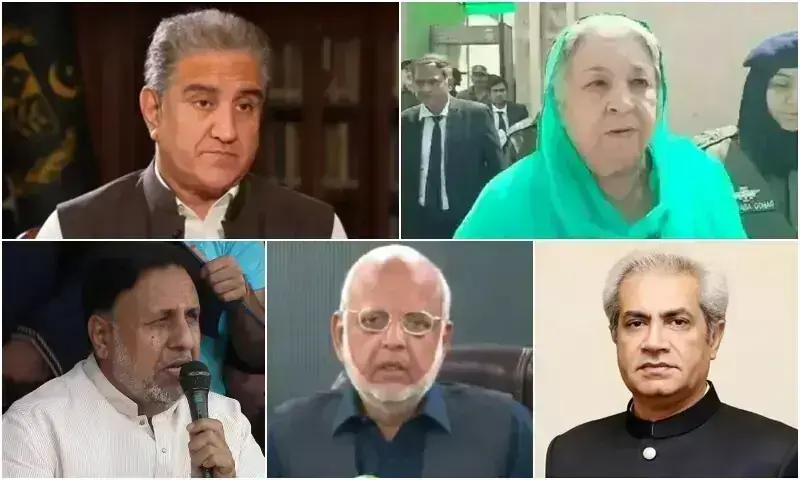

LAHORE: Five senior PTI leaders, incarcerated in Kot Lakhpat Jail, have urged opposition leaders to “engage constructively” with Prime Minister Shahbaz Sharif on a “Charter of Pakistan” — a move they deem will address the root cause of instability in the country.
They made the appeal in a joint letter to National Assembly Opposition Leader Mehmood Khan Achakzai, Senate Opposition Leader Allama Raja Nasir Abbas and PTI Chairman Barrister Gohar Ali Khan.
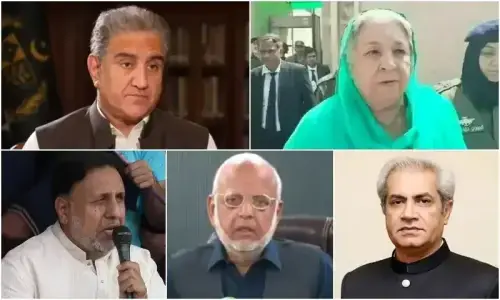
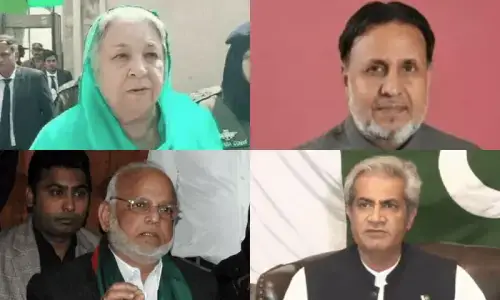
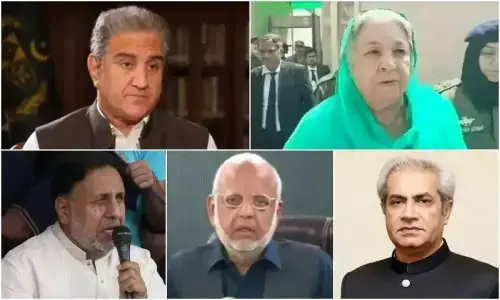
The letter by Shah Mehmood Qureshi, Dr Yasmin Rashid, Omar Sarfraz Cheema, Ejaz Chaudhry and Mian Mahmoodur Rasheed was shared by their counsel Rana Mudassar Umer and dated June 17. It said that Pakistan currently “stands at a critical crossroads” and referred to a recent invitation by the government to the opposition to sign a Charter of Economy.
The PTI leaders noted in their letter that “Prime Minister Shehbaz Sharif has once again proposed a ‘Charter of Economy’ as a means of addressing the country’s persistent economic challenges’.
“While economic reform and policy continuity are undoubtedly essential, it is important to ask a more fundamental question: Can economic stability be achieved in the absence of political stability and constitutional certainty?
“History, experience and common sense suggest otherwise,” the letter stated.
It added, “No economy flourishes where constitutional supremacy is contested, where political uncertainty prevails and where public confidence in institutions is weakened.”
The jailed leaders emphasised that investment, growth and prosperity were “ultimately products of trust in the rule of law, respect for democratic mandate and predictable governance”.
They said that Pakistan’s crisis was “not merely economic but constitutional and political”.
“Attempting to resolve economic difficulties without addressing these foundational issues is like repainting a building whose foundations remain unstable,” they added.
“For this reason, we respectfully urge the opposition leadership to engage constructively with the prime minister and challenge him to elevate the national conversation beyond a ‘Charter of Economy’ toward a broader and more meaningful ‘Charter of Pakistan’,” the PTI leaders said.
Moreover, they maintained that such a charter should seek consensus among all political forces, state institutions and centres of power on the following fundamental principles:
- Unconditional supremacy of the Constitution.
- Respect for the electoral mandate and the will of the people.
- An end to political engineering in all its forms.
- Strict adherence by all institutions to their constitutional roles and boundaries.
- Across-the-board accountability without discrimination.
- Protection of core national policies, including implementation of the National Action Plan and long-term economic frameworks, regardless of changes in government.
“The world’s most successful nations first established stable political rules of the game and only then achieved sustained economic progress,” they said. “Political stability produces economic stability, not the other way around.”
The jailed leaders said that “if the prime minister is genuinely committed to placing Pakistan on a path of national recovery, this is an opportunity to demonstrate statesmanship by initiating an inclusive national dialogue on a ‘Charter of Pakistan’”.
“Such an initiative would address the root causes of instability rather than merely its symptoms,” they stressed.
The five leaders urged the opposition leaders to collectively invite the prime minister to engage in “a serious, transparent and result-oriented discussion on this proposal”.
“Pakistan deserves a consensus that transcends governments and secures the supremacy of the Constitution, democratic continuity and institutional balance for generations to come.”
The leaders added that the “nation’s future requires not another temporary arrangement but a durable national covenant”.