BUDGET 2026-27: NA body questions mobile taxes, EV policy

• Committee finalises Finance Bill 2026 recommendations
• Lawmakers seek relief for entry-level, mid-range phone users
• FBR says mobile imports generate Rs37bn annually
• Apple devices account for Rs21bn in mobile import revenue
• Aircraft lease, spare parts tax relief extended beyond PIA
• MNAs insist airline relief should reflect in ticket prices
ISLAMABAD: A parliamentary committee on Sunday raised questions over the government’s mobile phone taxation policy and proposed taxes on high-end electric vehicles, while also extending relief to airlines beyond Pakistan International Airlines.
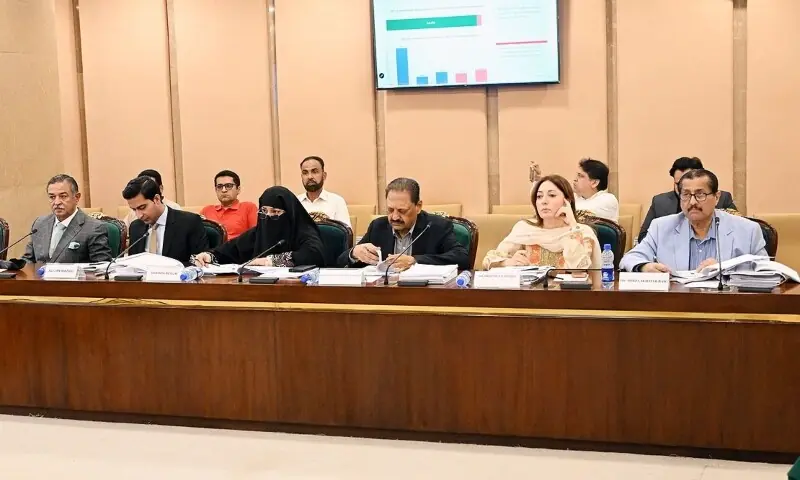
The National Assembly Standing Committee on Finance, chaired by MNA Naveed Qamar, concluded its series of meetings held for a clause-by-clause review of the Finance Bill 2026. The committee finalised its recommendations and forwarded them to the National Assembly.
During the proceedings, Sharmila Faruqui and Muhammad Javed Hanif submitted dissenting notes on the government’s electric vehicle policy and the existing tax structure on imported mobile phones, respectively.
The committee reviewed tax rates on imported and locally manufactured mobile phones, while officials outlined a tiered structure based on price.
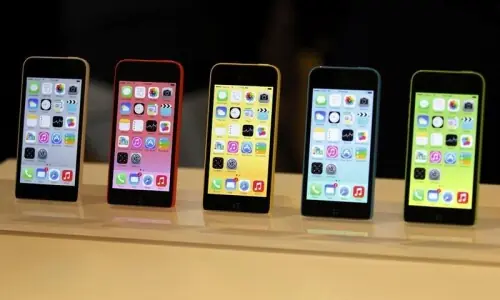
According to the briefing, phones valued up to $30 are taxed at 25pc, while those priced between $31 and $100 fall under a 36pc slab. Devices worth $101 to $200 attract a 40pc tax, while phones in the $201 to $350 range face an effective rate of 38pc. Smartphones priced between $351 and $500 are taxed at 40pc, and those exceeding $500 carry an effective rate of 41pc.
Officials said the tax burden ranged from Rs1,500 per unit to as high as Rs141,500, increasing with the price of the handset.
They added that 44pc of imported phones fell within the $31 to $100 category, which carries one of the lower tax slabs. The average effective tax rate across all categories stands at 39.6pc.
Lawmakers expressed concern over the widespread use of non-PTA phones and proposed introducing an instalment-based tax payment system, noting that such facilities are common internationally even for small consumer items.
Committee chairman Naveed Qamar directed the FBR to work with the Pakistan Telecommunication Authority to develop a feasible instalment plan.
Members also questioned whether recent changes in the Finance Bill offered any relief to consumers. MNA Javed Hanif Khan said no meaningful relief had been provided despite amendments.
FBR Chairman Rashid Mahmood Langrial suggested that taxes on phones priced up to $200 could be reduced, but some members, including MNA Hina Rabbani Khar, questioned the intent behind the proposal. She asked whether the move was aimed at raising revenue or favouring a particular company.
Langrial said mobile phones remained a major source of revenue, contributing Rs37bn annually from imports, with Apple devices accounting for Rs21bn. He warned that lowering taxes on low-priced phones could create a Rs1bn shortfall, which would need to be offset elsewhere.
Auto policy, EV taxes
The committee also took up the proposed five-year automobile policy, as the current framework is set to expire on June 30.
Minister of State for Finance Bilal Azhar Kayani said the existing policy would lapse at the end of the month, while Commerce Secretary Jawad Paul briefed members on plans to rationalise duties across engine categories.
Under the proposals, total duties and taxes on 1800cc vehicles would be reduced from 156pc to 74pc. For cars between 1500cc and 1800cc, the combined rate would fall from 91pc to 57pc, while vehicles between 1000cc and 1500cc would see a reduction from 76pc to 52pc.
Similarly, duties on 850cc cars are proposed to be cut from 66pc to 42pc. Customs duty on vehicles above 1800cc would be reduced from 100pc to 50pc, while rates for 1500cc to 1800cc cars would fall from 75pc to 45pc. Duties on 1000cc to 1500cc vehicles would drop from 60pc to 40pc, and for 850cc to 1000cc cars from 55pc to 35pc. For cars up to 850cc and motorcycles, the rate would decline from 50pc to 30pc.
The committee was also informed that customs duty on auto parts would be reduced from 35pc to 25pc, while specialised vehicles would continue to face a 30pc duty. The commerce secretary said the measures were aimed at lowering import tariffs and reducing business costs.
However, members raised concerns over the taxation of electric vehicles. FBR officials said electric cars priced up to $75,000, or around Rs20m, would remain exempt from federal excise duty, while higher-priced vehicles would be taxed.
MNA Shahida Akhtar Ali questioned the absence of charging infrastructure, asking how such vehicles would operate given the country’s power constraints.
MNA Sharmila Faruqui called for policy clarity, saying the government should either promote electric vehicles or avoid creating a luxury category within them.
Aviation policy
The committee decided to extend sales tax exemptions on aircraft leases and spare parts purchases to all airlines, not just PIA, as part of the Finance Bill.
FBR officials briefed the committee that under the revised proposal, 18pc sales tax would not apply to new aircraft leases and spare parts procurement. Initially, the exemption was sought only for PIA, but members argued that such relief should be sector-wide to ensure fair competition.
Qamar questioned why the benefit should be restricted to PIA, suggesting a compromise under which the exemption could be granted to the national carrier for one year while negotiations with the IMF continued.
However, members, including Dr Nafisa Shah and Sharmila Faruqui, stressed that policy should not be tailored to a single airline. “Tomorrow, if a new airline enters the market, it will immediately suffer from the 18pc tax burden,” Faruqui warned, calling for a neutral policy across the sector.
Finance Secretary Imdad Ullah Bosal initially urged limiting the relief to PIA, but the committee resolved to incorporate the broader exemption into the Finance Bill, effective July 1, 2027. Tax officials noted that the government would explain to the IMF that the measure was necessary to maintain market competition.MNA Javed Hanif added that if such significant relief was being granted, its impact should also be reflected in ticket prices.
Published in Dawn, June 22nd, 2026