Marcelo Bielsa: The coach who changed football, but not his ways
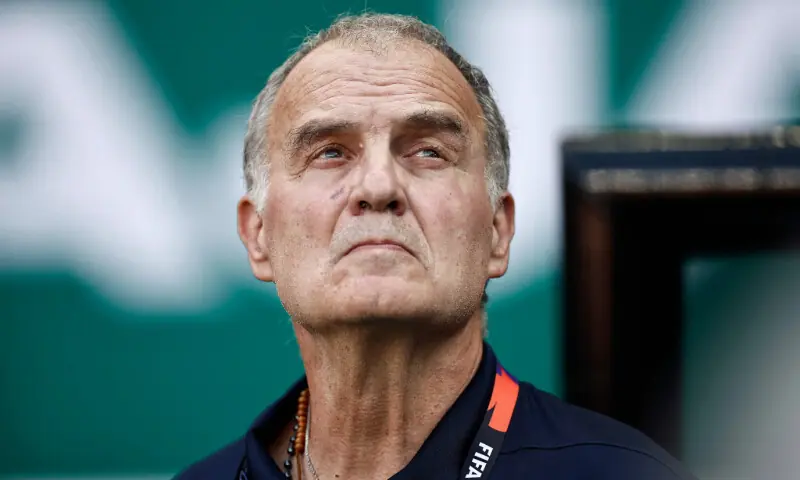

Marcelo Bielsa has never cared much for appearances.
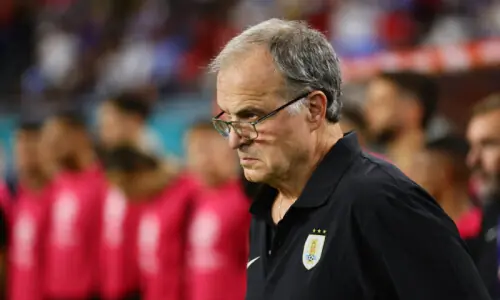
When FIFA gathered coaches for its official World Cup photoshoot earlier this month, Uruguay’s manager stood with his hands in his pockets, looking down rather than towards the camera. Asked afterwards why he refused to pose conventionally, the 70-year-old dismissed the question.
“I’m not a model,” he said. “I don’t have to give any explanation. The picture was taken the way it was taken.”
It was a typically Bielsa response — indifferent to optics and entirely consistent with a career built on doing things his own way.
Days later, Uruguay’s campaign came to a disappointing end. A 1-0 defeat to Spain, following draws against Saudi Arabia and tournament debutants Cape Verde, condemned the two-time world champions to a second successive group-stage exit. Afterwards, Bielsa offered a brutally honest assessment of his time in charge.
“I have not left anything to Uruguayan football,” he admitted.
Whether those words mark the end of his coaching career or simply another chapter remains uncertain. What is beyond doubt is Bielsa’s place among football’s most influential thinkers, even if his own career rarely produced the sustained success that many believed his ideas deserved.
The revolutionary
Born in Rosario in 1955, Bielsa never made his name as a player. Instead, he emerged as one of football’s most innovative coaches after taking charge of Newell’s Old Boys in 1990.
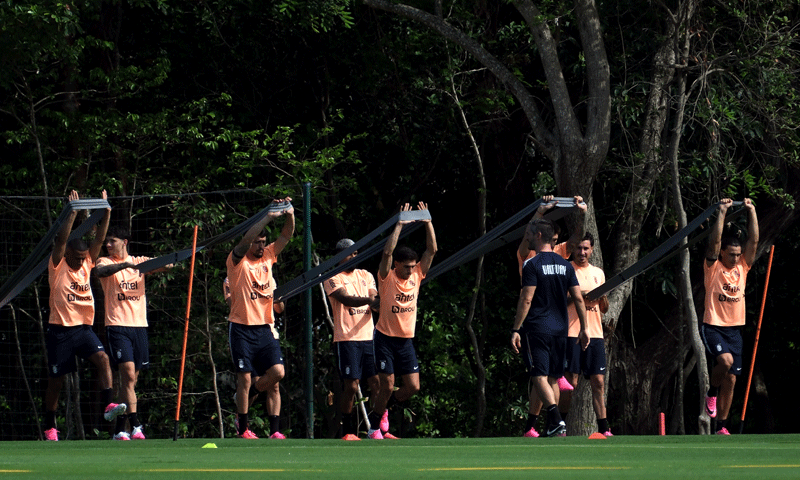
His methods were demanding. Training sessions were meticulously planned, video analysis became an obsession and players were expected to embrace relentless pressing and intense physical work. Bielsa’s teams attacked vertically, defended aggressively and functioned as collective units rather than relying on individual brilliance.
Those ideas, revolutionary at the time, earned him both admiration and the nickname El Loco, “The madman”.
His reputation grew further during spells with Argentina and Chile. Argentina’s highly-rated side suffered a shock first-round exit at the 2002 World Cup, but Bielsa later guided the country to Olympic gold in Athens. In Chile, he transformed La Roja into one of South America’s most exciting teams and laid the foundations for the country’s success in the decade that followed.
His greatest achievement, however, may not have been measured in trophies.
The disciples
Few coaches have influenced modern football as profoundly as Bielsa.
Pep Guardiola has repeatedly described the Argentine as one of the biggest influences on his own thinking, once famously saying that Bielsa was “the best coach in the world”.
Mauricio Pochettino, Diego Simeone, Marcelo Gallardo, Jorge Sampaoli and Andoni Iraola have all acknowledged his impact on their careers.
Many of the tactical ideas now considered commonplace — coordinated pressing, aggressive man-marking and fluid positional play — were refined by Bielsa long before they became part of football’s mainstream.
His influence extended beyond tactics. Former players often spoke about how Bielsa changed the way they understood football itself, and many later became coaches, carrying elements of his philosophy into dressing rooms across Europe and South America.
The contradictions
Yet Bielsa’s own career never quite matched the scale of his influence.
At Athletic Bilbao, Marseille and later Leeds United, his teams thrilled supporters with their intensity and attacking football. Leeds’ promotion to the Premier League in 2020, ending a 16-year absence from the top flight, cemented his cult status among supporters.
But Bielsa teams also developed a familiar pattern.
They started brilliantly, overwhelmed opponents with their energy and tactical organisation, before struggling to sustain those standards over longer periods. The physical demands of his football often took their toll, while opponents gradually found ways to play through the relentless press.
His time with Uruguay reflected many of those contradictions.
Reports of dressing-room tensions surfaced during his tenure, while former striker Luis Suárez publicly questioned Bielsa’s management style. Following the World Cup exit, frustration was evident as players left the pitch visibly dejected, bringing an underwhelming campaign to a close.
When football caught up
Football has changed significantly since Bielsa first challenged conventional thinking in the 1990s.
Pressing is now almost universal among elite teams. Advances in sports science have encouraged greater squad rotation and more careful workload management. Tactical flexibility has become increasingly important as coaches adapt to different opponents and changing game situations.
Ironically, many of those developments grew from ideas Bielsa himself helped popularise.
Yet while the game evolved around him, Bielsa remained remarkably consistent. His principles changed little, even as former disciples incorporated them into more flexible systems.
That consistency became both his greatest strength and, arguably, his biggest weakness.
Legacy
If Uruguay proves to be Bielsa’s final job, it will not diminish his standing in football history.
His career will always invite debate. Critics point to the limited number of major trophies and the recurring inability of his teams to sustain success. Admirers argue that no coach has inspired more of today’s leading managers or altered football’s tactical landscape more profoundly.
Perhaps both are right.
Bielsa may leave Uruguay without the ending he wanted, but his influence will long outlive the disappointment. The pressing systems that define modern football, the coaches who continue to cite him as an inspiration and the players who describe him as the man who changed the way they saw the game all point to the same conclusion.
His greatest achievement was never the silverware he collected. It was convincing generations of football thinkers that the game could always be played differently.
And if that ultimately came at the cost of refusing to compromise, Bielsa would probably have considered it a price worth paying.