
KARACHI: Regional instability continues to influence market sentiment, negatively impacting Pakistan’s domestic bond and equity markets and foreign direct investment, all of which declined at the end of FY26.
Several economic stakeholders were unsure whether the Gulf turmoil, which has recently paused, could last longer, analysts said.
They said all countries, except Israel, hoped for a permanent end to the Gulf war against Iran, but the business community was looking at the situation the other way.
“Even if the war does not start in the near future, the uncertainty is high enough to keep foreign investors away from the country, such as Pakistan, which faces serious problems with its external account and depends largely on friendly countries and international donors to avoid default,” said a senior banker.
Uncertainty drives foreign investors away
Foreign direct investment declined by 28 per cent over the first 11 months of outgoing FY26; domestic bonds recorded a net outflow of $550 million, while total outflows from domestic bonds were over $2bn.
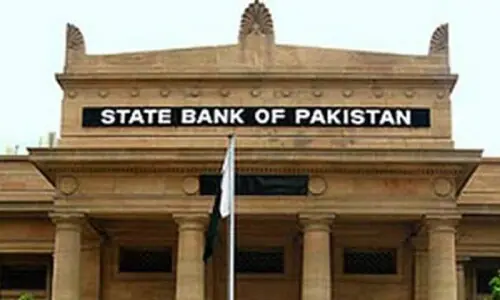
While the Pakistan Stock Exchange performed quite well, it has failed to attract foreign investments in the outgoing fiscal year. The data from the State Bank show that from July 1, 2025 to June 19, 2026, inflows into the equity market were $308 million, while outflows exceeded $1 billion.
Most analysts believe the risk is high for investing in Pakistan, despite stronger foreign exchange reserves and strong remittance growth. Pakistan hopes to receive $41bn in remittances in FY26, the biggest source of foreign earnings.
“Despite these high inflows of remittances, the country needs to pay over $26bn in 2026-27, making the external account vulnerable, with a $35bn trade deficit in 11MFY26, which is enough to alert foreign investors,” said S.S. Iqbal, an expert on investment and money markets.
“Although Pakistan is not involved in the Gulf war, the country is now part of the peace deal, which shows the high stakes for Pakistan in this tense Gulf situation,” said another analyst. If the deal fails, Pakistan may face negative impacts.
However, some believe that Pakistan’s growing role in the Gulf region could benefit the economy, as relations with Iran, Saudi Arabia, Oman, and now Qatar could yield attractive outcomes for Pakistan once the peace deal succeeds.
There were no details on business agreements signed during the Iranian president’s recent visit to Pakistan with a 70-member delegation, but industry sources said economic activity, particularly trade with Iran, could see a significant boost.
Published in Dawn, June 30th, 2026