Oil rises as US strikes on Iran raise fears over shaky truce
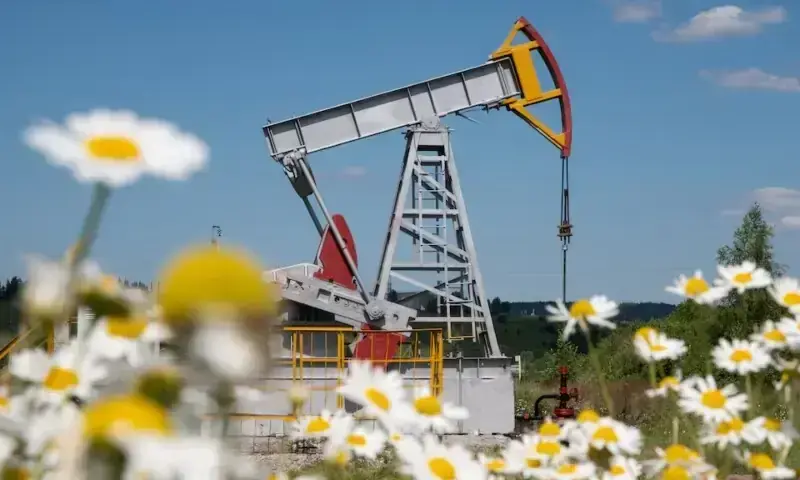

Oil prices gained more than 2 per cent on Wednesday after the US military launched airstrikes against Iran and reimposed crude sales sanctions, raising fears their fragile truce was unravelling and Middle East supplies could be disrupted again.
Brent crude futures gained $1.92, or 2.6pc, at $76.08 a barrel at 0400 GMT. US West Texas Intermediate crude climbed $1.82, or 2.6pc, to $72.26 a barrel.
Both benchmarks rose about 3pc on Tuesday after the US revoked the general licence authorising the sale of Iranian crude following the Iranian attacks.
“While the revocation doesn’t fundamentally change oil market dynamics, it’s important from a sentiment perspective. It heightens the risk of a breakdown in the temporary deal between the US and Iran,” ING commodity strategists said on Wednesday.
The US airstrikes were in response to Iranian attacks on three commercial vessels that were transiting the Strait of Hormuz, US Central Command said on Tuesday.
“The current conflagration is a reminder to the market of how fragile passage through the Strait still is,” said Saul Kavonic, head of research at MST Marquee.
“This presents a contrary indicator to the prevailing sentiment that the market could be flooded into oversupply, which may scare some of the record short positioning to cover,” he said, adding that if tensions persist and traffic through the waterway remains below 50pc of pre-war levels, the resulting supply constraints could support higher oil prices.
After the US and Iran signed their truce agreement last month, oil prices tumbled back to pre-war levels and traders amassed large short positions in oil futures, or bets that prices would fall further.
Expectations of a wave of pent-up Middle East supply coming onto the market caused the price declines.
Iran did not take responsibility for the vessel attacks, but Qatar blamed Iran for them, including one on a Qatari liquefied natural gas tanker, which reported being struck by a drone that caused a fire in its engine room.
A Saudi-flagged crude oil tanker, believed to be the supertanker Wedyan, was also damaged off Oman, maritime security sources said. The cause was not immediately clear.
The attacks renewed concerns about tanker traffic through the Strait of Hormuz, which carried cargoes equal to about one-fifth of global energy supply before the war began in February.
Iran is asserting its control of the Strait and has ordered ships to use a route closer to its coast rather than one nearer to Oman, which also borders the waterway. The US insists the waterway must remain free to all as it was before the conflict started.
Since the war started, nations have drawn down their inventories to make up for the supply shortfall.
US crude oil inventories fell again last week, market sources said on Tuesday, citing data from the American Petroleum Institute. Analysts polled by Reuters had expected crude stockpiles to decline by about 2.4 million barrels in the week ended July 3.