US launches third night of strikes on Iran; IRGC targets American assets in Bahrain and Jordan

The United States launched another wave of strikes on Iran for the third consecutive day early on Tuesday after President Donald Trump announced the reimposition of a blockade on Iranian ports and floated a 20 per cent fee on cargo in the vital Strait of Hormuz.
Trump said a deal with Iran was still possible even as attacks were carried out, with Tehran striking two ships in the Strait of Hormuz and killing one crew member, according to the United Arab Emirates.
Meanwhile, Iran’s Revolutionary Guards Corps (IRGC) said two “offending supertankers” were hit and disabled in the Strait of Hormuz. It said the tankers ignored warnings, turned off navigation systems and tried to pass through a “mined route”.
The statement did not name the vessels or say whether it was referring to the same tankers cited by the UAE’s Ministry of Defence.
The Guards said the US was “inciting vessels to use an illegal route” and warned that cooperation with the “aggressor enemy” would result in damage, delays in reopening the strait and a global energy crisis.
Fresh strikes
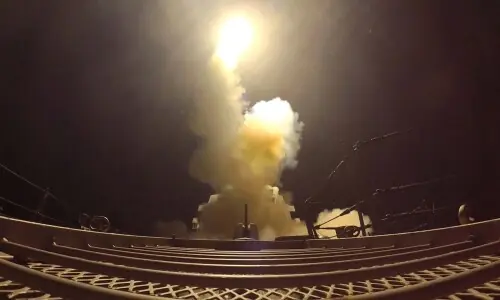
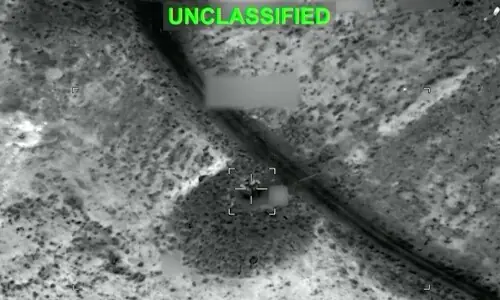
The US military said its latest five-hour mission hit targets across Iran, including in coastal Bushehr and Bandar Abbas, to “degrade Iran’s ability to attack commercial shipping”.
“Centcom forces employed precision munitions against Iranian coastal defence systems, missile and drone sites, and maritime capabilities,” it said.
More than 50,000 US service members are currently deployed across the Middle East, the statement said.
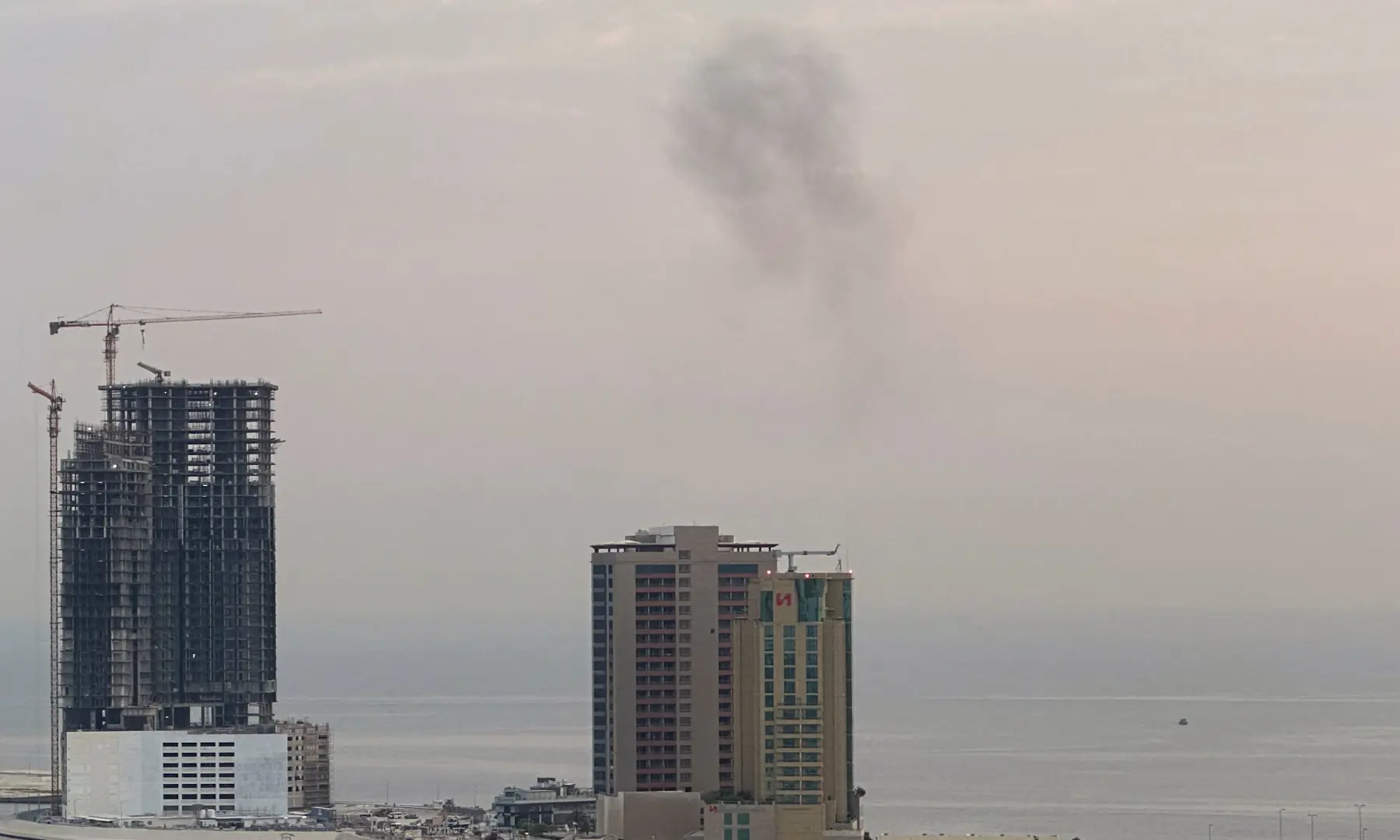
After the strikes, Iran’s Revolutionary Guards Corps announced it had in turn fired missiles and drones on Bahrain, targeting a residential building for US forces and other facilities. It said it targeted weapons warehouses, a satellite communications centre and a US forces’ housing building at Bahrain’s Juffair base.
The IRGC also claimed that its missile and drone attacks destroyed the air control radar of the US Navy’s Fifth Fleet in Bahrain. It said its naval and aerospace forces hit a Patriot radar and an early warning C-RAM radar system in Bahrain.
The IRGC added that fuel storage tanks and the control center for unmanned boats were also destroyed.
There was no immediate reaction from the United States or Bahrain to the Iranian statement.
Meanwhile, Jordanian state media reported that the country had intercepted and downed four missiles that entered Jordanian airspace from Iranian territory.
Later, the IRGC said in a statement published by Iran’s Fars news agency that an air base in Jordan that hosted US forces was targeted by ballistic missiles.
The statement further called on the Jordanian people to dismantle American bases in their country.
“You know very well that not only do we not have any enmity with your country, but we also love you, the noble people, who understand the pain and oppression of the Palestinian people more than any other nation,” the statement said.
Iran insists it only targets US interests in the Gulf, but its military command spokesman said that any collaboration by Gulf countries with the United States would be considered “an act of war.”
Hormuz blockade
Trump’s declaration on the Hormuz blockade followed US and Iranian attacks of a scale unseen since an April ceasefire in the Middle East conflict, adding to doubts about efforts to bring a permanent end to the war.
Tehran started blocking the strait after the US and Israel launched attacks on Iran in late February, setting off a war that had been paused under a fragile ceasefire arrangement until recently. Tehran’s blockade of Hormuz prompted Washington’s blockade of Tehran’s ports — but restrictions had eased after the US and Iran agreed on a preliminary deal in June.
Trump said on Monday that the United States was “taking over” the strait and would slap a levy of 20pc on all cargo shipped through it, in an announcement that drew mockery from Iran and accusations of “piracy”.
Trump declared on Truth Social that the United States would be “known as ‘THE GUARDIAN OF THE HORMUZ STRAIT’” and levy a 20pc fee on all cargo shipped through the waterway.
While Iran’s ports would again be blockaded, Trump said, “all other countries will have fair and open use of the strait”.
US Central Command (Centcom) said Iran’s ports on the waterway would be blockaded from 2000 GMT on Tuesday.
Iranian Foreign Minister Abbas Araghchi responded mockingly on X that Trump was “absolutely right” that whoever guaranteed safe passage should be compensated — but that Tehran would charge less.
“Twenty per cent is of course too much,” he said.
Washington has vehemently opposed Tehran’s desire to charge tolls in the strait, which international law generally forbids.
Resumed hostilities
Trump formally notified Congress last week that the United States had resumed military conflict against Iran, the White House confirmed to AFP, giving the Pentagon an additional 60 days to operate in the region without congressional approval.
In addition to the moves in Hormuz, the US president also threatened to destroy Pickaxe Mountain, a deeply buried nuclear site near Natanz where Western intelligence suspects Iran is building an undeclared enrichment facility.
“Tell the Iranians to be ready. Let them know we’re coming [and] there’s not a damn thing they can do about it,” he told conservative radio host Hugh Hewitt.
‘In crisis’
Despite all signs to the contrary, Trump said on Monday that a deal with Tehran to end the war was still possible.
Iran’s Foreign Ministry spokesman Esmaeil Baqaei said earlier that the June memorandum of understanding that formed the basis for the negotiations and lifted the US blockade was “in crisis”.
Baqaei said Iran would ignore its obligations under the interim deal if Washington did the same, but added that Tehran was continuing talks with mediators from Qatar, Pakistan and Oman to prevent further escalation.
Bader Al-Saif, an associate fellow at Chatham House, said the escalating attacks would merely delay a permanent agreement.
“Both sides want to end the impasse on their own terms, and they are increasingly finding it difficult to do so. Hence, the return to and increase in the scale of attacks,” he said.