THE Islamabad MoU, and the broader US-Iran ceasefire this document is supposed to underpin, is unravelling before our eyes.
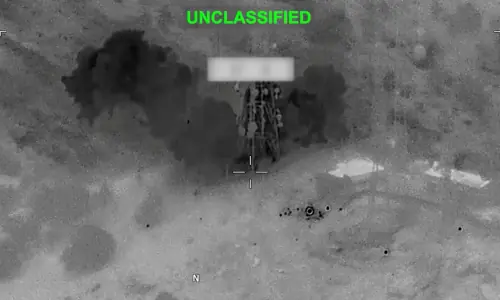
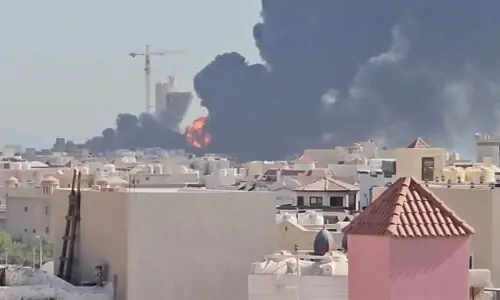
Following a recent escalation, Washington and Tehran have been trading fire across the Gulf, with each round more intense than the last. The US has struck locations in Iran, while Tehran has responded in kind by hitting targets in the GCC states allied with the US, as well as in Iraq, Jordan and Syria. Both sides have hit civilian sites, including water plants.
The immediate trigger for hostilities was Iran’s demand that only its ‘approved’ route be used for transit of the Strait of Hormuz. Its attacks on ships using ‘unauthorised’ routes invited an American military response.
Apparently, both sides were reading the MoU’s clause regarding the vital strait differently. Yet beyond Hormuz, Israel’s attacks in Lebanon have also put great strain on the MoU.
As of Saturday, the MoU seemed all but dead, as Iran’s deputy foreign minister has said his country is “no longer implementing” its commitments as per the document.
The threat of the war restarting and the conflict expanding is very real.
The US attacks have failed to deter the Iranians while there is talk of a possible American ground invasion. This idea must be dropped immediately, as it would prove to be an unmitigated disaster, and torpedo any chance of peace, however remote, that exists today.
Furthermore, Yemen’s pro-Iran Houthis have threatened to close the Bab al-Mandeb strait — another key chokepoint for global trade — in case the conflict expands. The effect this would have on the global economy would be brutal.
Therefore, to prevent further bloodshed and a new global economic shockwave, all regional states and members of the international community should redouble their efforts to revive the ceasefire.
The Pakistani and Chinese foreign ministers have called for an immediate return to dialogue. There is great wisdom in their words. Other states, such as Egypt and Turkiye, as well as Qatar, should also try and bring the belligerents back to the table.
This entirely preventable war is the result of hubris and arrogance; it was launched by the US and Israel, who thought they could knock out the Iranian system in a few days or weeks. Clearly, their assumptions were delusional.
The US particularly finds itself in a quagmire, standing at the precipice of another ‘forever war’ as midterms loom in November. It has few good options before it. Rather than sink deeper in the Iranian quicksand, the US should halt hostilities immediately.
Iran, too, must silence its guns. It is time the US realised that Iran sees the conflict as an ‘existential war’, as its parliament Speaker has observed. The only way to prevent a catastrophic regional conflagration is for both to return to the negotiating table.
Published in Dawn, July 19th, 2026