US attacks deepen hardship, not dissent, in Iran's south
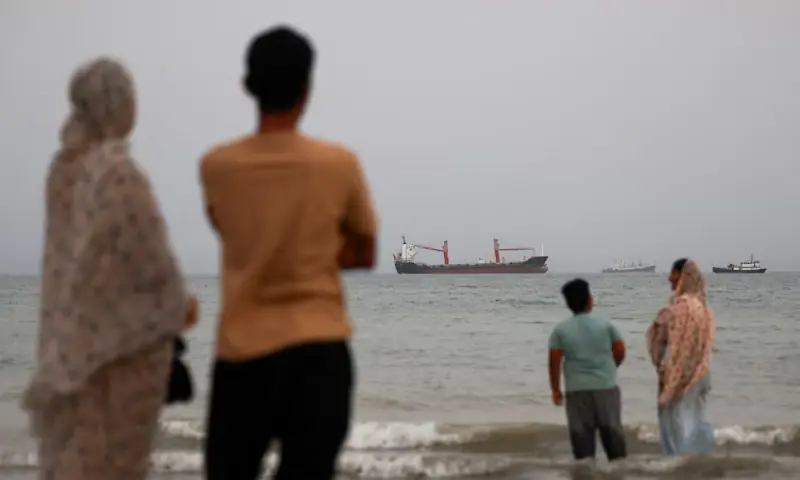

Opposition to Iran’s government has long simmered in the country’s impoverished south. But after bearing the brunt of US strikes this month, many residents are directing their anger at President Donald Trump and an air campaign they say has upended their lives.
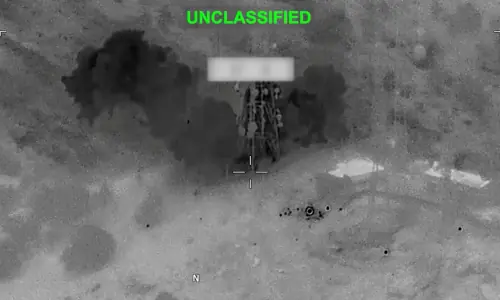
Southern Iran, which borders the Strait of Hormuz, has been a major target of US attacks on ports, energy facilities and transport infrastructure. Washington claims the strikes are aimed at curbing Iran’s ability to threaten shipping through the strategic waterway. Tehran says they have gone far beyond legitimate military targets.
Most of the more than two dozen southern residents Reuters interviewed by phone or messaging apps agreed that the strikes had gone beyond targets with a clear military purpose.
“Trump has ruined our lives,” said Amin, who runs a small boarding house for tourists in the south, blaming the US strikes for worsening economic hardship.
None of those Reuters spoke to said the conflict had generated support for renewed anti-government protests.
No new wave of unrest in the south
“I feel like I’m suffocating,” added Amin. Such frustration with the strikes’ impact helps explain why, even in provinces known for anti-government protest, the war has not triggered further unrest — something Trump had hoped for at the start of the conflict.
Like the other Iranians Reuters spoke to, Amin asked that his family name not be published for fear of reprisals.
Reza, 62, a veteran of the 1988-89 Iran-Iraq war, said he was still willing to fight against the United States.
“If my country needs me I’ll take up arms again, not for this regime but for the soil beneath my feet. It’s the least I owe it,” said the retired teacher from his home in Abadan in the southwestern Khuzestan province.
The southerners Reuters spoke to included people who had taken part in previous bouts of protest, but none said they supported renewed unrest for now.
Huge region is home to several ethnic minorities
Southern Iran’s provinces of Hormozgan, Bushehr, Khuzestan and Sistan-Baluchistan form a large, diverse region stretching along a humid, rugged coastline from Iraq to Pakistan.
Khuzestan is home to a large Arab minority, Sistan-Baluchistan to Iran’s Balochi ethnic minority and Hormozgan to a Sunni Muslim religious minority.
Despite having most of Iran’s oil and gas, southerners have also complained of low investment, little opportunity and poor state services.
“The US attacks have deepened our problems. No electricity for hours means no water for hours in this heat,” said Hadi, a grocery shop owner in Khuzestan province.
“I love Iran. This war should stop. Enough is enough,” he added.
The authorities deny any regional, ethnic or religious discrimination.
Majid, a 41-year-old engineer in Konarak, said the war had brought new fear to a town already struggling with years of neglect: nights filled with the sound of explosions, followed by days of heat, hours of darkness and fears of empty water pipes.
Power cuts have become especially punishing in provinces where summer temperatures regularly climb above 40 degrees Celsius, leaving families without air conditioning and disrupting water supplies that depend on electric pumps.
In Bushehr, home to Iran’s one working nuclear power plant, high school student Samad said he could not focus on his exams because of the nightly attacks.