Senate panel concerned over diversion of flood rehabilitation funds in KP

• Mardan gets most road projects despite not being among worst-hit districts while Upper Dir, Lower Dir, Chitral receive fewer projects
• Committee raises concern over World Bank ‘interference’ in Sindh project; directs Economic Affairs Division to take up matter with lender
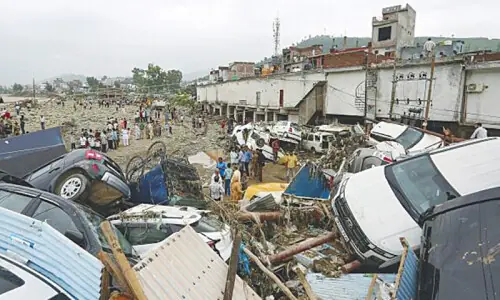
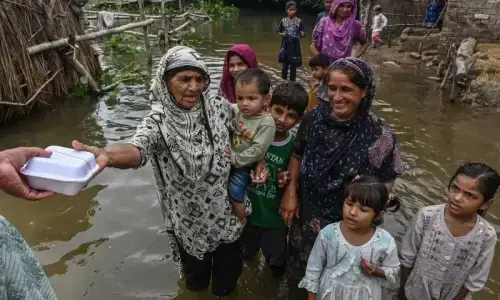
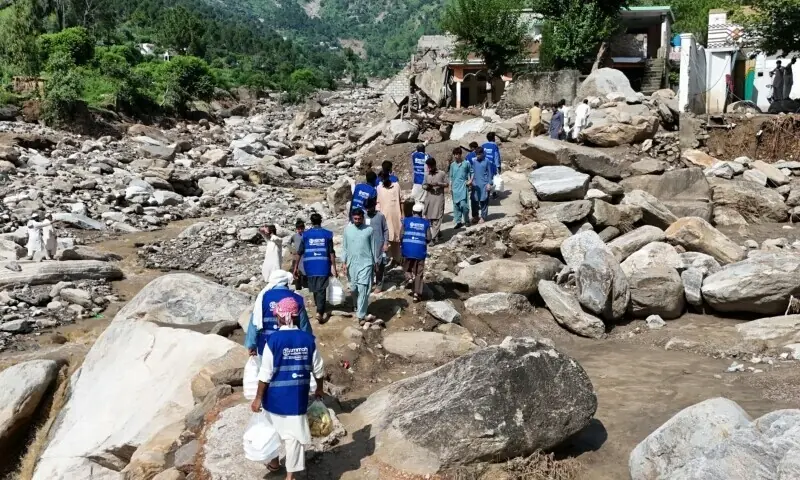
ISLAMABAD: A Senate panel on Tuesday questioned the use of foreign loans and grants received for rehabilitation and reconstruction of flood-affected areas of Khyber Pakhtunkhwa, observing that funds appeared to have been diverted to less-affected or unaffected areas for political reasons.
The Senate Standing Committee on Economic Affairs also expressed displeasure over alleged interference by World Bank staff in a foreign-funded project in Sindh.
The meeting, presided over by Senator Saifullah Abro, reviewed the implementation, progress and utilisation of foreign-funded uplift projects in the country, with special focus on KP’s road, flood rehabilitation and irrigation schemes.
KP’s Communication and Works (C&W) Department briefed the panel on district road projects, flood rehabilitation initiatives, externally funded infrastructure schemes and irrigation projects financed by international development partners.
During the briefing on flood rehabilitation projects, committee members questioned the criteria adopted for selecting road schemes in flood-affected districts and observed significant disparities between areas actually hit by floods and the allocation of reconstruction projects.
Reviewing the list of completed and ongoing road projects, the panel noted that the highest number of roads had been constructed in Mardan despite the fact that the district was not among the worst flood-affected areas.
In contrast, severely affected districts, including Upper Dir, Lower Dir and Chitral, received comparatively fewer road projects.
Senator Rubina Khalid pointed out that 16 roads had been constructed in Mardan, while only 12 kilometres of roads were built in Dir despite the district suffering extensive flood damage.
Senators questioned the basis on which roads were selected for construction across KP.
Senator Hidayatullah observed that nine roads had been built in Peshawar despite the city not experiencing flood damage and sought details of the criteria used for project selection.
Senator Khalid lamented that there was a clear disparity in project implementation, saying reconstruction work had not been carried out where flood rehabilitation was genuinely required, while projects had been executed in areas where there was little or no need.
While expressing concern that donor agencies may have been misled regarding project priorities, the senators observed that deserving areas remained deprived of reconstruction while projects were shifted elsewhere under the pretext of donor requirements.
Senator Waqar Mehdi noted that the same concerns also applied to other foreign-funded schemes.
Officials of the Ministry of Economic Affairs informed the committee that once foreign loans were transferred to provinces, ownership and implementation became the responsibility of the respective provincial governments. They said the ministry continued to facilitate loan disbursement and assisted provinces in resolving bottlenecks whenever required.
Senator Abro said it was unfortunate that Pakistan continued to accumulate external debt while resources were not being utilised where they were actually needed.
He observed that the country’s debt burden continued to rise every year, while delays in project completion and poor utilisation further aggravated the financial situation.
C&W officials told the senators that work on district road projects across KP was progressing rapidly, with most development schemes reaching 100 per cent completion.They said the projects were completed in Swat, Peshawar, Mardan and Nowshera.
They said work on 63 district road projects across KP was nearing completion, while the total length of district roads had reached 488kms.They said more than Rs10.9 billion had been spent on the construction and rehabilitation of district roads.
The committee recommended that whenever provinces received grants or loans, mechanisms should be in place to ensure that funds were utilised strictly for their intended purposes.
World Bank role questioned
Meanwhile, the committee also discussed concerns regarding alleged unauthorised pressure by the World Bank’s local representative on Sindh Water and Agriculture Transformation Project, according to an official statement.
Senator Abro questioned the role of the World Bank’s local representative, saying the lender could either approve or decline financing but could not dictate how projects should be implemented. He said project execution remained the sole responsibility of local authorities while the lender’s role was limited to financing and loan recovery.
Officials earlier told the senators that the project cost had doubled.
Senator Abro said Pakistan should not succumb to external pressure, adding that Sindh could save about Rs14bn by resisting unnecessary project changes.
Referring to the Peshawar-Torkham project, he said similar pressure had been exerted regarding an amount of $890 million, adding that the committee had intervened to prevent unnecessary financial implications. He said that if the relevant authorities formally approached the lender, the local representative could be replaced. The chairman directed the Economic Affairs Division to convene a meeting with the World Bank to address the matter and ensure that implementation of development projects remained within the authority of Pakistani institutions.
Published in Dawn, July 22nd, 2026