Short-term inflation climbs for 67th week

ISLAMABAD: Short-term inflation, measured by the Sensitive Price Index (SPI), rose by 9.66 per cent year-on-year for the week ending July 23, mainly due to high prices of perishable food products, according to official data released on Friday.
The spike in short-term inflation was mainly driven by a steady increase in petroleum prices on a daily basis, pushing transportation costs substantially in the week.
The index increased by 0.91pc compared to the previous week, according to the Pakistan Bureau of Statistics.
The overall SPI showed a broad-based rise, indicating continued pressure on the cost of living. The increase was largely driven by sharp gains in key items on a year-on-year basis, including electricity charges (22.79pc), wheat flour (74.13pc), and liquefied petroleum gas (46.87pc).
Costly food, energy drive 9.66pc annual increase
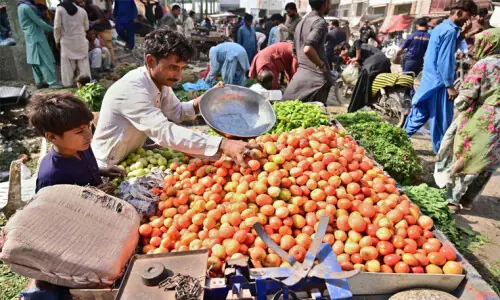
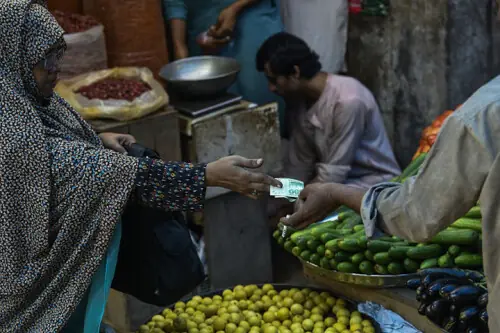
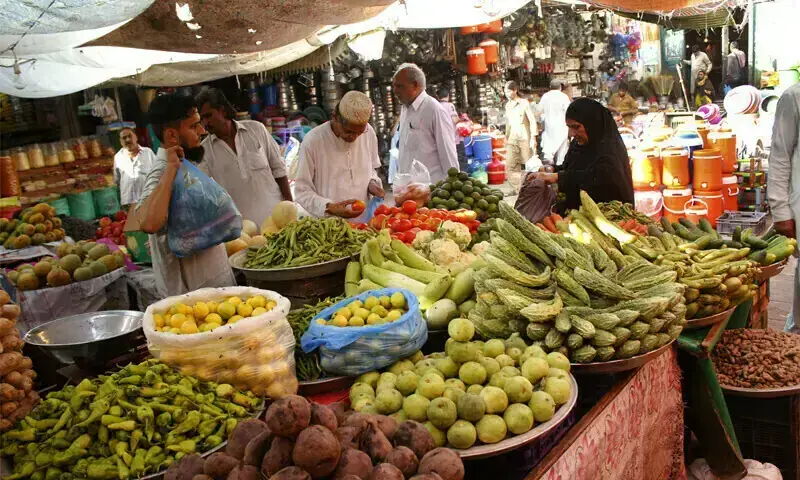
Food inflation remained elevated, with notable increases in the prices of onions, tomatoes, potatoes, mutton, beef and wheat flour.
Energy-related costs continued to weigh on household budgets and push up transport expenses across the economy.
The SPI has now recorded an increase for the 67th consecutive week. Although the pace of growth has slowed, it reflects sustained pressure on consumers.
The items, whose prices increased the most over the previous week included tomatoes (39.92pc), diesel (15.87pc), eggs (7.31pc), petrol (5.23pc), potatoes (3.70pc), LPG (0.91pc), cooked daal (0.72pc), tea Lipton (0.59pc), mustard oil (0.45pc), garlic (0.41pc), cooked beef (0.36pc) and washing soap (0.21pc).
The items whose prices saw a decline week-on-week included chicken (4.66pc), bananas (1.72pc), pulse moong (1.08pc), pulse mash (1.07pc), rice Irri-6/9 (0.52pc), pulse masoor (0.40pc), sugar (0.09pc) and pulse gram (0.03pc).
However, on an annual basis, the items whose prices increased the most were tomatoes (253.04pc), onions (81.55pc), wheat flour (74.13pc), LPG (46.87pc), diesel (31.92pc), electricity charges for Q1 (22.79pc), petrol (20.32pc), mutton (16.02pc), chilli powder (15.20pc), beef (13.09pc), bananas (12.06pc) and bread plain (9.69pc).
In contrast, the prices of potatoes dropped 33.69pc, followed by pulse gram (21.48pc), sugar (17.67pc), salt powder (14.09pc), chicken (13.73pc), pulse masoor (13.55pc), eggs (9.59pc) and pulse moong (8.67pc).
The index, comprising 51 items collected from 50 markets in 17 cities, is computed weekly to assess the prices of essential commodities and services at shorter intervals.
Data showed that the prices of 22 items increased, eight decreased, and 21 remained stable compared to the previous week.
Published in Dawn, July 25th, 2026