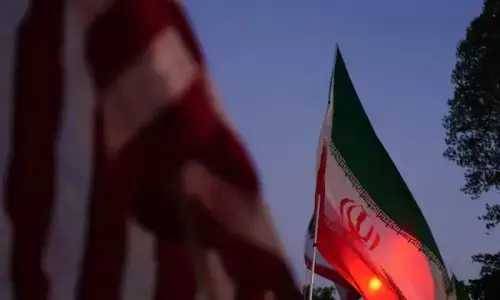
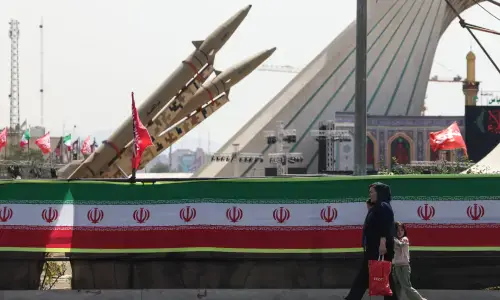
AFTER two weeks of escalating violence, the US has halted its strikes on Iran, with Tehran also silencing it guns. But rather than any newfound belief in the benefits of peace, the Trump administration may have made the U-turn on account of the mounting practical costs of continuing the conflict.
Moreover, efforts by regional states, including Pakistan, may have also helped convince both sides to give diplomacy another chance. Whatever the motivations for the belligerents to refrain from hostilities, the cessation of conflict in the Gulf is a welcome development, and it is hoped that the dialogue process can be brought back on track and a more permanent peace established in the region.
America’s ambassador to the UN said that President Donald Trump wanted to give “talks some space”. While that may be so, there are also reports in the US media — denied by Mr Trump — that America was running low on munitions. Besides, some of America’s top generals have reportedly advised their bosses in the Pentagon and White House not to escalate matters with Iran. Mr Trump’s decision to halt hostilities may also have been impacted by the rising economic cost of the war.
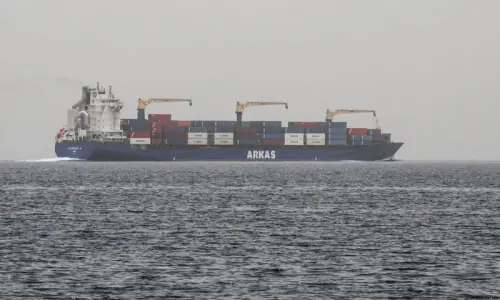
Furthermore, hostilities in the Gulf have expanded to the Red Sea, with the pro-Iran Houthis enforcing a blockade of Saudi ships. If this conflict escalates, it could have a devastating impact on the global economy, as two major chokepoints for marine traffic — the Strait of Hormuz and Bab al-Mandeb — face indefinite closure.
While Mr Trump has done the right thing by stopping the attacks, he should realise that this war was a mistake from day one, and a negotiated settlement with Iran would have a better solution. Tehran must also show flexibility over the Hormuz issue and ensure that a long-term arrangement guarantees free passage for vessels through this critical waterway.
Yet, this respite from attacks does not necessarily signal the return of peace. Related conflicts in Lebanon and Yemen can lead to the resumption of fighting in the Gulf. Therefore, the mediators who are trying to revive the peace process as per the Islamabad MoU also need to convince the Houthis and the Saudis to revive their ceasefire. In Lebanon, Israel continues its brutal attacks.
In this regard, Iranian Supreme Leader Mojtaba Khamenei has said that peace with the US will only be possible if there is peace in Lebanon. It should be remembered that the Lebanese ceasefire was an integral part of the MoU. Also, Ukraine’s targeting of an Iranian ship in the Caspian Sea is a dangerous escalation. Kyiv’s Western supporters should advise it to stay out of what is already a very complicated theatre. It is hoped that the current lull can lead to a sustainable peace across the Middle East’s volatile front lines.
Published in Dawn, July 28th, 2026