Achakzai calls for Jirga on Balochistan security crisis
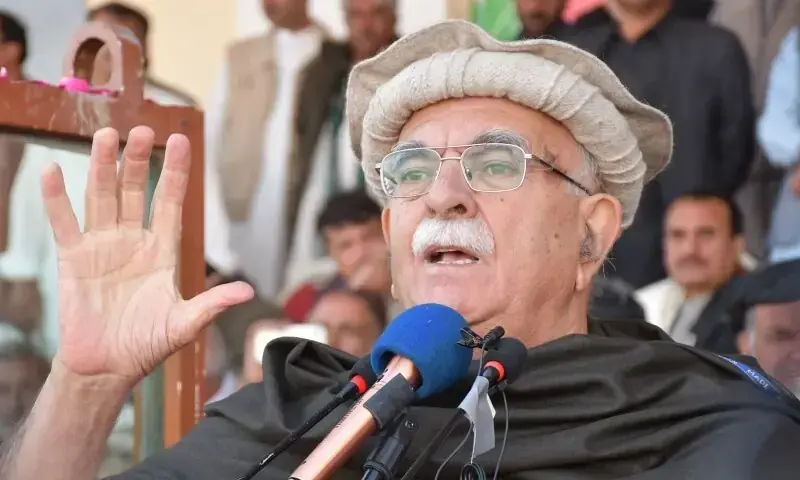

QUETTA: Opposition Leader in the National Assembly and Pakhtunkhwa Milli Awami Party (PkMAP) Chairman Mahmood Khan Achakzai has convened a three-day jirga in Quetta to discuss the worsening security situation in Balochistan and find solutions to the issue.
He said the issue was becoming increasingly serious and dangerous with each passing day.
Speaking at a press conference at the Quetta Press Club on Tuesday, along with other party leaders, he said the jirga would be held from August 29 to 31. He also announced that countrywide protest rallies and demonstrations would be held on August 5 to mark three years of imprisonment of former prime minister Imran Khan.
He said the proposed jirga would bring together political leaders, tribal elders and other stakeholders to deliberate on rising insecurity, attacks on highways, disruption of trade, burning of goods vehicles and the killing of judges, lawyers, political workers and civilians in the province. He added that after discussions, the jirga would prepare recommendations on how to address the issue.
Political leaders, tribal elders and stakeholders will participate in gathering to draft recommendations
Achakzai, who is also chairman of the Tehreek-i-Tahaffuz Ayeen-i-Pakistan, expressed concern over the deteriorating law and order situation, alleging that frequent attacks had severely affected businesses and transport, leaving many people without livelihoods. He questioned what he described as the government’s failure to restore peace and ensure the protection of citizens’ lives, property and commercial activities.
He also criticised what he termed the limited role of Parliament and provincial assemblies in addressing public concerns and alleged restrictions on the media’s ability to report freely. He condemned the killing of civilians in Kashmir and called for solidarity with the Kashmiri people.
The PkMAP chief opposed the proposed division of districts in Balochistan’s Pashtun-majority areas, saying the move could create further complications. He announced that separate jirgas would also be convened to discuss administrative changes, with decisions to be made in consultation with local communities.
Referring to attacks on transporters, Achakzai claimed that buses, trucks, oil tankers and other commercial vehicles belonging to Pashtuns had been targeted in Balochistan. He warned that transporters could suspend operations if such incidents continued and urged the government to ensure the safety of transport and trade routes.
He also expressed concern over the killing of labourers in recent incidents and criticised the authorities’ handling of security-related events, including those in Hanna Urak and Ziarat. He questioned why no senior officials had been held accountable following the incidents.
Achakzai further alleged that extortion was being demanded from drivers of goods vehicles travelling on national highways and called on the government and security institutions to take effective action against those responsible. He also criticised what he described as high airfares on flights between Quetta and Islamabad, saying they had become unaffordable for many passengers.
Commenting on compensation for vehicles damaged in recent attacks, he said owners of 14 coal-laden trucks that were set on fire had each been offered Rs950,000, adding that affected transporters were demanding full compensation for their losses.
Achakzai reiterated that political and security challenges could not be resolved through the use of force alone. He called for strengthening democratic institutions, an independent judiciary and a free media, saying lasting peace and stability could only be achieved through constitutional and democratic means.
He also opposed the formation of tribal militias, arguing that maintaining law and order was the responsibility of state security institutions.
Published in Dawn, July 29th, 2026