Qatar says progress made toward US-Iran talks on ending war
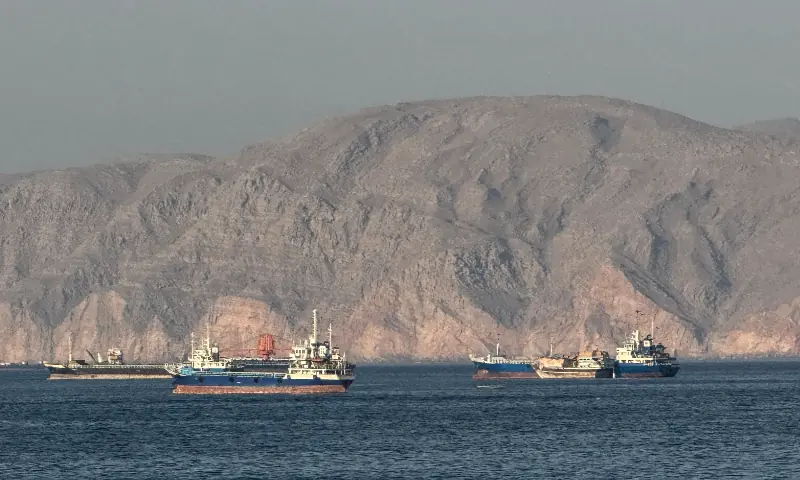

Qatar said mediators were making progress in efforts to end the US-Iran war on Tuesday, driving oil prices lower, although Tehran has denied President Donald Trump’s assertion that talks are already under way.
Benchmark Brent crude fell more than four per cent after the comments from Qatar, extending Monday’s steep losses on hopes that an arrangement could soon be reached to restore traffic through the blockaded Strait of Hormuz. But for now, the strait remained virtually shut, with another ship reportedly coming under attack while trying to cross it.
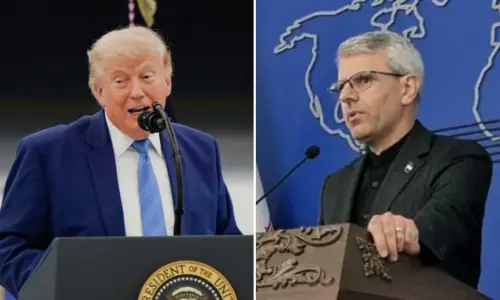
Trump said on Monday that talks with Tehran had started and Iran faced a “last chance” to reach a deal. Iranian officials insisted no negotiations with the United States were taking place. Iran says its only talks are with Oman about the strait, and that no major meetings were planned this week.
But senior US officials struck an optimistic tone on Tuesday, with Treasury Secretary Scott Bessent and Secretary of State Marco Rubio both pointing to progress in discussions aimed at reopening the Strait of Hormuz, a corridor that normally carries about a fifth of global oil and liquefied natural gas shipments.
“There’s been progress made in those talks, but not finality yet. We’re hoping that will happen very shortly,” Rubio told reporters at the State Department.
Bessent said a deal with Iran on the reopening of Hormuz could be reached by Tuesday or Wednesday. Qatar’s foreign ministry spokesperson Majed al-Ansari said diplomatic contacts had reached “very progressive stages”.
He said mediators including Qatar, Pakistan and Oman were coordinating closely to facilitate negotiations and exchange draft proposals between Washington and Tehran.
Trump’s comments followed his weekend decision to cancel what he described as “massive attacks” on Iran, extending a pattern in which he has threatened major military action before later backing off and pointing to diplomatic contacts.
Shipping risks remain
Iran has halted most traffic through Hormuz while Washington maintains a blockade of Iran-related shipping and ports. Yemen’s Iran-aligned Houthis have also imposed a naval blockade on Saudi Arabia in the Red Sea, further restricting oil export routes.
A cargo vessel reported being struck by an unidentified projectile near the Strait of Hormuz off Oman’s coast, according to the UKMTO maritime security agency. Maritime sources told Reuters on Tuesday that the vessel was a dry bulk ship. Its crew had to abandon the vessel and one seafarer was missing.
Iran has long demanded control over the strait, which it says it should share with Oman, which controls the opposite shore. Tehran rejected an Omani proposal last week that would have allowed shared oversight of the strait and the collection of voluntary fees from ships. A senior Iranian source said Iran is seeking full control over inbound shipping through the strait, and visibility over outbound traffic, with the ability to intervene if necessary.
Giving Iran such control would be a major shift in the regional balance of power and make it more difficult for Washington to argue that “Operation Epic Fury”, which Trump launched alongside Israel in February, had weakened Washington’s longstanding foe.
Questions are also growing about the sustainability of the US military campaign. The US Army has used up much of its stockpile of highly accurate long-range missiles during the war, according to three people familiar with the data, raising concerns about the military’s readiness for future conflicts.
Prolonged pain
Gulf officials and analysts say Iran is betting it can outlast Washington by turning the region’s trade routes, shipping lanes and energy infrastructure into pressure points that steadily raise the cost of confrontation.
“Their big advantage is that they can hurt the regional states and the global economy,” said Michael Knights of the Washington Institute.
Iran has publicly rejected negotiations with Washington since the collapse in early July of a memorandum of understanding the two sides signed the previous month in an attempt to end the conflict.
Trump has yet to achieve the objectives he set out at the start of the war: dismantling Iran’s nuclear programme, curbing its ability to attack regional rivals and creating conditions for Iranians to overthrow their clerical rulers.