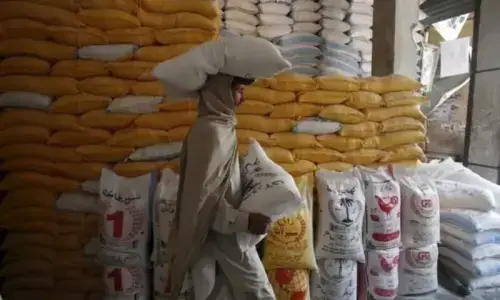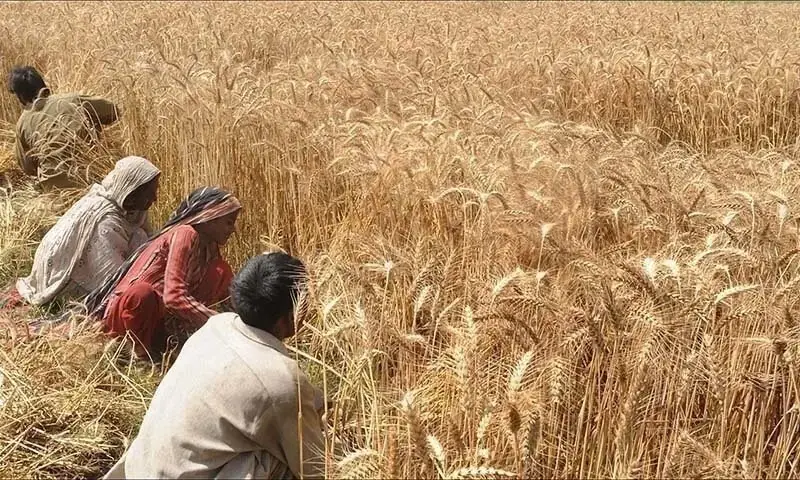

ISLAMABAD: While the government has decided to import one million tonnes of wheat, the PTI’s Kisan Wing on Thursday issued a white paper on the wheat crisis, detailing the factors responsible for the deteriorating condition of agriculture and farmers.
The white paper, presented at the Khyber Pakhtunkhwa House, also traces 79 years of policies and the history behind the rise and decline of wheat production.
The report provides a detailed review of historical data, 79 years of agricultural policies, production trends, wheat procurement records, the support price mechanism, import decisions, the performance of agricultural research, production costs and institutional failures. It identifies these as major reasons for the continued decline in wheat production, one of the country’s most important crops.
According to the white paper, despite fertile land, an extensive irrigation system, and experienced farmers, Pakistan has failed to produce enough wheat to meet domestic needs due to policy inconsistency, poor governance, delayed decision-making, and continued neglect of the agricultural sector.
Report blames policy inconsistency, poor governance and delayed decisions for declining production
The report states that wheat production reached approximately 31.43 million tonnes during 2023-24. However, subsequent policy decisions, uncertainty surrounding wheat procurement, low farm-gate prices and the absence of effective market intervention discouraged farmers from cultivating wheat, resulting in a significant decline in production.
The white paper further points out that sharp increases in the prices of fertiliser, diesel, electricity, irrigation, seeds, pesticides and labour have significantly increased farming costs, while farmers are receiving low prices for their crops.
According to the report, frequent policy changes on wheat imports and exports have damaged local markets, benefited influential middlemen and profiteering traders, and weakened national food security. The absence of long-term planning has forced Pakistan to shift from being a wheat-exporting country to importing wheat at higher prices.
The white paper also highlights the failure to transfer agricultural research and modern technology to farmers. It calls for an emergency national action plan that includes comprehensive reforms to agricultural research institutions, improved coordination with provincial departments, and investment in modern seeds and technologies to protect crops from the impacts of changing weather and climate.
It proposes a comprehensive national reform agenda that includes timely and guaranteed procurement of wheat; transparent determination of support prices in line with production costs; elimination of hoarding, cartelisation and speculation in the market; provision of affordable agricultural inputs such as fertiliser, diesel, electricity and seeds; increased production of certified seeds; modernisation of the irrigation system; revival of agricultural research institutions and technology transfer; adoption of modern climate-smart farming techniques; establishment of strategically managed wheat reserves; and formulation of a long-term national food security policy based on scientific planning.
Speaking on the occasion, PTI Kisan Wing organiser Sheikh Waqas Akram, who addressed the gathering via video link, Central Secretary Information Khalid Nawaz Sadhraich, and others said the purpose of the white paper was not merely to criticise the government but to provide practical, evidence-based solutions to save Pakistan’s agriculture.
They said the white paper served as a warning to policymakers, stressing that a nation unable to protect its farmers could not guarantee its food security.
“Pakistan has all the natural resources required to achieve self-sufficiency in wheat, but successive policy failures have caused irreparable harm to both farmers and consumers,” they added.
They said the time had come to formulate and immediately implement a long-term national agricultural policy based on science, transparency, institutional reforms and farmer-friendly measures.
Published in Dawn, August 14th, 2026