KP govt launches initiative to provide artificial intelligence education
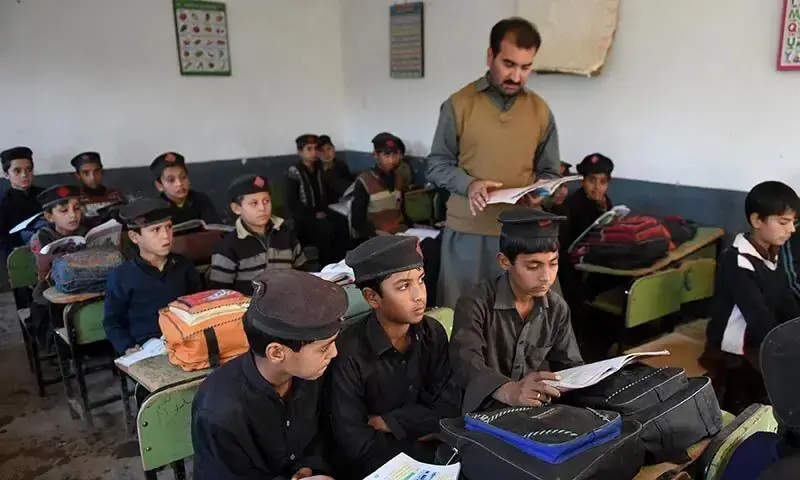

PESHAWAR: The Khyber Pakhtunkhwa government on Friday formally launched Global Virtual School (GVS), the first such initiative in the public sector by any government in the country, to provide virtual artificial intelligence education, linking up hundreds of schools across the length and breadth of the province.
“The GVS will help overcome challenges in a province beset by natural and man-made disasters,” elementary and secondary education secretary Mohammad Khalid Khan told participants of the launching ceremony.
Minister Arshad Ayub Khan and chief secretary Shahab Ali Shah were also in attendance.
Managing Director of the Elementary and Secondary Education Foundation Qaisar Alam, the architect of the GVS, hosted the ceremony, which included a detailed video presentation followed by live conversation with some students from remote tribal areas.
Model designed for 6-12 grade students
Officials said the GVS aimed to provide quality learning opportunities to model digital technology, particularly to students in remote and under-developed areas.
They said the model, designed for students from grade-6 to grade-12, provided virtual classrooms, digital learning content, live and recorded lessons, learning resources, gamification, assessments and progress tracking, according to them.
The officials said an AI teacher not only taught prescribed course syllabus in Urdu, English and Pashto in an interactive manner, answering questions and explaining topics but the GVS also provided virtual laboratory exercises.
They said GVS would also teach English, Chinese, German, Korean and Japanese languages to students.
The participants were told that enrolment of students for the GVS was open to public sector schools but that private schools could also benefit from it.
The secretary informed the audience that in the first phase, 175 schools would be connected to the GVS, while the network was planned to be expanded to 500 schools by this months’ end or early next month. All schools were being provided with necessary equipment for the purpose.
He said that the GVS would be available to overseas Pakistanis and might at a later date be extended to students beyond borders. These students, he said, will be given duly recognized certificates to enable them to apply for higher studies.
The secretary told Dawn that the government was considering signing a memorandum of understanding with the British Council to start O Level classes to enable the school children from the lower and middle class compete with the elite class in education.
A digital presentation unveiled the entire process from login and dashboard access to online classes, live and recorded lessons, learning resources, quizzes, assessment and progress tracking.
A special demonstration of the AI Teacher was also presented highlighting how AI can provide students with personalized explanation, follow up questions and learning guidance.
Chief secretary Shahab Ali Shah underscored the need for digital transformation, strong institutional ownership, effective governance, sustainability and the use of modern technology to provide quality education accessible to the remotest corners of the province.
He said that availability of teachers and schools in a challenging security environment was a major issue and that initiatives like the GVS would enable the government to provide quality education to students affected by security and natural disasters.
Mr Shah said that the GVS was in line with the government’s good governance policy and assured the department and foundation of full support in expanding quality education to the remotest concerns of the province.
He said that GVS would help overcome schools and teachers shortages and extend education outreach to remote and most inaccessible parts of the province. He later interacted with some students in South Waziristan and Dir.
Minister Arshad Ayub said that his government was planning to undertake a survey to correctly assess the number of out-of-school children not just in the province but each district of the province to formulate a comprehensive policy to bring them to the schools.
He said that school enrollment had picked up but that the government would explore options including GVS and expand its network to provide easy access to quality education to all.
The minister said that KP would not shy away from learning from other provinces but also assured to extend full support to other governments if they wanted to learn something about the GVS system.
A special film on the vision and expected impact of the GVS was also screened during the ceremony, highlighting AI-enabled learning, accessibility and modern educational opportunities for students across the province.
Published in Dawn, August 15th, 2026