DA’I-UL-ISLAM Syed Muhammad Ali, a scholar from Iran, is little-known in our literary circles today, but about a century ago he was much famous in the subcontinent and received admiration for his scholarly and religious works. From our point of view, what makes Syed Muhammad Ali stand out among his Iranian peers is his deep interest in Allama Muhammad Iqbal and the work he penned on Iqbal.
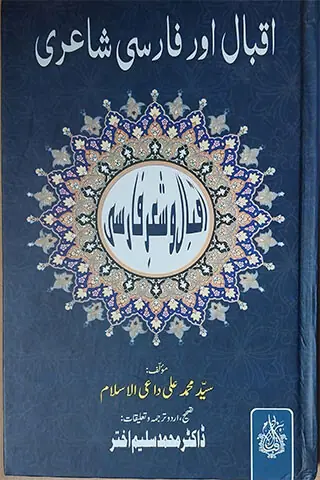
A prose writer, poet, lexicographer and editor, Syed Muhammad Ali was a preacher, too, and his munaazras (polemical public debates on religious issues) with Christian missionaries had earned him the sobriquet Da’i-ul-Islam, or the one who invites to Islam. Dr Muhammad Saleem Akhter has recently translated and annotated Syed Muhammad Ali’s longish article titled ‘Iqbal-o-Sh’er-i-Farsi’ (Iqbal and Persian poetry), first published in 1928, into Urdu and Lahore’s Bazm-i-Iqbal has published it. What increases the paper’s significance is the fact that it was the first-ever critical paper on Iqbal written in Persian by a native Iranian. As put by Dr Saleem Akhter, the paper opened new avenues of Iqbal studies in Iran and showed the way to future scholars. Before Syed Muhammad Ali, Ghulam Raza Saeedi, another scholar from Iran, had studied Iqbal and was much impressed with Iqbal’s Persian works, Payam-i-Mashriq in particular, but Syed Muhmmad Ali is the first one to have penned a work on Iqbal in Persian.
Dr Akhter first introduces Syed Muhammad Ali with biographical detail, which is very useful as these days Syed Muhammad Ali is almost forgotten and even scholars know very little of him. Syed Muhammad Ali was born on Nov 6, 1878, in a village near Larijan, says Dr Akhter in the introductory chapter. Larijan is a district in the Amol Shehristan (county) in Iran and the place gave the famous family name Larijani to many. Amol is a city, too, and Talib Amuli, also spelt Taleb Amoli, the poet from the city — who travelled to subcontinent and became the poet laureate in Mughal Emperor Jehangir’s court — gave this city much fame in literary world.
Syed Muhammad Ali was educated at Amol, Tehran and Isfahan and, in addition to religious subjects, he studied mathematics, literature, Hebrew and English. In those days, says Dr Akhter, Christian missionaries were active preaching their religious ideas in Iran and some local religious scholars asked Syed Muhammad Ali to join hands in munaazra with Christians. He agreed and proved very effective in their quest to defend their faith. As Muhammad Ali also covered the religious debates in a magazine titled Mujallaat-i-Islam, launched in 1902 and edited by himself, he had become quite well-known in Iran and elsewhere. So, when he arrived at the port of Bombay (now Mumbai) after performing Haj, local scholars and religious figures asked him to help them counter the propaganda spread by Christian missionaries. Muhammad Ali, therefore, stayed on, learned Urdu and launched a fortnightly Dawat-ul-Islam in 1906, writes Dr Akhter.
Soon Nizam of Deccan offered Syed Muhammad Ali the post of professor of Persian at Nizam College, which he accepted and moved to Hyderabad (Deccan). Here he learnt Deccani (a local variety of Urdu), Sanskrit and Gujarati. During his stay in Deccan, Syed Muhammad Ali compiled Farhang-i-Nizam, a monolingual Persian dictionary that took five volumes and 19 years to complete. Farhang-i-Nizam is appreciated for its comprehensive coverage of vocabulary that includes words from some European languages as well as Arabic and Turkish. Dr Akhter writes that Farhang-i-Nizam includes modern vocabulary coined in Iran in those days and also tags the words as literary, colloquial, slang or obsolete, along with the illustrative examples. This reminds one of another work by Syed Muhammad Ali on lexicography: a history of Persian lexicography. It was translated into Urdu and published in July-Sep 1975 issue of quarterly magazine Urdu, Karachi. The translator Syed Saeed Ahmed in the magazine had mentioned that Farhang-i-Nizam is a chronogram as it points to its year of completion, that is, 1346 (Hijri, or 1927-28 AD). Syed Muhammad Ali died in Hyderabad (India) on Nov 18, 1951.
Dr Muhammad Saleem Akhter has given the original Persian text and its Urdu translation. His detailed and meticulously penned annotations and taaleeqaat (additional explanatory notes) reflect his erudition and have made the work a true gem for lovers of Urdu and Persian literatures. An index at the end has enhanced the value.
Prof Dr Muhammad Saleem Akhter was born on Dec 5, 1946. He is an academician and is admired in Pakistani and Iranian academic circles for his research works in Persian. He has been associated with Punjab University Oriental College for quite long in various capacities.
Published in Dawn, August 24th, 2026