Torkham’s importance for CPEC
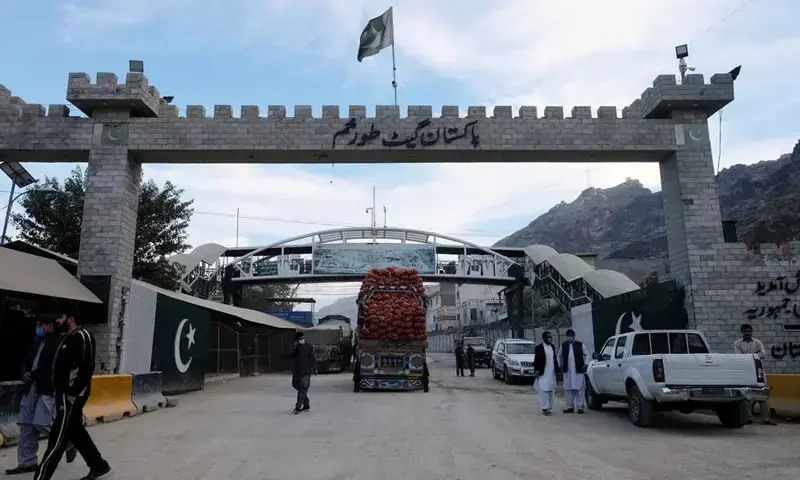

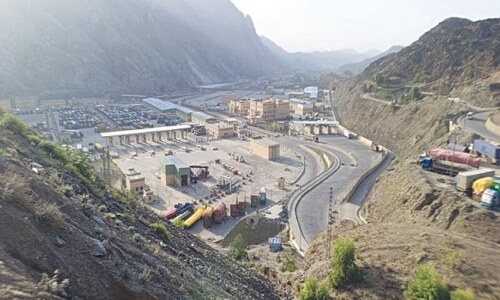
For a border post most of the world has never heard of, Torkham carries an outsized weight this year. It is a narrow gap in the Kyber hills where trucks queue for days, drivers sleep beside their cargo, and diplomats in Beijing and Islamabad see it as one of the indicators of whether their newest infrastructure ambitions will rise or fall.
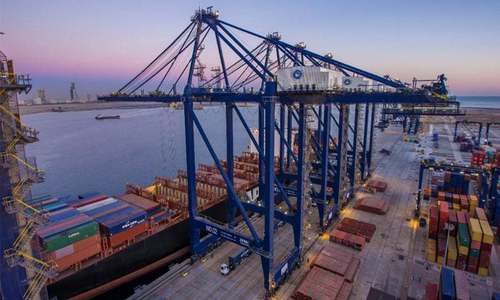
In May 2025, foreign ministers from China, Pakistan and Afghanistan sat together in Beijing and agreed to formally fold Afghanistan into the China-Pakistan Economic Corridor (CPEC). Four months later, the 14th Joint Cooperation Committee (JCC) meeting confirmed the shift with a full Action Plan through 2029 — CPEC 2.0, built around industrial zones, the ML-1 rail upgrade, and a westward road extension running from Torkham to Kabul and from Chaman to Spin Boldak. On paper, it was the corridor’s most significant expansion since the original plan was signed a decade earlier.
Then, within weeks, the ground gave way. In October 2025, clashes between Pakistani and Afghan forces — triggered by a wave of militant attacks traced back across the border — shut Torkham down almost entirely. By February 2026, the closure had run past three months, bilateral trade had collapsed by roughly a third to a half depending on how it is measured, and thousands of containers sat stranded at the peak of the crisis. It was the fifth major shutdown of the crossing since 2023.
That is the uncomfortable pattern now facing CPEC’s planners: diplomatic steps for an Afghan extension have at times been followed by ruptures at the crossing the extension depends on.
Diplomatic steps for Afghan extension have been followed by ruptures at the crossing the extension depends on
The deeper problem is that Pakistan does not actually have an alternative route to offer. Regional transport data compiled by the Central Asia Regional Economic Cooperation Institute (Carec) and the Asian Development Bank shows that virtually all trade between Pakistan and Central Asia has always moved through Afghanistan, because the parallel route via China into Kazakhstan has never taken off commercially. When Torkham closes, there is no workaround — cargo simply stops, or it reroutes permanently through Iran’s Chabahar port or new rail links into Uzbekistan and Kazakhstan.
And that rerouting is already happening. Afghanistan’s exports to Central Asia jumped from about $122 million in 2024 to $216 million in 2025 — a trend line that has little to do with any single closure and everything to do with traders concluding that Pakistani territory can no longer be relied on.
Independent monitoring data makes clear this is not only a security story. The same Carec performance report found that even before the October 2025 closure, Pakistan’s average time to clear a border crossing point had already risen 15 per cent in a single year, to 38 hours, while costs and delays both moved in the wrong direction.
Torkham’s own crossing corridor, known as Carec Corridor 5, ranked as the slowest-performing of the six major routes across the entire region. In other words, the border was becoming less dependable even while it was technically open — a governance problem layered on top of a security one.
China’s growing involvement gives Islamabad and Kabul a new forum to manage disputes — the same trilateral dialogue and JCC architecture that brought Afghanistan into CPEC in the first place. But the October 2025 closure is a pointed reminder that Beijing’s convening power, however real, does not amount to a guarantee. Two rounds of trilateral diplomacy in 2025 did not prevent the crossing from shutting again within months.
For a policy brief from Pakistan’s Centre of Excellence for CPEC, the conclusion is blunt: further capital spending on the Afghan extension — the Peshawar-Kabul motorway, the ML-1 railway, the Karakoram Highway realignment — risks repeating an old mistake if it isn’t paired with a standing protocol that keeps pre-cleared commercial cargo moving even when political relations sour, full digitisation of customs paperwork, and redundant crossing capacity at Chaman and other posts so that a single dispute cannot paralyse the entire western corridor.
Gwadar and Karachi remain, geographically, the shortest route to the sea for landlocked Central Asia. That has not changed. What has changed is whether traders in Kabul, Tashkent and Almaty still believe Pakistan will keep that route open when it is politically inconvenient to do so — and every week Torkham stays shut teaches them the opposite lesson.
CPEC 2.0 was announced as a shift from concrete to competitiveness, from roads to reliability. Torkham is where that promise will actually be tested, shipment by shipment, the next time politics and trade collide at the border.
The writer is a Research Associate at The Centre of Excellence for CPEC, Pakistan Institute of Development Economics
Published in Dawn, The Business and Finance Weekly, August 24th, 2026