Body of US climber who died in Broad Peak avalanche airlifted from base camp to Skardu
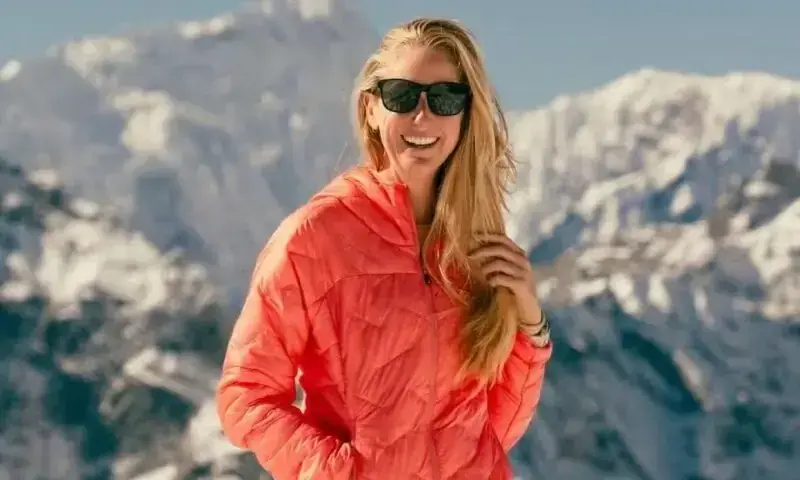
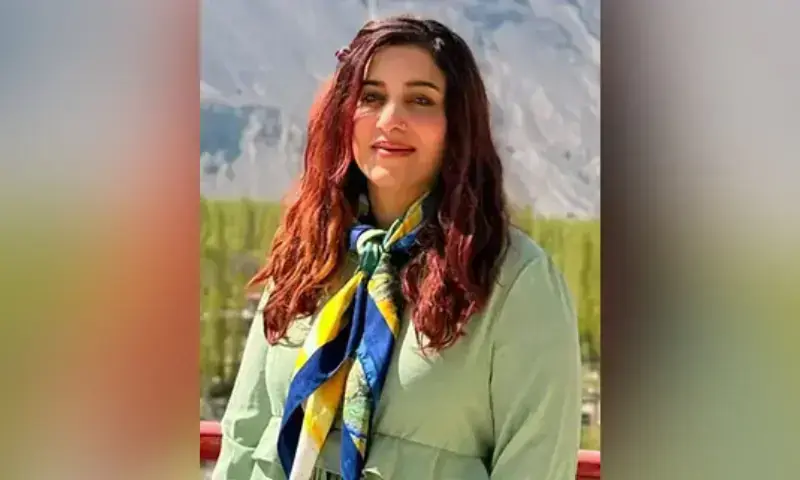

GILGIT: The body of US climber Sarah Mallory Geis, who was among the 10 mountaineers who lost their lives after being struck by an avalanche on Broad Peak last month, was airlifted to Skardu on Tuesday and taken to Combined Military Hospital.
The 10 members were part of an expedition led by world-renowned British-Nepali mountaineer Nirmal Purja. They were struck by the avalanche on July 30, and later, Purja’s company declared that there were no survivors.
Up until now, Geis was one of the last two climbers from the expedition whose bodies could not be retrieved.
The body was found by three local porters on Friday, 22 days after she went missing in the avalanche. The local volunteers had moved the body to the Broad Peak base camp.
But, it could not be airlifted as bad weather prevented helicopter operations.
It was eventually airlifted on Tuesday by Pakistan Army helicopters, Alpine Club of Pakistan (ACP) General Secretary Ayaz Shigri told Dawn.
The body was received by ACP officials, district administration, police and medical officials at a helipad in Skardu, he said, adding that it was then transported to Combined Military Hospital (CMH) in Skardu.
The body would be sent to Islamabad after the completion of relevant legal procedures, Shigri said.
Earlier, Shigri told Dawn that the search for the last member of the expedition, Nawang Thindu Sherpa, was also under way.
Broad Peak is the world’s 12th highest mountain, located in the Karakoram range, and is regarded as one of the toughest and most technical climbs of all the 8,000-metre-plus ascents.
Spatnik mission resumes
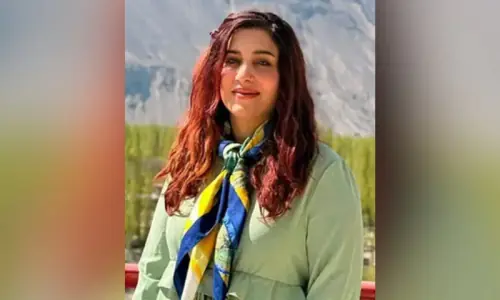
A rescue team also resumed its trek at Spantik on Tuesday to recover the body of Pakistani mountaineer Dr Asma Mushtaq, who died while descending the 7,027m peak in Gilgit-Baltistan’s Shigar district.
The 34-year-old died on Aug 20 while descending from the mountain also known as Golden Peak, after suffering from high-altitude sickness. Her body remains at Camp 3, which is located at a height of approximately 6,250 metres.
Efforts to retrieve her body were earlier disrupted due to severe weather.
ACP’s Shigri told Dawn on Monday that weather conditions were expected to improve on Tuesday, after which the rescue team, comprising six high-altitude porters, would make another attempt to bring Mushtaq’s body down to the base camp.
Subsequently, Information Minister Attaullah Tarar posted on X that the rescue team had resumed its operation after weather conditions improved.
“The rescue team has once again departed from the base camp and is now heading towards Camp 2. The team is moving carefully and will continue the operation as conditions permit. We pray for their safety and success,” he said.
Shigri had told Dawn that Pakistan Army helicopters were expected to airlift Mushtaq’s body to Skardu after its arrival at the base camp.
During her ascent, Mushtaq had successfully reached the 7,027-metre summit of Spantik and was in good health at the time, ACP said in statements issued on Thursday.
However, she developed a serious high-altitude medical emergency at an elevation of about 6,400 metres during the descent.
High-altitude sickness encompasses a range of pulmonary and cerebral conditions caused by hypoxia, or oxygen deprivation, due to rapid ascent and inadequate acclimatisation to high altitudes.
Her mountain guide, Akbar Ali, and expedition guide, Muhammad Amin, immediately came to her assistance.
“Despite the immediate and dedicated efforts of her mountain guides, who provided every possible assistance under extremely challenging conditions, she could not survive,” Karrar Haidri, a senior vice president for ACP, said in a condolence statement.
Shigri had said Mushtaq was part of a five-member Pakistani women’s expedition team that summited Spantik, which included climbers Zoni Aslam, Zaba Shigri, Shama and Sohana.
Climate change-induced shifts in weather patterns have worsened conditions on the peaks of the Karakoram Range in GB, creating serious difficulties for mountaineers.