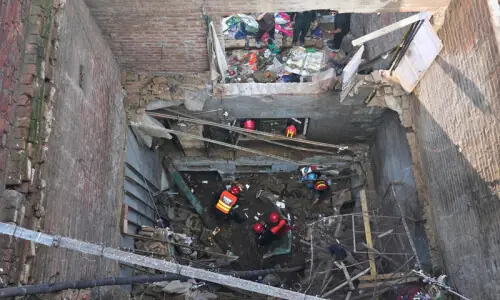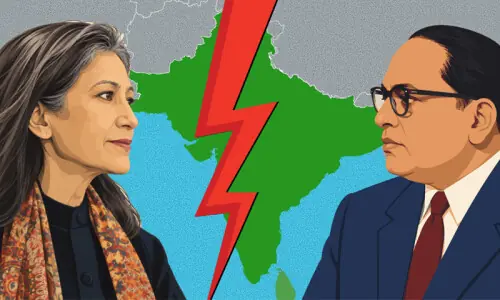
In Pakistan, death does not always carry the same political weight. Some deaths become national events. They bring officials to the family home, statements from political parties, funerals attended by hundreds and promises that the killers will be found. Other deaths are absorbed almost immediately into the ordinary news of the day.
A person is shot, a case is registered, an arrest is made and, by the following morning, there is another body, another headline, another family waiting for an answer. The difference is not always the brutality of the killing. Often, it is the position of the person who has been killed.
This is not a new condition, but the violence of the past several months has made it difficult to ignore. Pakistan has continued to record deaths arising from terrorism, targeted attacks, family disputes, so-called honour killings, street crime, land conflicts and encounters with police under separate headlines and through separate official accounts. In that separation lies part of the problem. We know the incidents. We do not seem to see the pattern.
The dead have become incidents before their deaths have had time to become a public question.
The question becomes clearer when individual cases are viewed not as isolated crimes, but as part of the wider system that determines which deaths remain visible and which quickly recede. The killing of Khalida Chandio is one such case.
Some killings become national causes, while others disappear into crime statistics and the routine news cycle. What does it say about a society when the consequences of death depend on who has died?
WHICH DEATHS MATTER?
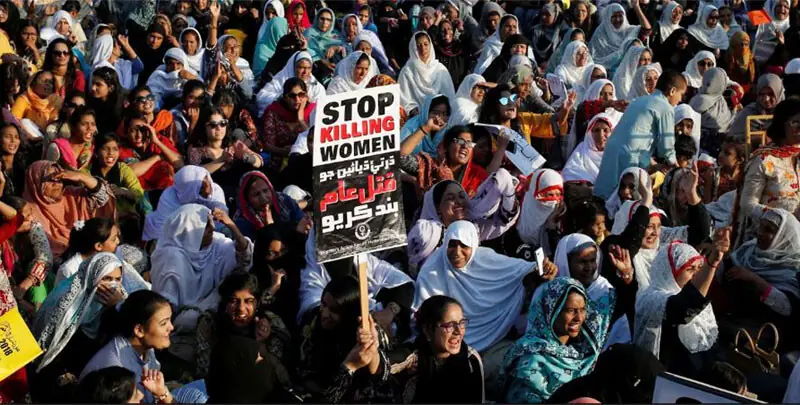
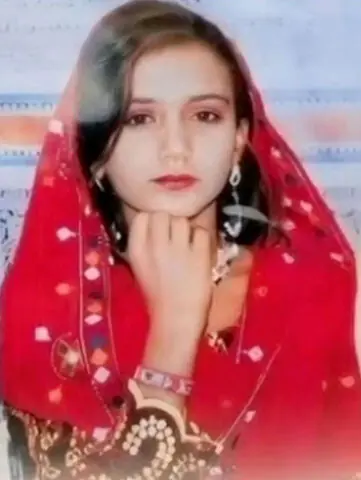
In July 2026, the killing of 20-year-old Khalida Chandio in Sindh brought renewed attention to the violence carried out in the name of honour. She was reportedly accused of being a kari, a woman deemed to have brought ‘dishonour’ upon her family by a local jirga [assembly of elders], and killed after a tribal elder allegedly ordered her death.
Khalida’s case became visible because a video of the murder circulated publicly. Yet the larger reality is far less visible. Human rights organisations recorded 470 so-called honour killings in Pakistan in 2025, including 126 in Sindh. At the same time, rights workers have repeatedly warned that such figures are likely to be incomplete because many cases never enter the formal system.
The number is important, but its political significance lies in what happens to each case after it is counted. A murder may enter the police record without ever entering the country’s memory. The law may recognise a crime while the surrounding social order continues to provide reasons for excusing it.
In cases involving women, the language itself often shifts responsibility towards the victim: what she did, where she went, whom she met, whether she had brought dishonour upon the family. The person who was killed then becomes the subject of scrutiny.
This is one of the ways violence survives. It does not always need to openly defeat the law. Sometimes it only needs the law to arrive late, or society to become accustomed to what has happened.
WHO GETS REMEMBERED?
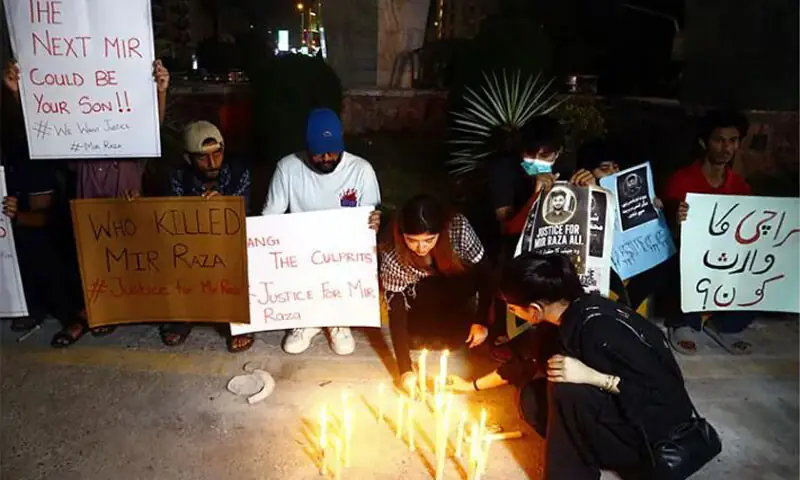
The same unevenness in public attention is visible beyond honour killings. In Karachi, the city continues to record deaths that rarely remain in public attention for more than a few days. In one month alone, in April, 42 people were reported killed in incidents of violence and firing, according to Citizen Police Liaison Committee (CPLC) figures.
Such numbers can be useful for understanding the scale of violence, but they can also conceal its human and political meaning. Forty-two deaths become a statistic because statistics allow a city to continue functioning around them. The roads open the next morning. Shops do business. People return to work. A city cannot stop every time a person is killed.
This ability to continue is necessary for ordinary life. It is also how violence becomes ordinary.
There is also a hierarchy of remembrance. The death of a person with political influence, institutional affiliation or public visibility can produce a response far greater than the death of someone whose life was known only to a family and a neighbourhood.
This does not mean that prominent victims are undeserving of attention. It means that attention itself has become unevenly distributed. Influence can determine how quickly a case moves, how much pressure is placed on investigators, how long the media remains interested, and how many people are present when the dead are taken to the grave.
Even the farewell can reveal this inequality. Some funerals become public gatherings, where the presence of powerful people turns grief into a political statement. At others, the family carries the body home, accompanied by little more than those who knew the deceased personally.
The difference is not in the depth of grief. A mother does not mourn her son less because newspapers did not print his photograph, nor does a wife lose less because no politician visited her home. What changes is the amount of public consequence attached to the death.
WHEN DEATH BECOMES A CATEGORY
This is why the language of martyrdom matters. In Pakistan, shaheed [martyr] is not merely another word for someone who has died. It places a death within a moral and political framework. It says that the person did not simply die but gave their life in circumstances that the community recognises as sacrifice. This is particularly visible when security personnel are killed.
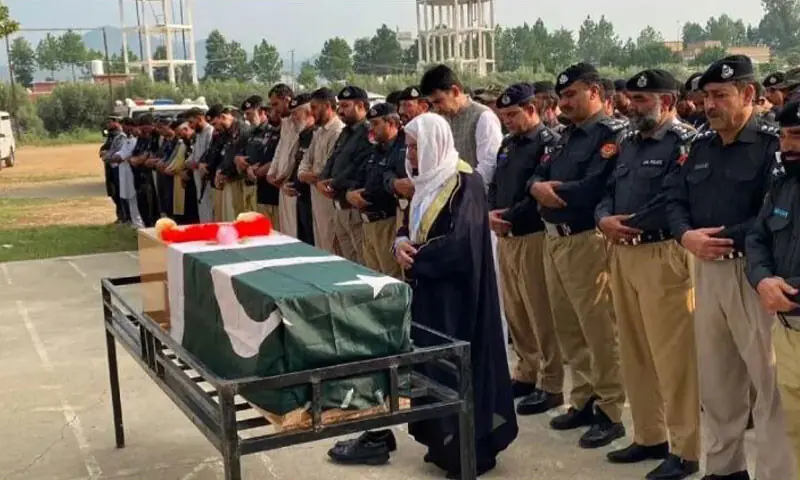
In July 2026, nine policemen were killed in an attack on a checkpost in Khyber Pakhtunkhwa’s Hangu area and were officially recognised as martyrs. The state had a language for their deaths, an institution to remember them and a public ceremony through which their sacrifice could be acknowledged.
That recognition is justified. But the distinction between being killed and being remembered should trouble us when it extends beyond the circumstances of death. The question is not whether every victim should receive a state funeral. It is whether a person’s social position should determine how seriously the state and society respond to their death.
A police officer killed while serving is mourned as a representative of the state. A civilian killed because of a family dispute may remain only a private tragedy. A woman killed by relatives may be reduced to an honour-killing statistic. A young man killed in street crime becomes part of a city’s crime figures. A person killed during a police encounter may disappear into the official version of events before an independent account of what happened can be established.
WHEN JUSTICE FAILS
The categories change. The value of life should not. This becomes even more complicated when revenge begins to take the place of justice.
Pakistan has a long familiarity with the language of revenge. After a killing, families may promise that the blood will not go unanswered. Sometimes the response is described as honour. Sometimes it is presented as the only way to obtain justice, when the formal system is perceived as too slow or too weak. But revenge does not resolve a killing. It extends it.
The danger is that, once the first death has been accepted as something that must be answered by another death, there is no obvious point at which the account can be closed. One family loses someone. Another suffers a loss in retaliation. The second family then demands its own answer. What started as a dispute becomes a chain of deaths — each justified by the one before it.
This is where the weakness of the justice system becomes more than a legal problem. It becomes a social one.
When people believe that the law will not produce a meaningful result, they begin looking for other forms of settlement. When an accused person receives bail, the family of the victim may feel that the case has already begun slipping away. Bail, of course, is a legitimate part of criminal procedure and does not mean that an accused person has been found innocent. But for a family waiting for a trial, the release of an accused person can deepen the sense that the death of their relative has become less important than the rights and resources of the person accused of killing them.
The law is supposed to make this distinction bearable. It is supposed to ensure due process for the accused while ensuring that the victim’s family is not abandoned to uncertainty.
Too often, the uncertainty becomes the punishment. The family waits for hearings. Witnesses disappear. Cases are delayed. Evidence becomes harder to secure. Relatives lose the money or time needed to keep pursuing the matter. In some parts of the country, families face pressure to settle disputes outside the formal legal system. The result is that justice can become dependent not only on what happened, but on whether a family has the resources and influence to keep asking what happened.
WHEN DEATH BECOMES ORDINARY
This is why the number of killings alone cannot explain the condition we are in. The deeper problem is impunity: the belief, whether justified or not, that a killing can be absorbed by the system without producing consequences proportional to the life that was lost.
That belief is strengthened every time a case disappears from public attention. It is strengthened when an arrest is treated as the end of a story rather than the beginning of a legal process. It is strengthened when an encounter substitutes for a trial. It is strengthened when a family is expected to accept a settlement because pursuing the case has become too difficult. It is strengthened when the dead are divided into categories of greater and lesser public importance.
And it is strengthened by the way we direct our attention. We have not necessarily become indifferent to death. We have become selective in the deaths we allow to disturb us.
A prominent killing can occupy the country for days because it has political meaning. A killing in a remote district may never travel beyond the local press. A killing captured on video may become a national scandal, while another — unseen and unrecorded — remains invisible. This produces an unequal geography of outrage: what becomes visible is not necessarily what is most common, but what manages to cross the distance between a private tragedy and public attention.
That distance matters. Pakistan does not lack laws against murder. It does not lack police officers, courts, prosecutors or committees. What it lacks, in many cases, is the certainty that the institutions of justice will work with the same seriousness regardless of who has died.
That is a political failure, not merely a criminal one. The state cannot prevent every murder. No justice system can. But it can determine what happens after a person is killed. The state can investigate without prejudice, protect witnesses, prosecute without political interference, ensure that courts function within a reasonable time, and make it difficult for families or powerful intermediaries to turn murder into a private settlement.
Most importantly, it can refuse to let social importance decide legal importance.
THE COST OF MOVING ON
The deaths of the past several months should therefore not be understood only as a series of unrelated crimes. They reveal something about the country in which they occurred.
Violence persists not only because people are willing to kill, but because the consequences of killing remain uncertain and uneven. Some cases become causes. Some become statistics. Some become family disputes. Some become ‘encounters’. Some become martyrdoms.
And some simply disappear. Perhaps that is the most serious thing about the way we have begun to live with death. It is not that we do not know that people are being killed. We know. The newspapers tell us every morning. The police issue statements. Families protest. Courts hear cases. Funerals take place.
What has weakened is the connection between a death and the demand that something change because of it. A person is killed, and the country moves on. Then another person is killed. Eventually, the accumulation becomes so large that the individual disappears into the number. That is when violence becomes ordinary: not when people stop dying, but when their deaths stop producing a lasting political consequence.
A society cannot give every death the same public ritual, and perhaps it cannot give every case the same level of public attention. But a society that gives some lives greater access to justice than others has crossed into something more serious. It has made death unequal. And that inequality is not buried with the dead. It remains with the living, shaping what people expect from the law, what families believe they must do themselves, and how easily the next killing can be justified.
The question, then, is not why Pakistan has so many ways of mourning its dead. It is why it has so few ways of preventing their deaths from becoming ordinary.
The writer is a researcher whose
work centres on cultural critique and
social realities. She can be contacted at
hamnasyed66@gmail.com
Published in Dawn, EOS, August 30th, 2026