Uzbek music, dance show enthralls audience in Islamabad
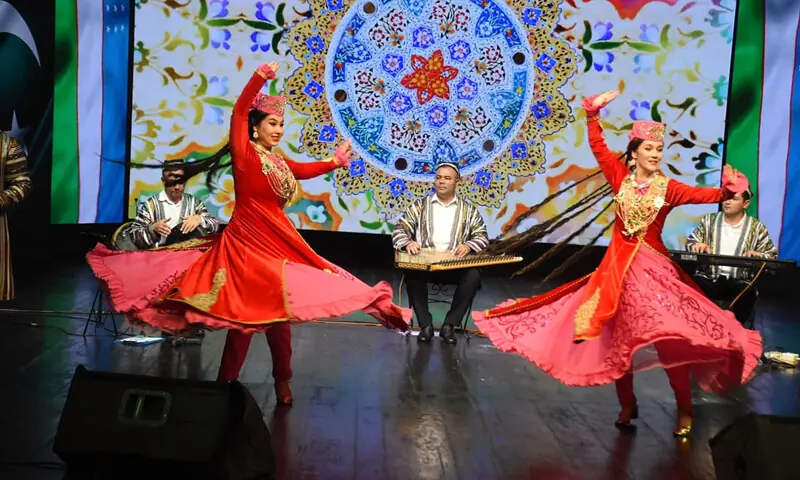

ISLAMABAD: A cultural event titled “Uzbekistan-Pakistan: Melodies of Friendship and Brotherhood” on Saturday filled the audience with energy by featuring traditional Uzbek music and dance performances.
“It was absolutely mesmerising. The dancers’ energy was infectious, and the music transported us straight to Samarkand,” said a member of the audience.
Another participant described the performances as truly authentic. “The costumes were stunning, and the skills of the artists were top-notch.” Being hosted by the Embassy of the Republic of Uzbekistan in Islamabad, the celebration marked the 35th Anniversary of the Independence of Uzbekistan.
The cultural evening featured a captivating programme by distinguished Uzbek artists, who presented a vibrant blend of musical and traditional dance performances, showcasing the rich cultural heritage and artistic traditions of Uzbekistan.
Melodious musical presentations, accompanied by colourful and graceful traditional dances, enthralled the audience and offered a glimpse into the diverse cultural traditions of the country.
Federal Minister for National Heritage and Culture Aurangzeb Khan Khichi said Pakistan and Uzbekistan shared much more than formal diplomatic relations, as their ties were rooted in shared history, culture and spiritual heritage.
The minister said poetry, music, art and ideas had travelled across the region for centuries, bringing the two peoples closer.
Addressing diplomats, high officials and dignitaries of various countries, the minister congratulated the government and people of Uzbekistan on the 35th anniversary of its independence and said the theme of the evening, “Melodies of Friendship and Brotherhood,” beautifully captured the deep bond between the two countries.
“Music needs no translation. It speaks directly to people and reminds us of how much we share,” the minister said, adding that he was delighted to welcome the Uzbek artists who had come to Pakistan to showcase the richness of Uzbekistan’s culture and musical traditions.
He said Pakistan valued its cultural partnership with Uzbekistan and expressed the hope that cooperation would be expanded in heritage, museums, literature, music, performing arts, traditional crafts and exhibitions.
He particularly emphasised creating more opportunities for young artists, writers and cultural professionals from both countries to meet, learn and work together.
The Minister thanked the Embassy of Uzbekistan and Ambassador Alisher Tukhtaev for arranging the cultural evening and contributing to bringing the peoples of Pakistan and Uzbekistan closer.
In his remarks, Ambassador Alisher Tukhtaev described the concert as a “cultural gift from the people of Uzbekistan to the friendly people of Pakistan”, reflecting the deep-rooted friendship and growing partnership between the two brotherly countries. He highlighted the centuries-old links between the two societies through the Silk Road, which facilitated the exchange of knowledge, literature, science, music and art.
The Uzbek envoy also recalled the shared legacy of Zahiriddin Muhammad Babur and highlighted recent initiatives strengthening bilateral people-to-people ties, including the naming of Tashkent Street in Islamabad, the ongoing Babur Park project, and sister-city relations between Samarkand and Islamabad and between Termez and Peshawar.
He noted the growing cultural, academic, educational and sports exchanges between the two countries, as well as initiatives to promote Urdu language and scholarship in Uzbekistan. Referring to the Uzbek President’s state visit to Pakistan earlier this year, he said it had provided fresh impetus to cultural and humanitarian cooperation, including collaboration on the preservation and promotion of the heritage of the Great Baburid Dynasty.
Ambassador Tukhtaev announced that preparations were underway for the “Days of Culture of Uzbekistan in Pakistan” later this year, which would bring a large Uzbek cultural delegation to Pakistan to showcase the country’s historical heritage, traditional arts and contemporary cultural achievements.
Published in Dawn, August 30th, 2026