India’s relevance?


INDIA is the most populous country in the world. With a nominal GDP of $4.15 trillion, it is the sixth-largest economy globally, with a big market share that makes countries want to do business with it. Its expansive territory extends down to the northern tip of the Indian Ocean. Despite this strategic weight, why is India losing proportionate relevance in today’s global geopolitics? Five reasons can be identified.
Firstly, for decades, India was a partner of choice for the US in countering China’s rise. Imagining itself as the net security provider for South Asia, India joined the America-led Indo-Pacific Strategy, Quad, I2U2, and IMEC. Beijing sensed well in time that America was encircling China with the help of India, Japan and Australia. It could also see that America continued to stir trouble in the South China Sea and could well choke Chinese exports passing through the Pacific and Indian oceans. Pursuant to Russian President Vladimir Putin’s Greater Eurasia partnership initiative, China is increasingly using three overland northern routes and one sea route through the Arctic Ocean.
Adapting quickly, America decided to work with China for “constructive strategic stability”. This was announced during President Donald Trump’s meeting with President Xi Jinping in May 2026. The US also reverted its Indo-Pacific Command back to Pacific Command. India’s salience began to change from a strategic US partner to a commercially relevant country.
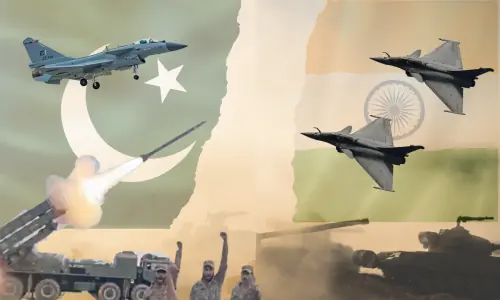
Secondly, nothing has altered the balance of power in South Asia more profoundly than the events of May 2025. Encouraged by its blatant aggression against Pakistan in 2016 and 2019, Narendra Modi’s government launched missile strikes against nine targets in Pakistan on May 7, wrongly assuming that Pakistan would not be able to respond. It learned to its surprise that Pakistan not only responded robustly on May 10 but also forced India to seek a ceasefire through the US leadership.
When the US president helped secure a ceasefire, India did not have the grace to accept the role the US had played. As a result, it found itself in an uncomfortable situation in which the country it sought to please was unresponsive.
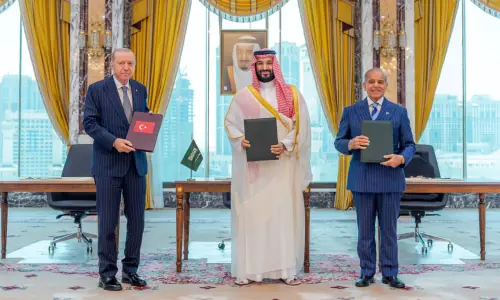
Pakistan’s military credentials, on the other hand, were recognised by the world at large. Soon after the confrontation, Saudi Arabia entered into a Strategic Mutual Defence Agreement with Pakistan in September 2025. Earlier this month, Pakistan, Saudi Arabia, and Turkiye signed the Makkah Joint Defence Agreement, making India wonder how and why it lost its strategic space in West Asia.
Thirdly, South Asia is the world’s least integrated region. A major factor is that India has unfriendly ties with most of its neighbours. It has also made Saarc dysfunctional lest other South Asian states team up to counterbalance it. Indian policymakers have failed to recognise that India’s global stature and relevance will never be realised unless it can take regional countries along.
The May 2025 conflict has altered the balance of power in South Asia.
Fourthly, for some time, India has tried to project itself as a champion of the Global South. The reality is that China is miles ahead in cultivating developing countries through massive investment in infrastructure, energy and other projects. Furthermore, India has sought to lean closer to the US, clearly signalling its priorities to the Global South. For instance, India opposed the creation of a common BRICS currency to challenge the US dollar, though it does not reject bilateral trade in national currencies.
Finally, it was Pakistan, and not India, that was deemed a credible mediator to bring about a ceasefire to the 40-day war between the US and Iran. Pakistan hosted the US and Iran in Islamabad for direct talks, helped conclude the Islamabad MoU, and is continuing its efforts to achieve peace in West Asia.
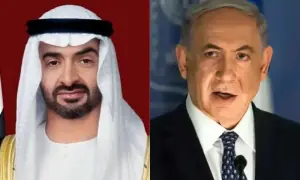
Pakistan’s diplomatic efforts have been appreciated by the entire world except India and Israel that have been courting each other. Three days before the US-Iran war started, the Indian prime minister was in Israel praising the latter as the fatherland without saying a word about the Israeli genocide in Gaza. India’s real priorities stood exposed to Iran and the Gulf countries.
Importantly, Pakistan’s rising diplomatic profile has also thwarted India’s decade-long effort to isolate it.
While these five reasons have made India strategically less relevant today, Pakistan’s diplomatic and military profile has continued to rise. For Pakistan to sustain its global relevance, an equal effort is needed to build up its economic profile.
Given the close linkages between a country’s citizen-centric governance and economic output, the recent debate over how to devolve resources to the grassroots is timely. It should be taken to its logical conclusion.
The writer is the chairman of Sanober Institute and a former foreign secretary of Pakistan.
Published in Dawn, August 30th, 2026