


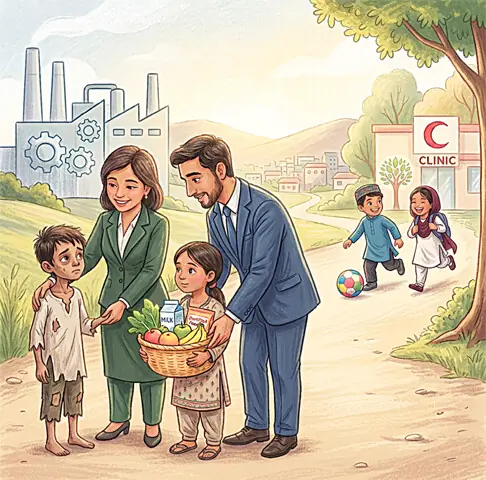
PAKISTAN is experiencing a slight shift in its fight against stunting: private companies and non-profit health organisations are increasingly moving beyond charity towards research-based community-level interventions. Working with healthcare and development partners, corporate entities are beginning to place maternal and child nutrition at the centre of their social-impact agenda.
In one such initiative, a local corporate giant supported a four-year clinical trial with a leading healthcare institution to examine maternal nutrition and assess whether energy-dense biscuits could help bridge dietary gaps. Such research matters in a country where low-income families often face a difficult trade-off between affordability and nutritional value.
Taking its efforts to the next level, the company (English Biscuit Manufacturers [EBM]), developed fortified biscuits aimed at addressing malnutrition and micronutrient deficiencies, with some products distributed through institutional partners, including the World Food Programme. Its school-focused approach recognised that nutritional needs evolve with age: younger children require energy for learning and playing, while adolescents need nourishment that supports concentration, activity and wellbeing. Initiatives like the Zero Hunger School Drive sought to place that support within schools. Extending the scope of its activity, the company has been in collaboration with an NGO, combining medical care, nutrition guidance and food assistance, helping about 600 mothers and babies.
However, private-sector action can be effective only as a complement to public policy. In the words of Dr Zeelaf Munir, who heads the corporate entity, no single intervention “can resolve malnutrition on its own”. Pakistan’s malnutrition and stunting crisis truely demands a shared effort: businesses contributing affordable nutritious products and research, health organisations reaching vulnerable households, and government maintaining continuity and scale needed to turn promising interventions into lasting national progress.



























