


IN a cramped kitchen in the outskirts of Rawalpindi, three-year-old Hamza sits on a woven cot, quietly chewing on a thick, warm piece of white roti dipped in sweetened tea. His stomach swells beneath a faded cotton shirt, visually signalling a full meal. To a casual observer, Hamza is fed. To his grandmother, who watches him struggle to lift a plastic toy, something is deeply amiss. At 36 months of age, Hamza has the height of a toddler half his age. His belly is filled, but his body is starving. This is, indeed, unfortunate. What is even more unfortunate is the fact that Hamza is not an isolated case.
There are millions of children across Pakistan trapped in the silent, devastating grip of ‘hidden hunger’ — a state of chronic malnutrition where caloric intake masks severe micronutrient deficiencies.
In Pakistan’s protracted economic slowdown, the public discourse around food insecurity frequently focuses on sheer calorie availability: whether wheat flour is in stock, whether sugar prices have spiked, or whether relief hampers can reach flood-impacted rural districts. Yet, behind the headlines lies a far more systemic crisis: even when stomachs are full, the food in them lacks the essential proteins, vitamins and minerals needed to build a functional human body and brain.
According to data maintained by the United Nations Children’s Fund (Unicef) and the World Food Programme (WFP), roughly 40 per cent of children aged under five (<5) in Pakistan are stunted. That translates to approximately 10 million children whose physical height and cognitive potential are permanently impaired before they even step inside a primary school classroom. Another 10pc suffer from wasting, the most acute and life-threatening form of malnutrition. These numbers do not merely represent a health emergency; they outline a structural catastrophe that threatens the country’s social and economic survival.
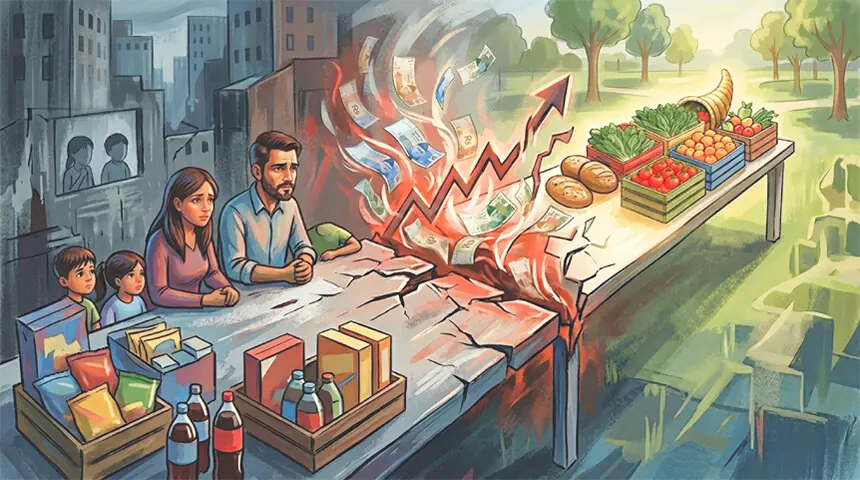
When inflation goes through the roof and food basket costs soar, families in pakistan find their hands pressed rather hard and have to opt for substitution rather than nutrition.
The root of the problem lies in the stark distinction between hunger and malnutrition. When inflation surges and food basket costs double, families adapt through substitution. Protein-rich foods, like eggs, dairy, meat and lentils, are taken off the daily menu, replaced almost entirely by cheap, refined carbohydrates — primarily wheat-flour and rice. A child may consume enough calories to quell the pangs of hunger, but without essential micronutrients like iron, zinc, vitamin A and iodine, cellular development stalls.
Undernutrition is rarely caused by lack of food alone; recurrent illness plays an equal role. Repeated episodes of diarrhoea and environmental enteropathy, caused by contaminated drinking water, open defecation and inadequate hygiene, prevent the intestines from absorbing nutrients. Furthermore, Pakistan’s public spending on health remains under 2pc of the gross domestic product (GDP), placing the burden of emergency care directly on impoverished households and leading to a cycle of medical impoverishment.
The biological window to reverse this damage is brutal in its brevity. Medical experts point to the first 1,000 days — from conception to a child’s second birthday — as the irreversible period of growth. During this phase, neural pathways form at rapid speeds. When a child experiences chronic micronutrient deficiency during these crucial months, the damage to brain architecture and linear height becomes permanent. No amount of nutritious food introduced at age six or seven can fully restore the lost cognitive bandwidth or physical stature. The consequences radiate far beyond individual households. Stunting is an economic disease. Studies show that adults who suffered from childhood stunting lose an estimated 20pc of their adult earning capacity due to reduced physical endurance and impaired cognitive capabilities. In Pakistan, the World Bank estimates that malnutrition costs the country over 3pc of its GDP in lost productivity, healthcare expenditures and diminished human capital.
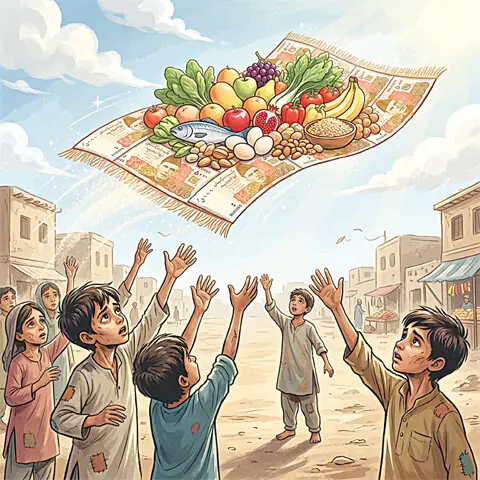
Despite the staggering scale of this crisis, state interventions remain piecemeal. While social safety nets, like the Benazir Income Support Programme (BISP), and international agency collaborations provide targetted nutritional supplements and cash transfers to millions of vulnerable mothers and infants, these measures often act as temporary band-aids on a structural wound. The national food policy continues to subsidise wheat production and staple commodities rather than encouraging crop diversification, fortification of cooking oils and flour, or accessible livestock farming for rural mothers.
Moreover, the crisis of quality is compounded by inadequate public health infrastructure. Malnutrition in Pakistan does not exist in a vacuum; it is aggravated by unsafe drinking water, poor sanitation and high rates of childhood infectious diseases like diarrhoea. When toddlers suffer repeated gastrointestinal infections, their gut lining loses the ability to absorb whatever few nutrients their diet actually provides — a vicious cycle known as environmental enteropathy.
Moreover, a child’s nutritional trajectory is directly correlated with maternal education and household agency. Millions of adolescent girls suffer from early marriage, early pregnancy and systemic malnutrition. When an anaemic, undernourished adolescent girl becomes pregnant, she is much more likely to give birth to a low-birthweight infant. Without intervention, this intergenerational cycle continues uninterrupted.
This does not just end at health and hygiene. Pakistan ranks among the world’s most climate-vulnerable nations. Catastrophic floods, heatwaves and changing monsoon patterns destroy crops, kill livestock, contaminate clean water sources, and displace rural communities. In flood-affected districts across Sindh and Balochistan, acute malnutrition spikes rapidly following agricultural loss, pushing communities into severe food insecurity.
Following the 18th Constitutional Amendment, social sectors like health, agriculture and education were devolved to provincial governments. However, inter-ministerial coordination remains weak. Agricultural policies focus heavily on crop yield rather than dietary diversity; education curricula ignore nutrition, and social safety net programmes, such as the BISP, struggle to synchronise cash transfers directly with health facility utilisation.
Article 38 of the Constitution of Pakistan guarantees the provision of basic necessities of life, including food and health, for all citizens who are temporarily or permanently unable to earn their livelihood. Persistent stunting violates a child’s fundamental right to survival, growth and maximum developmental potential. Treating nutrition as a human right shifts the narrative from charitable relief to constitutional obligation.
To elevate malnutrition from a localised health concern to a national development priority, Pakistan must adopt a unified, multi-sectoral strategy. At the executive level, establishing a high-powered national body directly under the Prime Minister’s Office (PMO) would ensure joint accountability across agriculture, health, education, and social protection ministries.
Scaling proven social safety initiatives, like the Benazir Nashonuma Programme (BNP), nationwide will effectively couple conditional cash transfers with specialised nutritious foods, maternal healthcare and routine growth monitoring during the critical first 1,000 days of life. Legally, enforcing mandatory large-scale food fortification for flour, edible oils and salt, backed by tax incentives for compliant processors, will address pervasive micronutrient deficiencies across all income brackets.
On the agricultural front, subsidies should shift away from water-intensive cereal monocultures towards climate-resilient, bio-fortified crops and smallholder horticulture to build food security against ecological shocks. Strengthening frontline healthcare requires empowering Lady Health Workers (LHWs) with digital diagnostic tools and integrating therapeutic foods directly into primary care centres. Finally, economists must frame these interventions as high-return investments in human capital, proving that reversing stunting is essential to unlocking long-term economic growth and safeguarding constitutional rights.
As Pakistan’s youth bulge continues to grow, the question is no longer whether the nation can produce enough grain to fill its dinner plates, but whether it can nourish the minds of its next generation. Without urgent policy pivots towards bio-fortification, maternal health education and diversified food security, millions of children will continue to grow up with full stomachs, hollow bones and diminished futures.
The writer is a freelancer based in Islamabad.



























