KARACHI: A study conducted at 12 public schools in Karachi has found that giving pre-school teachers structured training in social-emotional learning (SEL) significantly improves classroom quality and lowers behavioural difficulties among children, offering a low-cost, scalable model for the country’s public schools.
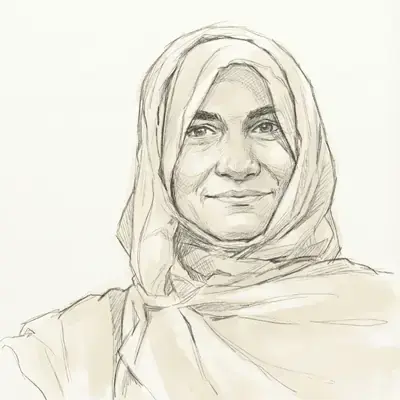
Titled ‘Preschool Teacher Professional Development for Promoting Social-Emotional Learning in Pakistan: A Quasi-Experimental Study’, the research is led by Dr Seema Lasi of Aga Khan University (AKU) in collaboration with researchers from Ball State University in the United States.
The findings, published in the peer-reviewed ECNU Review of Education (2026), come at a time when a large number of Pakistani children enter school without the basic emotional and social skills needed to learn, make friends, and thrive — a gap that research worldwide links to poor outcomes in education, health and employment later in life.
“Teachers are at the heart of early childhood development,” said Dr Lasi. “When equipped with the right tools and support, they can create nurturing environments that profoundly influence children’s lifelong outcomes.”
The quasi-experimental study followed 410 preschool children and 24 teachers across 12 public schools in Karachi over four months.
Teachers in the intervention group received 48 hours of SEL-focused training, along with ongoing mentorship to implement strategies in real classroom settings, while a control group continued teaching as usual. Researchers then compared the two.
The results showed significant improvements in classroom quality across all key domains, including emotional support, classroom organisation and instructional support.
These improvements reflect stronger teacher-student interactions, better classroom management, and more engaging instructional practices.
Most notably, children in classrooms led by trained teachers showed meaningful gains in social-emotional development, and the share of children with behavioural difficulties was substantially lower in intervention schools than in control schools.
The study shows these gains are achievable in resource-constrained settings, making the programme a realistic blueprint for scaling across Pakistan and comparable countries.
It recommends embedding SEL training in pre-service and in-service teacher education, scaling up professional development programmes in public schools and prioritising classroom interaction quality alongside curriculum delivery.
It also suggests designing culturally relevant SEL curricula tailored to local contexts.
The researchers believe that by strengthening teachers’ capacity to promote SEL, Pakistan can take a critical step toward more inclusive and holistic early childhood education.
Published in Dawn, September 3rd, 2026