RAWALPINDI: As many as 63 per cent students of 9th grade failed in the annual examination of Rawalpindi Board of Intermediate and Secondary Education (RBISE) drawing criticism from parents and different school associations.
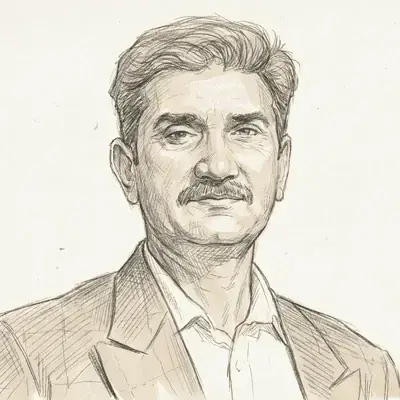
RBISE Chairman Professor Dr Iqbal Mahmood announced the results of the Secondary School Certificate Part 1 annual examination 2026.
According to the results, a total of 124,430 candidates submitted their admission forms, out of whom 121,739 candidates appeared in the examination. Out of the total, 45,724 candidates were declared successful, resulting in an overall success rate of 37.56 percent, while 76,015 students failed. In addition, 2,354 candidates were absent from the examination while 337 admission forms were cancelled on the basis of various reasons.
Meanwhile, Abrar Ahmed Khan, President of All Pakistan Private Schools Management Association North Punjab, including Islamabad, expressed serious concern over the results of the Rawalpindi Board and demanded an immediate, comprehensive and impartial review of the board’s examination, marking and assessment policy.
Chairman urged to conduct audit of results and review of marking standards
He said that according to the available comparative data, the success ratio of Rawalpindi Board for the class was only 37.56 per cent, while the overall average of Punjab boards was 45.17 per cent. Thus, RBISE is 7.61 per cent lower than the provincial average and is in the last position among the nine boards included in the comparative review.
Mr Khan wondered why the students of RBISE have to face a lower success rate every year compared to other boards. He said that if the results were low in a single year, it could be considered a mere coincidence, but if the low results become a continuous trend, then instead of blaming only the performance of students and teachers, it is necessary to impartially review the examination system, paper setting, marking and assessment methods.
He demanded that the chairman of the BISE conduct an immediate and comprehensive audit of the recent results. A comparative review of the marking standards of RBISE with other boards of Punjab should be conducted.
He said that the consistency of paper setting, marking and syllabus should be reviewed in the subjects where there is an unusual failure. “The marking and re-checking system should be made more transparent and uniform. An independent Quality Assurance Mechanism should be established to check the quality of paper marking.
”A review should be made to make the examination pattern in line with the curriculum and desired learning outcomes. An advisory committee consisting of teachers, school owners, education experts and other stakeholders should be formed,” he said.
Meanwhile, All Pakistan Private Schools and Colleges Association (APPSCA) has also expressed concern over the results of the 9th grade annual examinations, saying that the results of all nine education boards of Punjab require immediate and effective steps to improve the educational standard, examination system and basic educational capability of students.
According to the association, the overall success of students in the available results of various boards was disappointing and contrary to the government’s claims of educational reforms, while students of private and affiliated educational institutions in the boards performed better than those of government institutions.
For example, in the RBISE, the success rate of government institutions was 30.82 per cent while that of private affiliated institutions was 60.41 per cent. Similarly, in the Gujranwala board, the rate of private and non-government institutions was 69.71 per cent compared to 39.59 per cent for government institutions.
Central President APPSCA Dr Abrar Hussain Malik said that the results should not be limited to the statistics of successful and unsuccessful students, but the government should conduct a comprehensive comparative review of the performance of the public and private education sectors.
Published in Dawn, September 4th, 2026