PESHAWAR: Khyber Pakhtunkhwa has recorded 98 dengue cases this week, the highest number of infections in the past 34 weeks, amid high transmission season which will continue till end of October.
Last week, the number of confirmed dengue cases in the province was 87.
Kohat has been recording most of the dengue cases as it has reported 41 infections this week, followed by Peshawar’s 33 and Bannu’s 10 whereas the number of patients in other endemic districts has remained in single digit.
Overall Peshawar, the provincial capital, is leading tally of dengue cases with 220 infections, followed by Kohat with 209, Bannu 52, Haripur 26, Dera Ismail Khan 11, Bajaur, Swabi and Swat 10 each, Charsadda nine, Nowshera and Mohmand eight each while the number of cases in rest of the 24 endemic districts ranges from one to seven.
According to a report released by Integrated Disease Surveillance and Response System (IDSRS) at directorate-general health services, a total of 3,487 suspected dengue cases had so far been examined at hospitals and 581 of them had been confirmed across Khyber Pakhtunkhwa.
High transmission season to continue till Oct
It said that 11 districts, including Charsadda, Malakand, Khyber, Nowshera, Peshawar, Mansehra, Haripur, Kohat, Swabi and Hangu, were found to be home to breeding sites for dengue larvae which were destroyed mechanically and chemically.
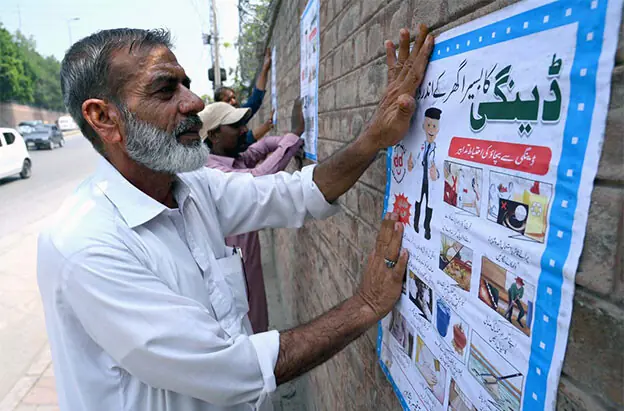
Health workers have been deployed throughout the province as the high transmission season has already begun to scale up public awareness regarding preventive steps. So far, a total of 59,267 community sessions have been organised for health education. These sessions have been attended by 56,777 men and 236,334 women.
The participants of these training events and 35 seminars and walks held so far have been acting as trainers for community people, especially women.
They visit houses and inform women about the dangers associated with storage of water in uncovered pots and persuade them to pursue safe methods of water storage.
The report said that larvae surveillance continued. It said that a total of 2,11,206 houses were inspected.
It said that larvae, found in 529 houses, were destroyed. Of the 779,318 containers seen by the staffers, 934 had larvae that were destroyed and outdoor 286 positive sites were sprayed with chemicals, it added.
It said that health department was providing free transportation of PCR test from all districts to Public Health Reference Laboratory at Khyber Medical University. Medical teaching institutions (MTIs) continue to ignore requests by health department to share line-lists about dengue cases with it due to which the latter faces issues regarding devising strategies to curtail the infection in Peshawar.
Peshawar has been the epicentre of the mosquito-borne ailment since long.
It had witnessed many outbreaks of the disease, the worst amongst them in 2017 when 70 people died and 50,000 checked into hospitals.
Health officials said that presently, the situation was under control and sporadic cases were being reported but non-cooperation by MTIs could snowball into major public health issue.
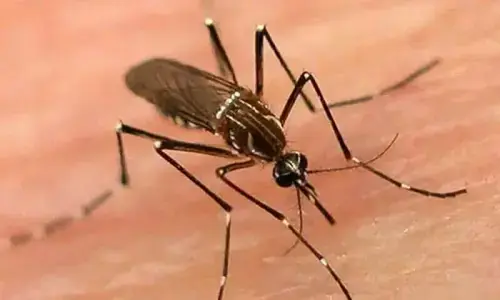
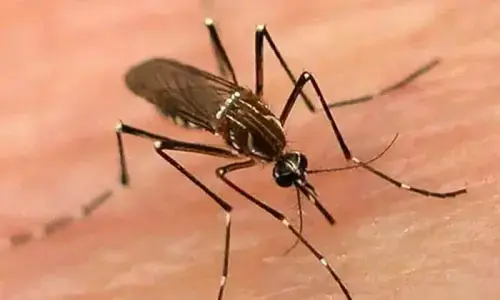
They said that dengue cases were on the rise in Kohat due to hot and humid season, the most favourable for breeding of mosquitoes, the carrier and transmitters of dengue virus.
They said response was rapid due to which outbreaks were prevented so far.
In the corresponding period last year, the province had detected more than 1,000 dengue cases and four deaths but this year not only the number of infections is less but there is no mortality so far.
Published in Dawn, September 4th, 2026