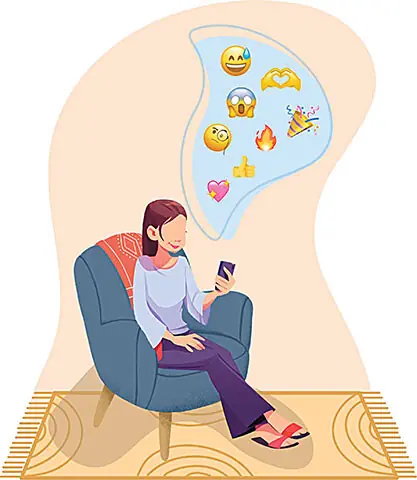
The first thing almost all of us do in the morning is reach for our phones to check the time and look at unread messages from our friends and family. Sometimes, reading is enough; sometimes we feel like replying. But the decision to reply isn’t as simple because we need to decide if we should send a complete text message, a voice note or perhaps just a reaction.
Sometimes, the perfect emoji is all you need to convey your correct reaction. Emojis, launched in the 1980s and included by Apple in its system in 2011, have become a major part of our written communication, helping us express our feelings and emotions.
What’s even more interesting is that these differently shaped, brightly coloured icons have developed into a subtle form of universal language, appreciated and widely used by people of different ages and communities.
They have become a common form of expression, understood by people irrespective of their nationality, religion or geographical location, particularly through digital communication and social media platforms such as YouTube, Instagram, Facebook and WhatsApp.
Emojis are a language of their own, adding emotions to our messages. But there are some things only words can truly express
Emojis are expressions, symbols and pictorial representations that help us convey our emotions, thoughts and points of view easily. Plus, they can tone down the frigidity of our messages, bringing empathy and care to our words. This doesn’t mean that they can completely express our true feelings.
For example, if I send a sad-face emoji without writing anything, will my friend understand what makes me sad? Or if she replies with a heart, will it be enough to console me? Certainly not.
Language gives our thoughts meaning and makes communication complete, while emojis simply add expression, emotion and a little more warmth or clarity to our words.
I personally feel that when we have a mix of feelings and can’t find the right words, emojis can make the situation a little easier. Think of a situation when your friend is venting about her emotions and, despite your attempts to console her, the conversation just doesn’t seem to end.
There comes a time when a simple emoji can say what words cannot.
Or sometimes, when someone asks if you’re okay and you’re just not feeling yourself, you might prefer replying with a thumbs-up rather than explaining how you really feel.
So, while emojis may be fun, attractive and easy to use, the fact remains that we still need words to voice our emotions, communicate our messages and understand each other’s feelings and sentiments better.
Published in Dawn, Young World, September 4th, 2026