Fires, symptoms & the disease

Accidents are nurtured over years; they don’t happen just like that — Qabil Ajmeri
MY last column on these pages was titled ‘Collapse and consequences’. I borrowed ‘collapse’ from the interior minister and added the consequences myself, illustrating the latter with the fast-unfolding HIV epidemic in Pakistan. The epidemic has infected at least 7,500 innocent children; they contracted the virus through unsafe medical care at our health facilities.
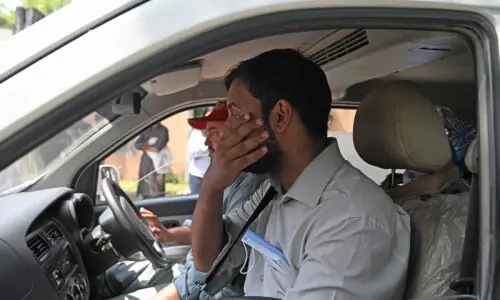
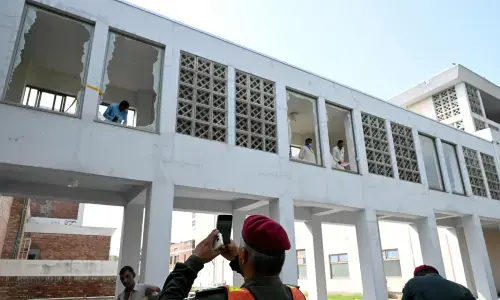
Today, when I sat down to write this column, another horrible consequence of collapse is before me — 14 newborns died in the fire at the Mother and Child Health Ward of the largest public sector hospital in Islamabad. One columnist has called it murder, and rightly so.
Indeed, the catastrophe on August 26 has sent shockwaves through the system and society. When and how it leads to a seismic shift is yet to be seen. Most people are not very hopeful. They believe that the incident will gradually fade away. Other shocking headlines will replace it in the media and public memory. But I disagree. Being a chronic optimist, the only option I have is hope. The system will change. It has to change. There is no other option.
The fire and the deaths nevertheless are the symptoms of an underlying disease which has spread across the health system. Let’s talk about children’s deaths in the country from a public health perspective.
The system will change. It has to change. There is no other option.
The neonatal mortality rate (NMR) is defined as deaths of newborn children within 28 days after their birth per one thousand live births. This rate is a function of many factors: the health of the mother (49 per cent of women of reproductive age suffer from iron deficiency or anaemia); the birthing place, meaning deliveries taking place at home at the hands of untrained birth attendants (31pc of births in Pakistan are still attended by untrained birth attendants) or by a trained midwife. After birth, 80pc of deaths take place due to prematurity; birth asphyxia and sepsis, which are neonatal infections. All of these are almost entirely preventable causes. Each day, 691 newly born infants die in Pakistan before they complete the first month of their life due to the conditions in which they arrive in this world and how they are handled on their arrival. In a year, 248,500 children die before the age of 28 days in Pakistan.
Let’s bring a perspective to it. Pakistan has the world’s third largest and Asia’s highest neonatal mortality rate. Yes, you read it right. In Pakistan, more children die per 1,000 live births before 28 days than any other country in the world except South Sudan and Nigeria. Our NMR, according to 2024 UN IGME data, is 36.1/1,000, for South Sudan it is 39.5/1,000 and Nigeria 39/1,000. Two countries below us are also sub-Saharan African countries: Somalia 34.2/1,000 and Zimbabwe 33.7/1,000. We have a higher NMR than Afghanistan, India and Bangladesh. In Iran, this rate stands at 7.2. In Sri Lanka it is 6.6. The NMR can be as low as one or less. For example, it is 0.9 in Japan, 1.1 in Singapore, 1.4 in Sweden, 2.6 in China and UK and 3.6 in USA.
A deeper analysis of the exceptionally high NMR in Pakistan shows that there are remarkable differences in the deaths between the rich and the poor, and between provinces. The national figure of NMR of 36.1/1,000 is actually 51/1,000 among the poorest in the country; 85.2pc of rich mothers are assisted by skilled birth attendants whereas only around 30pc of poor mothers have the same facility. Punjab has the highest NMR among all the provinces in Pakistan ie 51/1,000 and within Punjab, the NMR in the district of Chiniot is 65, while in Lahore it is 35.
What this tells us is that we are amongst the worst in taking care of our newborn children. The fact that Asia’s highest NMR is in Pakistan reflects the dismal state of our healthcare system and socioeconomic conditions, especially for the poor. We are among the lowest spenders on health and we spend it very inefficiently. Our primary healthcare is very weak. Our public healthcare system is plagued with a governance crisis that has resulted in an ongoing and deepening public health crisis in the country. The NMR is just one symptom.
So, the tragic loss of 14 newborns at Pims is actually the eruption of a volcano that has been churning for a long while. This is not the first eruption, and unfortunately this may not be the last either. Dawn has listed 31 hospital fire incidents across Pakistan since 2010. It is a non-exhaustive list.
A keen reader of this column may be itching to ask me: why are you still optimistic? The reason is rather simple: I have no other option but to be so. We have to fix this system, and it can be fixed. Let me share an example.
There were only three hospitals in Pakistan until November 2024 which were accredited by the Joint Commission International (JCI). JCI is a stringent and prestigious international benchmark of quality and patient safety. The three hospitals included AKU, SKMH and Shifa International. All of these are in the private sector. In 2024, Pakistan Kidney and Liver Institute and Research Centre (PKLI&RC) also got JCI accreditation. PKLI&RC is a public sector hospital and it has become the first government hospital not just in Pakistan but in South Asia to have achieved this honour. It has an independent board of directors and it makes its own decisions. The government supports it through public money but does not interfere in its functioning. PKLI&RC now has filter clinics in 18 districts of Pakistan accredited by JCI, proving that it is possible to deliver at the primary healthcare level. This is a great model to learn from. I hope that by learning from this model and the MTI experience, the public sector hospitals can be structurally reformed soon.
But the real underlying public health crisis of which NMR is just one indicator looms large. And a much greater intervention is needed here. This is also possible. The history of the National Health Service in the UK and what role the Beveridge and Black reports have played in its development and strengthening contain so many lessons for us, only if we are ready to wake up and develop a will to reform.
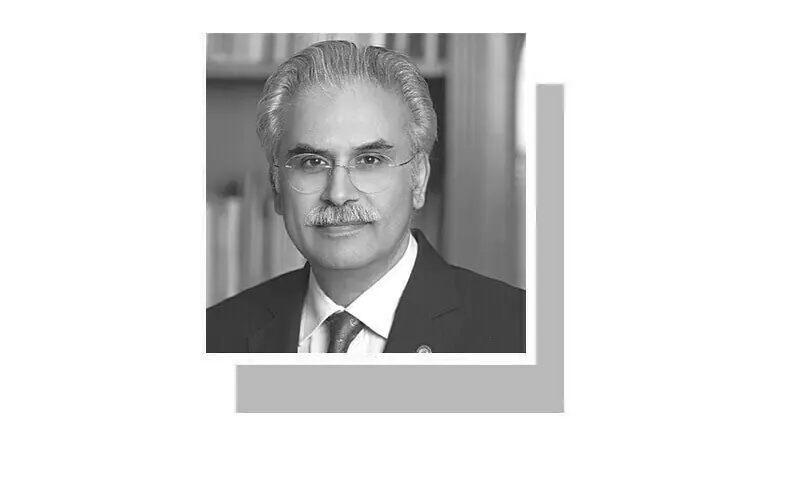
The writer is a former health minister, adjunct professor of health systems and president of Pakistan Association of Lifestyle Medicine.
Published in Dawn, September 4th, 2026