Asif says devolution of power is 'inevitable', accuses PPP of having contradictory stance on new provinces
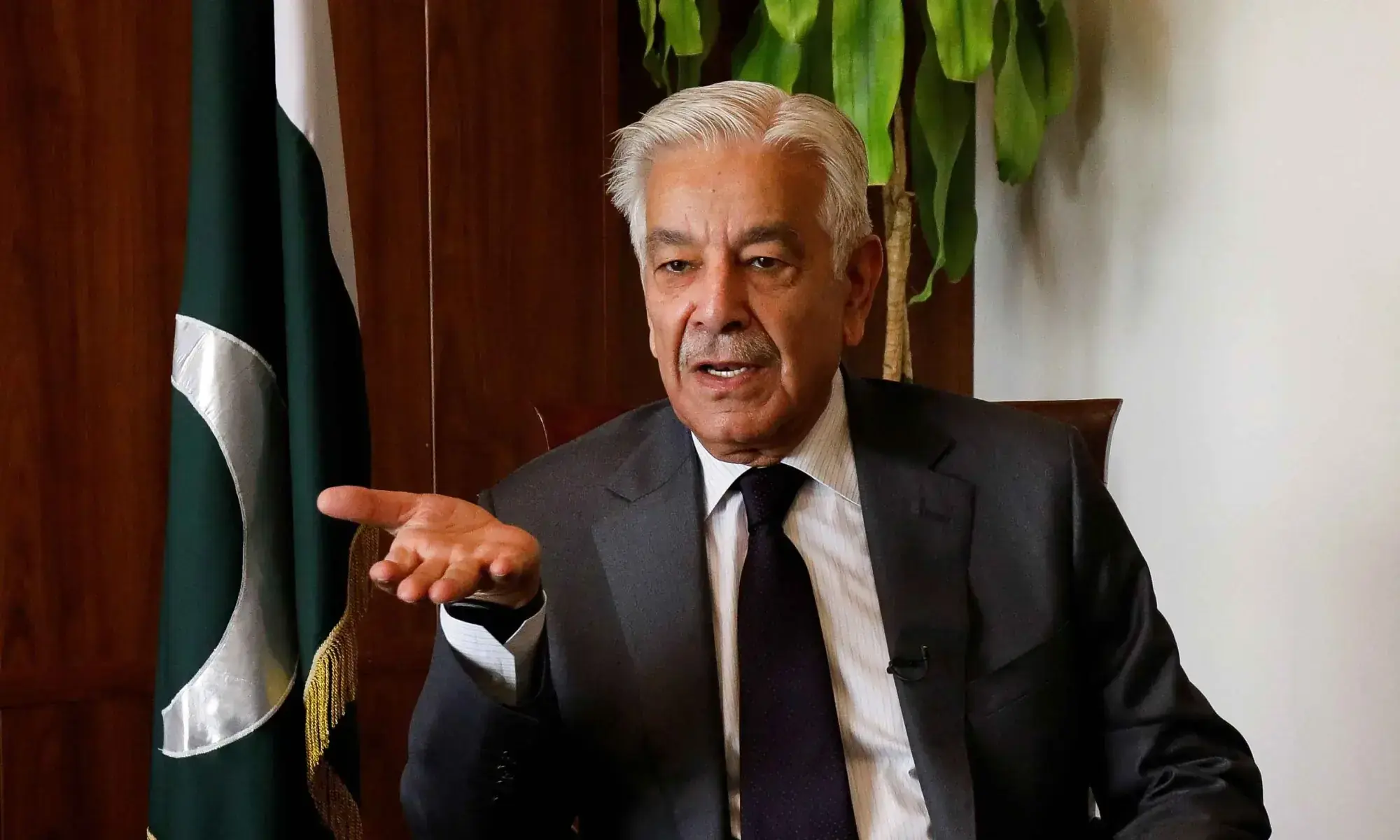

Defence Minister Khawaja Asif has said that the devolution of power is “inevitable”, while also accusing the PPP of having a contradictory stance on the issue of new provinces.
“When there is talk of a Saraiki province in Punjab, the PPP supports it or shows a soft corner on this issue. And when there is talk of multiple provinces or administrative units instead of four, talk of ‘Sindhudesh’ begins,” he said in a post on the social media platform X late Friday night.
On Friday, the Muttahida Qaumi Movement-Pakistan (MQM-P) was denied the opportunity to present a resolution against the “Sindhudesh movement”. The PPP had slammed the party for attempting to “mislead the people” by tabling the resolution.
Asif said that he saw “something else” behind this “dual policy” by the PPP, adding that he would delve into this deeper “when the time comes”.
“We are first and foremost Pakistanis. Devolution was decided as a constitutional principle through the 18th Amendment, which was not respected. Time and circumstance demand that it be implemented with integrity,” he said.
He said that concentration of power had made the current system obsolete, which needed to be “corrected”.
“Provinces or administrative units, whatever label you want to apply. You have 36 divisions, use them, or devise some other administrative-geographical scheme. The devolution of power is inevitable,” he said.
Asif’s remarks come as the PPP, a key ally of the PML-N-led ruling coalition, has questioned Prime Minister Shehbaz Sharif’s silence over the debate on creating new provinces and sought his stance on the matter.
The PPP had earlier maintained that any move to create additional federating units must follow the procedure laid down in the Constitution. However, the PPP-led Sindh government on Wednesday got a resolution passed by the provincial assembly opposing any further division of the country’s existing four provinces.
A debate over the creation of new federating units has continued for the past couple of months in different circles, although there has been no official confirmation about the origin or contours of any proposal. However, some ruling-party leaders and federal cabinet members have publicly expressed support for the idea at different forums, including parliament.
Media reports have suggested proposals ranging from eight to as many as 30 provinces, though no official plan has been announced.
Talking to Dawn on Friday, PPP Parliamentarians Secretary General Nayyar Hussain Bokhari sought the prime minister’s position on the issue.
Bokhari said that if the government was serious about increasing the number of provinces, it should first bring the matter before the federal cabinet, after which the prime minister should take all stakeholders and political parties on board.
He recalled that consultations between the government and political parties had continued for months during the framing of the 1973 Constitution, while deliberations preceding the 18th Constitutional Amendment had lasted for more than a year.
Bokhari, who also raised the issue during a talk show on DawnNewsTV on Friday, said the consent of the provinces was essential for carving out new federating units. He said any such move would also require the necessary constitutional amendment to be passed by both the National Assembly and Senate with a two-thirds majority.
The PML-N-led government enjoys a two-thirds majority in the National Assembly with the PPP’s support. Therefore, if the PPP pulled back its support, it would become impossible for the government to implement the idea.
Responding to a question about the local government system in the country, Bokhari said any move in that regard must also follow the Constitution, particularly Article 140-A, which provides for the establishment of local governments by the provinces.
Meanwhile, PML-N leader and Adviser to the Prime Minister on Political Affairs Rana Sanaullah on Friday reiterated that no preparations were currently under way for the creation of new provinces.
Sanaullah told a private television channel that no bill or resolution regarding the creation of new provinces had been presented in parliament.
He said consultation and consensus among political parties would be essential before any such bill or resolution could be brought before parliament.
Responding to a question, he said there was currently no discussion under way regarding the division of the existing provinces.