Health dept springs into action after chikungunya outbreak in KP's Nowshera
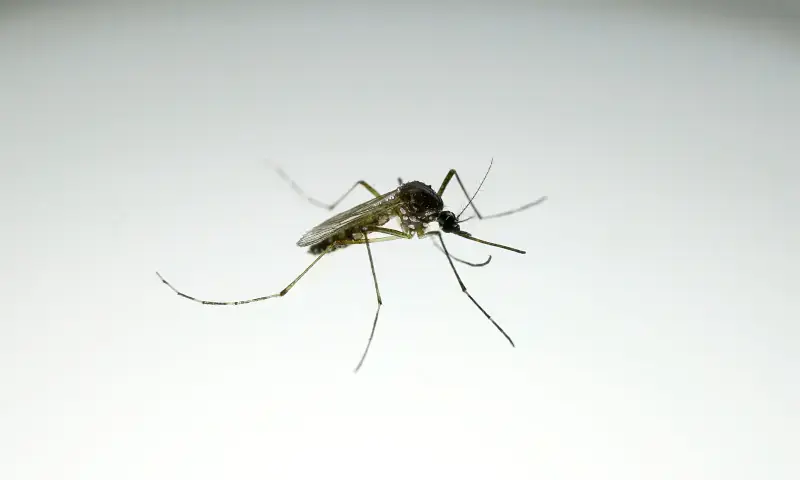

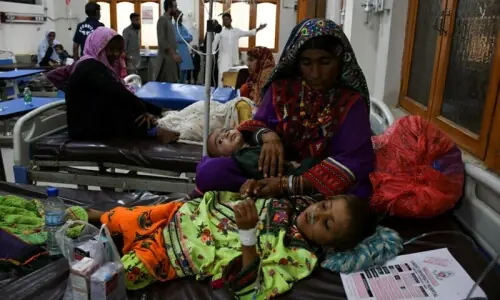
PESHAWAR: The Khyber Pakhtunkhwa health department has launched activities to effectively respond to the outbreak of chikungunya in Nowshera district after the detection of six cases of the viral fever caused by mosquito bites.
In a related development, one of the three samples collected from Malakand district tested positive for the infection.
“We have identified a total 192 suspected cases and 25 more samples have been sent to the lab for confirmation,” Nowshera district health officer Dr Akram Shah told Dawn.
He said last Sunday, the health department recorded 45 suspected chikungunya cases and sent 15 samples to the public health reference lab (PHRL) before six of them came positive.
Official says investigations under way to trace outbreak’s source, virus transmission patterns
“Yesterday, the PHRL team collected more samples whose results are awaited,” he said.
The DHO said that the cases were reported in Spin Kanai union council of Kaka Sahib area but the situation was under control.
“The Spin Kanai UC is one of the 10 areas highly vulnerable to vector-borne diseases, including malaria, dengue and chikungunya,” he said.
Dr Shah said that initially, malaria cases were detected in the area but later some patients complained about body ache, nausea and high-grade fever, leading to their testing for chikungunya.
He said epidemiological investigations were under way to trace the outbreak’s source and virus transmission patterns.
“The area inhabited by middle class families has a shallow drainage system, which is favourable for mosquito breeding. Chikungunya is a dengue-like disease with a similar source,” he said.
The DHO said last Friday, his department delivered speeches on healthcare in mosques, requesting the people not to store water in uncovered pots to deny breeding spots to mosquitoes.
He also said senior doctors were organising health camps where besides patient examination and treatment, they also scaled up public awareness regarding those avoidable diseases.
“Chikungunya has only a 0.1-0.4pc mortality ratio but those who are aged above 62 and have co-morbidities are at a higher risk of getting infected,” he said.
Dr Shah said all confirmed chikungunya cases were stable.
When contacted, PHRL director Dr Yasar Mehmood Yousafzai said that samples had been collected from residents who complained about viral fever and thus, raising concerns about a possible chikungunya outbreak.
He said chikungunya was a community-based infection, not a fatal one like dengue, and was usually self-limited as it went away without treatment in 7-10 days.
Meanwhile, the directorate-general of health services has directed authorities to effectively manage the chikungunya outbreak and set up a district control room, isolation wards in hospitals located in vicinity with a high number of suspected cases and ensure adequate stockpiling of essential medicines for the standard patient treatment in all hospitals.
It also ordered measures to strengthen larval source management and mechanical elimination of mosquito breeding sites in affected communities, maintain an accurate and updated list of cases, and intensify community engagement and awareness campaigns promoting vector prevention and control measures.
The directorate-general said the proximity of mosquito breeding sites to human habitation was a significant risk factor and the viruses could circulate in the same area with dengue and cause occasional co-infections in the same patient.
The officials said in October last year, the health department declared a chikungunya outbreak in Peshawar after the detection of 16 cases in the areas with high dengue incidence.
They said there was no specific treatment for that infectious disease, so the doctors mainly relied on the management of symptoms.
The officials said neither any vaccine nor any antiviral was available to prevent and treat chikungunya.
Published in Dawn, September 6th, 2026