Walk into a gym or wellness store and you might encounter compression boots, smart rings, creatine supplements and ice baths. Their use by elite athletes can function as an implicit endorsement, making them seem more proven or more broadly useful than the evidence supports.
As an athletic trainer with experience in collegiate and professional sports, I now evaluate the evidence behind health and performance practices for a National Collegiate Athletic Association (NCAA) Division I athletics programme. That work has shown me how teams decide whether a new product or training strategy offers a meaningful benefit.
Elite sports are natural testing grounds for new approaches to health and performance. Teams pursue small advantages and often have the staff, data and resources to evaluate new ideas earlier than most other organisations.
But these are not controlled laboratories. Decisions are made under pressure, with incomplete information and a demand for immediate results. Some ideas prove useful. Others produce effects that are too small to matter, work only in narrow circumstances or fail to hold up as evidence develops.
Elite sports are laboratories of health and performance innovation, but not every experiment belongs in your routine
HOW TEAMS EVALUATE NEW IDEAS
Championships, careers and major financial investments may depend on keeping athletes healthy and prepared. Given those stakes, teams often explore anything that could give them even a small edge, especially when athletes must recover quickly or remain healthy during a demanding schedule.
Medical, coaching, nutrition and performance staff can look at the same approach from different angles. They ask whether it works, whether the benefit is large enough to matter, whether it is safe and practical and whether it solves the problem facing the athlete.
A strategy may help one athlete during one part of the season and still be a poor choice for routine use. Teams may abandon it when the results are inconsistent, costs outweigh the benefits or it does not produce a meaningful outcome.
I saw this clearly when I first entered an NBA [National Basketball Association] professional team’s dedicated recovery lounge. Rather than waiting for athletes to feel tired or sore, the staff planned recovery around what each athlete had done and needed to do next.
That shift mattered more than the equipment in the room. Recovery became part of the training plan rather than an optional treatment after practice.
RECOVERY TOOLS HELP ONLY A LITTLE
Recovery devices have moved well beyond elite athletic training and performance facilities. Compression boots, massage guns and electrical stimulation devices are now marketed directly to recreational athletes, often with the promises of faster recovery or better performance.
Some of these tools may help, but the effects are often modest. Compression boots may reduce perceived muscle soreness, while massage guns may help muscles feel less stiff and improve short-term range of motion. Evidence for broader improvements in recovery or performance, including from electrical stimulation, is less consistent.
Even when the evidence is limited or the expected benefit is small, an elite athlete may still choose to use a recovery tool, because feeling even slightly better could matter when another game, practice or competition is already scheduled.
Someone who exercises recreationally may also value feeling less sore but can often adjust the next workout based on how they feel.
MANY SUPPLEMENTS LACK EVIDENCE
The same principle applies to nutrition. If elite athletes use a supplement, does that mean everyone who exercises should use it?
Research supports some commonly used approaches. People who perform resistance training may benefit from adding more protein to their diet, because protein provides the materials the body needs to build and repair muscle.
Creatine, a naturally occurring compound the body synthesises using three amino acids, works differently. It helps muscle produce quick energy during short bursts of intense activity, and supplementation can improve strength when combined with resistance training.
But the evidence is much weaker for many other supplements sold to athletes and exercisers. A sports dietitian may recommend a product only after considering an athlete’s diet, health history, training schedule and competition demands. A consumer may encounter the same product through an advertisement that leaves out those details.
Before buying a supplement simply because certain high-profile athletes use it, ask what problem it is supposed to solve and whether the evidence applies to your goals.
WHAT READINESS SCORE CAN AND CANNOT TELL YOU
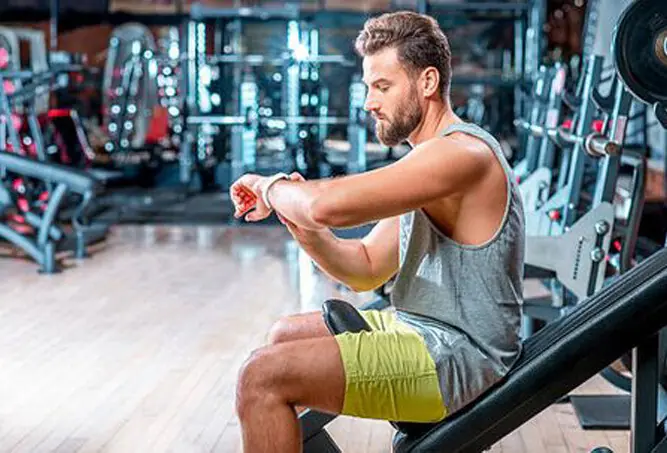
Smart rings and fitness watches increasingly combine measures such as sleep, resting heart rate, heart-rate variability and recent activity into a readiness score, meant to estimate how prepared someone may be to exercise.
For the recreational exerciser, a low score might appear after a poor night’s sleep, a hard workout the day before or several unusually stressful days.
Elite sports teams may use readiness scores to prompt questions about sleep, illness, stress or recent training. But a score cannot explain what caused a change or determine what should happen next. Wearable measurements also vary in accuracy, so a score that combines several of them can appear more definitive than it is.
A low readiness score before a planned workout does not necessarily mean you should skip the workout. It is more useful when considered alongside how you feel, how you slept and what you have done recently. The score should inform your decision — not make it.
THE RIGHT CHOICE DEPENDS ON YOUR GOAL
An innovation does not have to work for everyone to be valuable. As evidence develops, its appropriate use may become narrower and better defined.
Ice baths illustrate this idea. An athlete who just competed and must compete again tomorrow may use an ice bath because it can reduce soreness and support short-term recovery, particularly during a tournament or demanding stretch of games.
Someone lifting weights to build strength and muscle has a different goal. Regularly using ice baths immediately after resistance training may reduce some of the muscle-building response to exercise.
Before buying a recovery device, changing a supplement routine or letting a readiness score alter a workout, ask three basic questions. What am I trying to accomplish? Is there good evidence that this approach helps with that goal? Does it make sense for my health, schedule and training?
For people trying to stay active, improve fitness or feel healthier, the lesson is neither to copy every routine or product used by elite athletes nor to reject every idea that comes from sports.
The better lesson is to adopt the process elite teams use: define the goal, examine the evidence, consider the individual and stop when the results do not justify the approach.
The writer is Clinical Associate Professor of Kinesiology at the University of Texas at Arlington in the USA
Republished from The Conversation
Published in Dawn, EOS, September 6th, 2026