Circular bio-economy and smog crisis

Last month, Punjab’s Chief Minister inaugurated a high-tech steam plant in Sheikhupura, built by a multinational company and designed to consume around 72,000 tonnes of biomass as fuel annually. By burning biomass in a controlled environment fitted with emission-control filters, the plant offers a far cleaner alternative to the open-field disposal of crop residues — a practice that remains one of the major contributors to Punjab’s smog crisis.
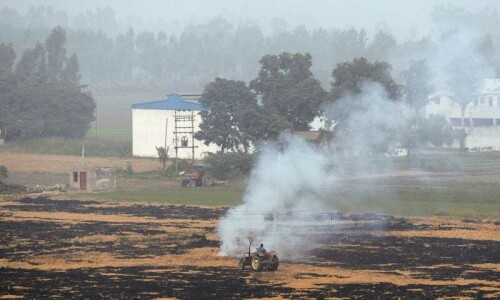
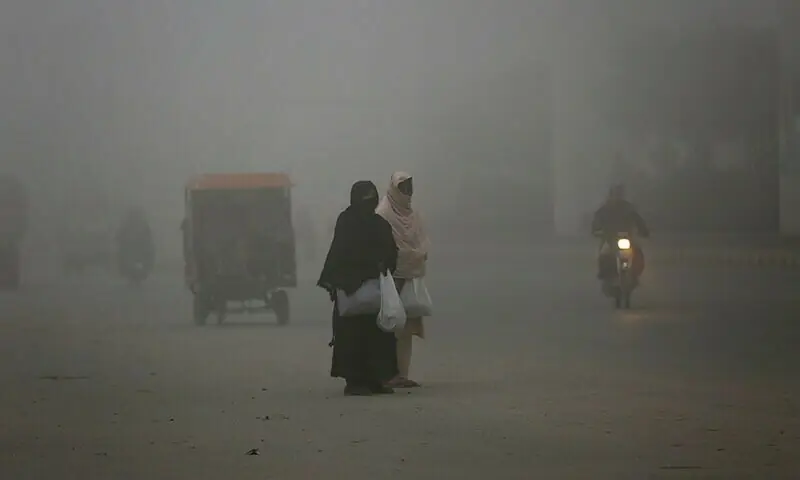
The smog season is fast approaching — a period when Lahore and several other Pakistani cities frequently rank among the world’s most polluted cities. In recent years, the scale and spread of this health hazard have grown significantly. In late October and November, farmers burn rice straw and stubble — residues left after harvest — to clear their fields for the next (Rabi) crops, including wheat, oilseeds, potatoes, and vegetables.
To combat smog, Punjab’s provincial government, as always, resorted to its familiar response: coercive and punitive measures — the invocation of Section 144 of the Criminal Procedure Code, arrests, heavy fines and jail terms for farmers. Such a response is popular in our political and bureaucratic circles because it is quick to deploy and matches their command-and-control instincts and experience.
However, it inherently fails to address the economic and operational root causes that compel farmers to burn crop residues. A government act that treats a systemic economic problem, rooted in labour shortages, as a criminal one is bound to fail.
The reality farmers face is a narrow window of just a few days between harvesting rice and sowing the next crop. With labour scarce for manually collecting rice residue and, where available, prohibitively expensive, burning remains the cheapest and fastest way to clear fields. This is not a choice farmers make lightly — they know fire damages soil organic matter, destroys soil nutrients, and kills beneficial earthworms. But without affordable alternatives, they treat the risk of a fine or arrest as simply the cost of survival.
Roughly 4m tonnes of rice straw burnt annually represent over Rs55bn in lost economic value each year
The real solution, therefore, lies not in punishment but in economics. What is needed instead is a genuine biomass market: a supply chain in which biomass suppliers — equipped with tractor-driven straw baler, stubble shaver, rake/windrower, forklifts, and trolley — collect crop residue from farmers’ fields, while power plants, paper mills and other industrial units use cheap biomass either as a raw material or as an energy source to replace expensive electricity, oil, or gas. The government can help this ecosystem take root through targeted tax concessions and subsidies for biomass collection and utilisation.
Beyond its environmental toll, crop-residue burning also carries a striking economic cost. Pakistan produces around 10 million tonnes of rice. With a straw-to-paddy ratio of 0.7 to 1.4 — depending on crop growth and variety — rice cultivation generates roughly 10 million tonnes of biomass annually.
This rice straw is used for livestock feed, animal bedding, cooking fuel, crop mulching, and composting. Yet a conservative estimate suggests that around 40 per cent is still burnt in the paddy fields, particularly in those harvested with traditional multi-crop combine harvesters, leaving chopped residue scattered across the field.
This waste is emerging as a valuable commercial resource. Pakistan’s biomass market is expanding rapidly on the demand side, entirely without government support — much like the country’s solar boom — driven by soaring electricity, oil and gas prices.
Dozens of large industrial units are increasingly switching to biomass, currently paying around Rs500-600 per 40 kg. At this price, 4m tonnes of rice straw burnt annually represent more than Rs55 billion in lost economic value each year. The paradox is that farmers cannot monetise this resource because they lack access to mechanised crop-residue collection and baling services.
Although crop-residue collection is making inroads in Punjab, the number of balers remains very limited. Policymakers have yet to fully recognise that Pakistan is gradually transitioning towards a circular bio-economy — one that reuses agricultural waste, promotes renewable processes, and reduces carbon emissions.
The Punjab government has included a limited number of balers in a fairly long list of agricultural machinery and equipment offered under the chief minister’s Punjab Hi-Tech Farm Mechanisation Financing Programme. The machinery is available to farmers and service providers through interest-free bank loans. Yet, uptake of balers under the scheme has been disappointingly low.
Given the serious health hazard posed by smog and the billions of rupees’ worth of biomass burnt every year, the government should launch a dedicated programme to develop crop-residue collection, baling, and supply services — a market-based solution to combat smog. To ensure such a programme’s success, it should offer targeted subsidies rather than interest-free loans to service providers, given the short seasonal window in which they can operate.
Ultimately, the question is how scarce government resources are prioritised. Punjab is spending billions of rupees on subsidised tractors — an established technology, with multiple tractors already available in almost every village. A portion of this allocation, or even of the funds allocated for underpasses, bypasses, overhead bridges and highways — the unique emblems of our development — should instead be redirected to promote crop-residue collection, baling and supply services. Such an investment could help deliver clean air to every citizen — a constitutional right and a far more meaningful measure of development.
Khalid Wattoo is a development professional and a farmer. Dr Waqar Ahmad is a former Associate Professor at the University of Agriculture, Faisalabad
Published in Dawn, The Business and Finance Weekly, September 7th, 2026