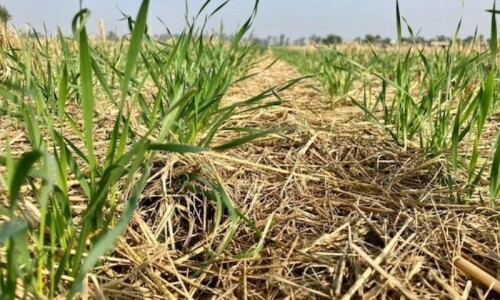
The adoption of regenerative agriculture (RA) is emerging as a relatively new paradigm in the farm sector. RA capitalises on the ecosystem services of farming, and its proponents see it as a set of principles that can promote sustainable and environmentally friendly practices.
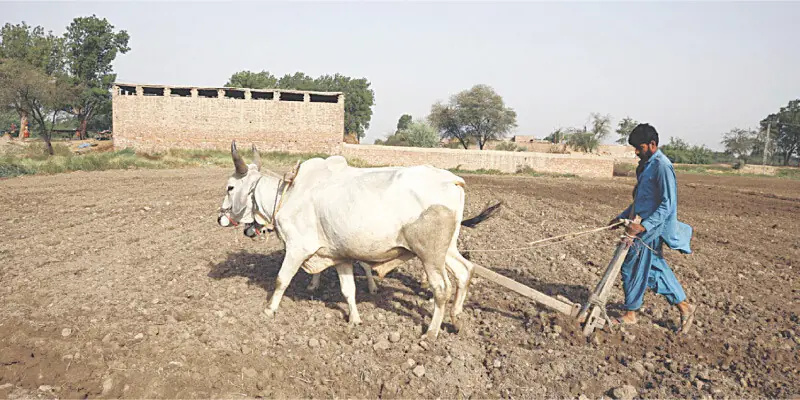
These include zero or low tillage to minimise soil disturbance, maintaining soil organic matter (OM), enhancing biodiversity and crop diversification, and reducing reliance on synthetic fertilisers by switching to farmyard or green manure to promote healthier soil.
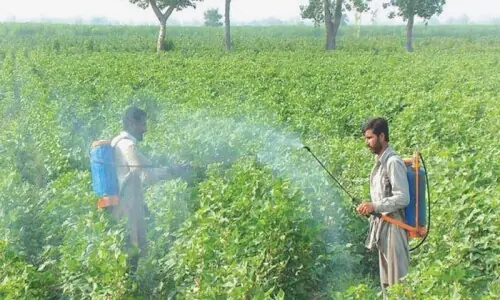
In conventional farming, farmers generally achieve higher per-acre yields, often applying more diammonium phosphate (DAP) fertiliser. Insecticides and pesticides are also used to control pests, adding to the burden of input costs. RA helps growers lessen their reliance on such inputs. It does not, however, ban the use of fertiliser, particularly given the need to meet food production requirements of a growing population. Experts and farmers alike, meanwhile, agree that conventional practices have generally degraded soil.
RA is now being discussed globally as part of a broader movement. Organic farming, too, has long been part of the conversation, though the two differ. Organic agriculture involves an entire organic production chain, while RA focuses more specifically on soil structure and health, encouraging farmers to prioritise healthy soil as the basis for improved yields.
Regenerative agriculture helps decrease reliance on chemical fertilisers, insecticides and pesticides in farming
Experts say intensive cropping practices, common everywhere, have exhausted the soil. Through RA or natural farming, farmers are guided to prepare fertiliser using components such as cow urine and animal dung to revive living organisms in the soil, which increase fertility by breaking down organic matter and minerals.
Inayat Rajpar, a soil sciences expert at Sindh Agriculture University (SAU), Tandojam, believes fertiliser application benefits crops more than the soil, while the RA approach enriches the soil itself. Farmers must use green manure — including leguminous crops such as lentils and fodder — along with farmyard manure and crop residues, instead of selling them. This would improve soil health as farmyard and green manure decompose and raise the level of organic matter (OM). “As soil receives OM, its fertility gets a boost,” he said.
Farmers face adverse conditions. So, even in the brief interval between kharif and rabi, they cultivate smaller or minor crops instead of leaving the land fallow, which is a practice Mr Rajpar said should be avoided.
“In the UK, we saw the government offer subsidies to farmers to grow cover crops, such as legumes that fix nitrogen in the soil. Since no such policy exists here, farmers continue intensive agricultural practices to grow back-to-back crops,” he said.
Through RA, cover or break crops can also help control soil erosion caused by floods or winds. “If cover crops are preferred, it will stop soil erosion on the one hand and improve fertility on the other. Fertility is just one of many factors of productivity because we must have soil that doesn’t have salinity or waterlogging,” Mr Rajpar argued.
A private sector company has engaged farmers in Sindh’s Khairpur Mirs and Naushahro Feroz districts to introduce them to RA practices and involve them in organic agriculture. To adopt RA methods, farmers are educated about appropriate tillage practices and the use of suitable ploughs.
Suleman Siyal, a farmer from Faiz Ganj, Khairpur, said regenerative agriculture had reduced his cotton yield from 25-27 maunds to 17-18 maunds, but has also considerably cut his input costs. “It has saved the irrigation water cycle for the land as well. I don’t rely on urea and DAP or multiple pesticide sprays,” he said.
Like Mr Siyal, many small farmers borrow money for inputs from private lenders, a common practice in rural areas, with the cost of the inputs plus interest adjusted against their produce at harvest. Many growers also sell their produce to these private lenders.
From farmers’ point of view, soil fertility is crucial to production, with organic matter (OM) a key component. But when OM is not on the radar, it tends to deplete, resulting in lower yields.
RA was not alien to Sindh Abadgar Board (SAB) president Mahmood Nawaz Shah. He had been practising RA for some time but noted that managing OM was not simple.
“It becomes difficult for farmers in the absence of technical advice. I’ve been working with soils for 25 years, using farmyard and green manure, reducing pesticide use, retaining crop residues and adding silt from canals, yet I’ve still only been able to raise OM slightly,” he said.
He believed RA was being projected as a saviour for soil, but adopting it across the entire farm could be commercially back-breaking. “So, the transition has to be gradual. Research is needed, with methods demonstrated to enhance soil fertility,” he said.
Former Pakistan Agricultural Research Council (PARC) chairman Dr Yusuf Zafar pointed out that RA was part of a global movement that placed greater emphasis on soil health to ensure balanced food production through sustainable agricultural practices. RA allows the use of synthetic fertilisers and pesticides, but in balanced amounts and with proper documentation.
He said soil was a living entity and home to billions of microbes, fungi and insects, the majority of which are useful and only a few harmful. “The nutrient cycles of major elements — nitrogen, phosphorus, carbon and others — take place in the soil as well as the atmosphere. All minerals, such as iron, magnesium and calcium, drawn by plants come from the soil. The minimum level of organic matter in healthy soil should not be less than 2pc, whereas it is generally 0.4-0.7pc in our soils,” he said.
He added that the Food and Agriculture Organisation (FAO) talks of 4pc organic matter in soil structure.
He noted that in current farming practices, balanced fertiliser use often eludes farmers, resulting in nutrients leaching through the soil and entering groundwater aquifers, polluting them. Groundwater extraction is massive, not only for agriculture but also for drinking, so groundwater contaminated with nitrates poses serious health risks to the population. A plant absorbs about 30pc of the phosphate applied, with the remainder leaching.
The writer is a Dawn staffer
Published in Dawn, The Business and Finance Weekly, September 7th, 2026