'Instead of speaking at business forums, Naqvi should visit Parliament': Bilawal on interior minister's call for governance reset
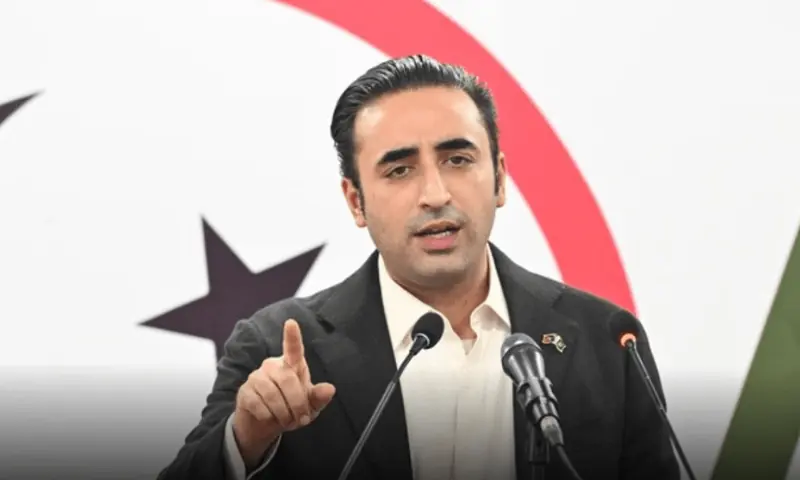

Amid growing debate in the country on the creation of new provinces to improve governance, PPP Chairman Bilawal Bhutto-Zardari has said that the issue should be debated in Parliament.
He expressed these views while speaking to the media in London, where he is on a visit with his father, President Asif Ali Zardari. During the trip, President Zardari held a meeting with Interior Minister Mohsin Naqvi, who in July sparked a political maelstrom by calling for an overhaul of the country’s governance structure and the creation of new provinces.
During the media interaction in London, Bilawal was asked about the matter and questioned about “whose language Mohsin Naqvi sahib was speaking”.
“Mohsin Naqvi sahib must be speaking his own language, and I speak my language. It is his right to express his opinion,” Bilawal said.
He said that the creation of new provinces should be debated in the National Assembly, adding that, however, Naqvi rarely visited the lower house of Parliament.
“So instead of [speaking at] business forums, Mohsin Naqvi should visit [Parliament],” he remarked, an apparent reference to the first instance of Naqvi stressing the need for more administrative units while speaking at the Pakistan Economic Summit 2026 in July.
Bilawal reiterated that the matter should be debated in Parliament.
“I am ready to debate this with any representative of the federal government or a federal minister,” he said.
He added that problems and faults that had “historically” existed in the system should be openly discussed.
“The real issues resulting in the system’s collapse and their solutions should be discussed in Parliament by the people’s elected representatives,” Bilawal stressed.
The proposal by Naqvi in July drew strong reactions from government ministers, while the country’s leading lawyers’ bodies adopted divergent positions.
However, the PPP, which rules Sindh and is also an ally of the PML-N government at the Centre, has strongly opposed the move. It has also maintained that any decision to create new provinces must be taken through the constitutional and parliamentary process and with political consensus.
Its opposition is mainly to the proposed division of Sindh, but the party has long advocated for a South Punjab province, and so has the opposition PTI. On the other hand, the Muttahida Qaumi Movement-Pakistan (MQM-P) — which is an ally of the Centre coalition but forms the opposition in Sindh — has been demanding that Karachi be designated a province separate from Sindh.
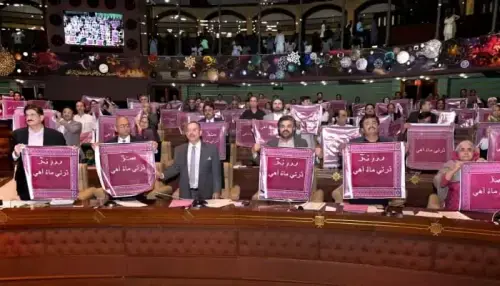
President Zardari’s meeting with Naqvi in London was followed by the Sindh Assembly adopting a resolution rejecting all attempts to divide the province or create new administrative units. Sindh Chief Minister Syed Murad Ali Shah declared that “there will be no compromise on Sindh’s geographical unity”.
On Tuesday, the Sindh Assembly Secretariat also sent letters to the principal secretaries to the president and prime minister, and to the Senate and National Assembly, informing them about the resolution.
Meanwhile, two days after the resolution was passed, Naqvi doubled down on his demand for new provinces.
“New administrative units will eventually have to be created as Pakistan’s growing population and changing needs can no longer be effectively managed through the existing administrative structure,” said the minister, who is considered close to the powers that be.
Addressing a National Policy Dialogue on ‘Devolution of Powers and Good Governance in Pakistan’ at the University of Management and Technology in Lahore, he said the proposed “reset” did not mean a change of government or political party but a comprehensive review and restructuring of the administrative system to make it responsive to the needs of citizens.
He even called for a debate on granting provincial status to Islamabad, saying residents of the federal capital did not receive a share under the National Finance Commission award.
The development resulted in the PPP stepping up its opposition to the federal government’s statements on new provinces and administrative units.
The PPP Sindh leadership, at a meeting chaired by provincial president Nisar Ahmed Khuhro the same day, accused the federal ministers of interfering in the constitutional affairs of the province and warned the federal government against any attempt to undermine Sindh’s autonomy or territorial integrity.
The meeting called on Prime Minister Shehbaz Sharif to restrain his ministers from making statements on new provinces and warned that continued remarks could lead the PPP to conclude that the federal government was behind a “conspiracy against Sindh’s unity, provincial autonomy and the 18th Amendment”.