25 years after 9/11, Muslims embrace ‘transformed’ New York

NEW YORK: Asad Dandia was eight when he watched the September 11, 2001, attacks on television at his parents’ home in New York.
Then came the backlash — years of Islamophobia as Americans processed attacks that had killed nearly 3,000 people.
There was anger, suspicion and worse.
At 19, the son of Pakistani immigrants experienced a police informant posing as a friend to infiltrate his family home, part of a now-disgraced surveillance effort purportedly seeking to detect Islamic extremism.
Muslim community gains visibility with political power, leaders, mosques as it sheds spectre of Sept 11 attacks
Today, though, the 33-year-old historian finds a New York transformed: one with its first Muslim mayor, public prayers in Times Square and new mosques rising across the city.
“Twenty-five years after 9/11, we mourn and we grieve what happened, and at the same time, we recognise that I am not responsible for what happened,” he told AFP.
“I don’t deserve to be targeted for what happened, and I am as much of a New Yorker as anybody else in that respect,” said Dandia, who leads walking tours centred on the city’s Muslim communities.
Islamophobia surged in the United States after the 2001 attacks in which militants hijacked airliners and flew them into Manhattan’s World Trade Centre and the Pentagon outside Washington. A fourth plane crashed into a Pennsylvania field after a passenger revolt.
Muslims faced more public assaults and harassment, leading some to hide religious symbols like hijabs. US authorities also required many Muslim men and boys to register, resulting in numerous deportations.
Pakistan-born Mohammad Razvi, founder of the Council of Peoples Organisation, said, “Everyone was in fear” post-9/11. “Gunshots were fired in our neighbourhood by those blaming us,” he added.
Razvi adopted the name “Mo” post-9/11 to escape the stigma linked to “Mohammad”. He noted that Muslims pursuing the American dream were unfairly blamed for events beyond their control.
‘Terrifying’
In New York, police began surveilling hundreds of Muslims as part of their counterterrorism strategy, often targeting people without evidence of wrongdoing.
As a 19-year-old college student, Dandia befriended a young Bangladeshi man who joined his mutual aid charity.
They became close, sharing meals and playing sports. Seven months later, the man confessed to being an NYPD informant monitoring Dandia, leaving him heartbroken and terrified.
“My relationship with the world around me shifted underneath my feet,” he recalled.
After his ordeal, Dandia and rights groups secured a legal settlement limiting NYPD’s ability to start similar surveillance programmes and created a watchdog for oversight.
For Gadier Abbas, an attorney with the Council on American-Islamic Relations, the NYPD programme was the prime example of the “anti-Muslim hysteria” that followed 9/11.
But today, Abbas said, “There is a lot of hope.” “You see American Muslims in every single walk of life, almost at every single level, and that’s a testament to the vibrancy of the community.”
Power
New York will soon boast the largest mosque in the state — one of more than 100 added since 2001 in New York — while Muslims are a rising cultural and political force.
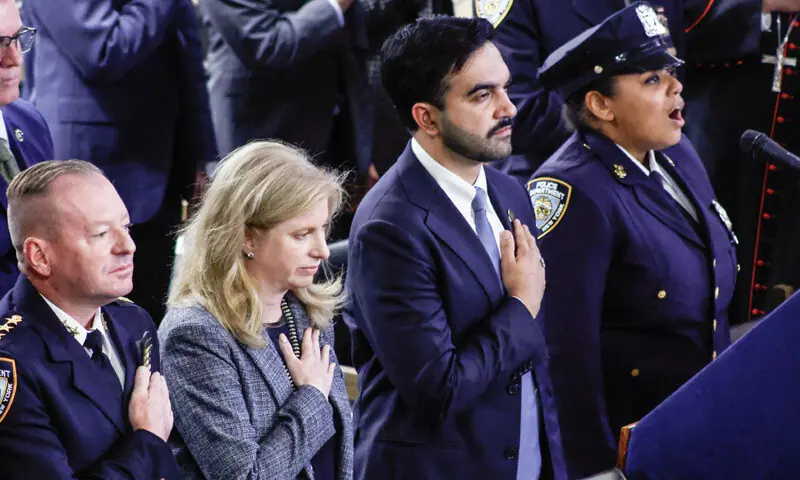
Mayor Zohran Mamdani, who took his oath of office on a copy of the Holy Quran, has become the new face of American leftist politics.
Still, Islamophobia persists in the city, where around nine per cent of the population is Muslim.
In March, a far-right figure led a rally against an “Islamic takeover” of NYC near the mayor’s home. A senator suggested Mamdani be sent to Guantanamo, known for 9/11 detainees.
Rudy Giuliani, former mayor during 9/11, finds Mamdani’s attendance at the memorial offensive, with some victims’ families agreeing, while others support him.
Dandia acknowledged Islamophobia remains, but he’s hopeful about New York’s Muslim community progress, noting both institutional growth and broader acknowledgement from non-Muslims that they’re integral to the city.
“Rome wasn’t built overnight or by one group; it was a community effort,” he remarked.
Published in Dawn, September 10th, 2026