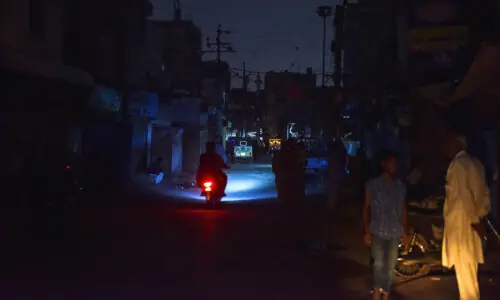
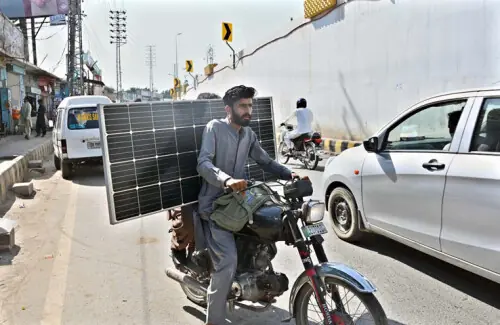
PM Shehbaz orders no more than two hours of loadshedding across country
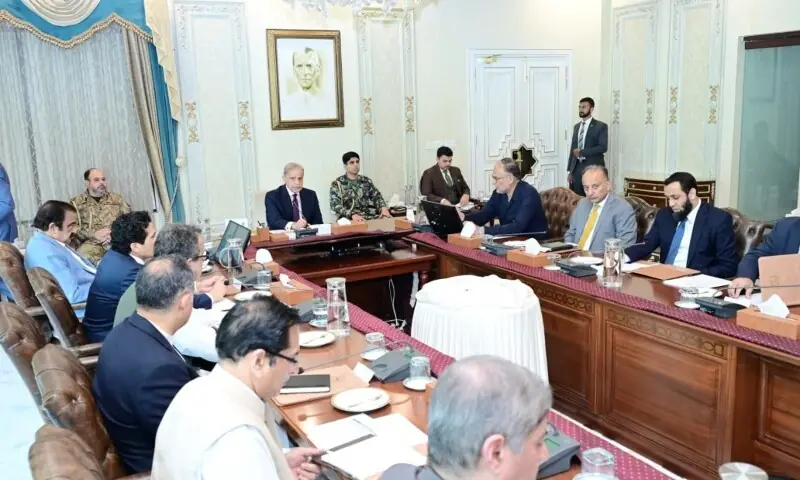

Prime Minister Shehbaz Sharif on Friday ordered that there should be no loadshedding for more than two hours in any area of the country, according to a statement from the Prime Minister’s Office (PMO).
The premier was chairing a meeting on electricity load management when he issued the instructions, expressing displeasure over increasing loadshedding nationwide, the statement added.
Planning Minister Ahsan Iqbal, Economic Affairs Minister Ahad Khan Cheema, Climate Change Minister Mushtaq Malik, Information Minister Attaullah Tarar, Petroleum Minister Ali Pervaiz Malik, Power Minister Sardar Awais Leghari, Adviser to the Prime Minister Rana Sanaullah and other relevant senior government officials were in attendance.
“The prime minister said that no area should experience load shedding for more than two hours,” the statement read.
The meeting was informed that the supply of regasified liquefied natural gas (RLNG) had been affected by the ongoing situation in the Middle East and tensions in the Strait of Hormuz.
This had caused a reduction in electricity generation, which in turn led to load management to “maintain a balance between demand and supply”, the PMO said.
PM Shehbaz ordered immediate measures to address the disruption in RLNG supplies. Keeping the situation in the region and future requirements in view, he made it clear that all available resources “should be utilised effectively so that no area experiences electricity load shedding for more than two hours”.
Furthermore, the prime minister ordered the formation of Consumer Grievance Redressal Committees at the distribution company level within a week to address public complaints related to electricity transmission and power supply issues.
He also directed that public representatives be included in these redressal committees.
The US-Iran war, which began on February 28, has disrupted the supply of RLNG cargoes from Qatar via the Strait of Hormuz. This resulted in the government purchasing five expensive cargoes from the spot market in July, with the sale price of RLNG witnessing the biggest-ever increase in the commodity’s decade-long history.
The cost of RLNG-based power generation surged by a record 242 per cent to Rs47.4 per unit in July, from less than Rs14 in April.