Tehran agrees to engage Gulf states over Hormuz future

• Oman-hosted talks set for Monday as Tehran weighs service fees system
• Trump says he has no regrets over war despite domestic pressure
• Pezeshkian warns Western pressure has pushed Iran into a ‘critical’ phase
TEHRAN: Iran on Friday announced talks with Gulf states in Oman scheduled for Monday over the future of the blockaded Strait of Hormuz, even as US President Donald Trump insisted he had no regrets about a war that has become a growing liability for Republicans ahead of November’s midterms.
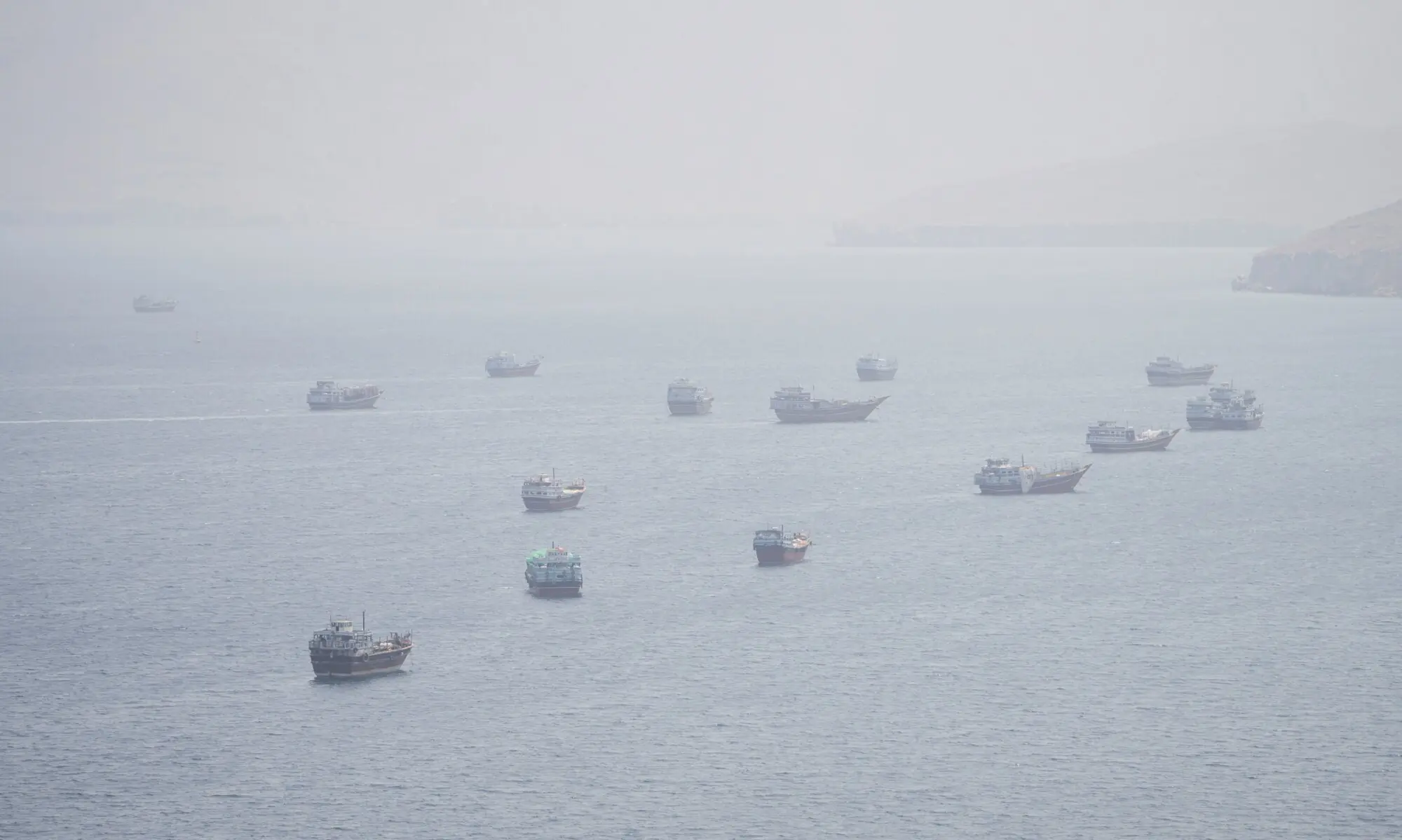
Tehran’s foreign ministry said it would meet Gulf states, including Iraq, in Oman on Monday to discuss the waterway, which Iran has controlled since its war with the US and Israel began.
The ministry described the gathering as an effort “to promote better understanding among the countries of the region and help strengthen shared regional security.”
The talks build on weeks of diplomacy between Tehran and Muscat over how the strait should be managed going forward.
Before the war, the waterway facilitated roughly a fifth of the world’s oil supplies, moving freely between the Gulf and international markets.
Vessels now require Iranian permission to transit, and Tehran is weighing a system of service fees. Ships that defy the restrictions have been struck by Iranian forces, while the US has periodically bombed Iran’s coastline to challenge its control of the strait.
More than six months into the conflict, the standoff continues to ripple through global energy markets. Crude prices climbed well above $100 a barrel this week, driven by the continued disruption to Gulf shipping and fears of further escalation around the strait.
That economic strain has become an uncomfortable backdrop for Republicans ahead of the midterms, yet it has done little to soften Trump’s stance on the war he ordered.
Asked by Fox News’s Laura Ingraham, in an interview broadcast on Thursday, whether he regretted launching the conflict given its political cost, the president was unequivocal. “I don’t believe in the word ‘regret,’” he said.
“You can always question yourself a little bit.” Pressed further, he added: “If I had it to do again, I would do exactly as I did.”
Trump also waved away suggestions that his base had soured on the war. “I don’t think they’re demoralised,” he said. “I think they’re very proud of the fact that I’m not letting Iran have a nuclear weapon.”
Trump has repeatedly predicted the war will end “right after the election,” alleging without evidence that Tehran has been trying to influence the US midterms.
The diplomatic overtures in Oman coincided with Iranian President Masoud Pezeshkian’s first official visit to India, where he is attending the BRICS summit and preparing for bilateral talks with Narendra Modi.
Speaking in New Delhi on Friday, Pezeshkian struck a grave tone, warning that Western economic and military pressure on Iran had reached “a critical and dangerous stage” in recent months.
“The world today is going through a period of unprecedented complexity,” he said, arguing economic coercion only deepens crises rather than resolving them.
“Iran has been subjected to heavy sanctions in recent years; this pressure has reached a critical and dangerous stage in recent months following the military aggression by the United States and Israel,” he said, framing the war as part of a longer pattern of pressure on the Islamic republic.
“When a country is subjected to political and military pressure on its trade, energy, infrastructure and financial system, the repercussions extend beyond its borders,” he added.
Published in Dawn, September 12th, 2026