KARACHI: Speakers at a programme called for the creation of new administrative units or provinces and constitutionally empowered local governments (LGs), arguing that Pakistan’s existing provincial structure has failed to cope with rapid population growth, urban expansion and worsening governance.
The event, titled “Empowered Local Bodies System, Creation of New Administrative Units, Developed and Stable Pakistan,” was organised by the Graduate Forum Pakistan in collaboration with the Muttahida Qaumi Movement-Pakistan (MQM-P) at a local hotel on Saturday.
It brought together political leaders, former Karachi mayors, business representatives and civil society figures.
Speakers stressed that greater devolution of powers and resources was essential for effective service delivery and said the creation of smaller administrative units should not be viewed as a threat to the federation or national unity.
At an event organised by MQM-P, politicians, businessmen and civil society members call for greater devolution of powers to address Karachi’s governance crisis
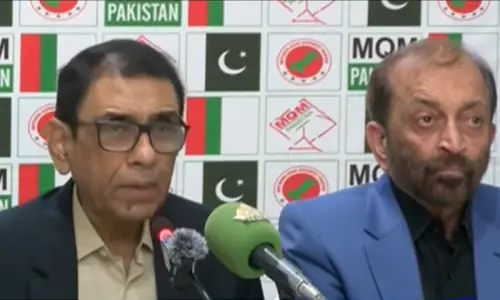
Federal education minister and MQM-P Chairman Dr Khalid Maqbool Siddiqui, in his address, said the demand for a province in urban Sindh predated the formation of his party and was aimed at creating administrative units rather than weakening Pakistan.
“The only indivisible entity is our homeland, Pakistan,” he said, adding that provinces could be reorganised on administrative grounds.
He described the demand for a separate administrative unit for urban Sindh as one of the country’s oldest such demands and alleged prolonged political and economic deprivation of the region.
“If an honest census is conducted in Sindh, the PPP itself will be demanding new provinces,” he said. He also proposed referendums in areas where people were demanding new provinces or administrative units.
Senior MQM-P leader and former Karachi mayor Dr Farooq Sattar said the existing four-province structure had perpetuated the political status quo and concentrated power in the hands of a few families.
He proposed dividing Sindh into several administrative regions and giving Karachi a special administrative status.
“Today we have to accept that we are not economically, politically and participatively autonomous,” he said, arguing that the 18th Amendment had strengthened provinces without ensuring meaningful devolution to the grassroots.
He called for a broader national debate, saying a referendum could determine the wishes of people in areas seeking new administrative units.
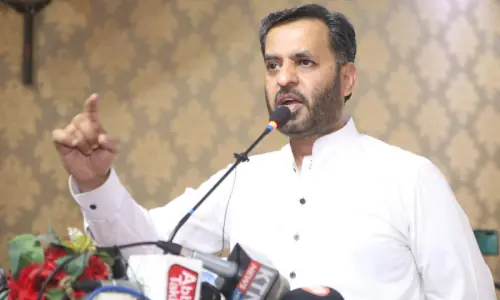
Former finance minister and senior leader of Awam Pakistan Miftah Ismail said the country essentially had several options, including continuing with the existing system, empowering LGs or creating new administrative units.
He argued that provincial governments had repeatedly failed to establish genuinely autonomous LGs.
“The local government option is very good, but under the existing system it is simply not possible,” he said. “Let Karachi run Karachi, Larkana run Larkana, and similarly let local people run Lahore, Peshawar and Quetta.”
Senior politician Irfanullah Marwat said there was no disagreement that Karachi could not continue to be governed under the present arrangements. “The way the city is being run, the city cannot be run like this,” he said.
He pointed to Karachi’s expanding population and unplanned settlements, saying the city needed a governance structure capable of addressing its growing infrastructure and civic needs.
“Provinces are the need of the hour, whether you call them provinces or administrative units,” he said, adding that Karachi should be a separate administrative unit.
Karachi Chamber of Commerce and Industry President, Rehan Hanif, sup the city needed a governance structure capable of addressing its growing infrastructure and civic needs.
“Provinces are the need of the hour, whether you call them provinces or administrative units,” he said, adding that Karachi should be a separate administrative unit.
Karachi Chamber of Commerce and Industry President, Rehan Hanif, supported greater devolution, saying the fundamental issue was the transfer of powers and resources to the grassroots.
Referring to LG systems in the United States, he said municipal authorities handled areas including schools, hospitals, infrastructure and policing.
“The basic purpose of this discussion is the transfer of powers and resources to the grassroots,” he said, arguing that smaller administrative units would make governments more accountable and accessible.
Business leader Atiq Mir described Karachi’s economic and civic condition in stark terms. “Karachi’s economy has sunk,” he said, calling the metropolis “a jungle in the shape of a beautiful city.”
He assured that Karachi’s traders stood behind the demand for administrative reform. “If you fight, we will fight with you,” he said while stressing that new administrative units should be created across the country.
Former bureaucrat and lawyer Shahab Imam said Pakistan needed a system in which people could make decisions about their own areas. He alleged that local representation was being overlooked in recruitment and administrative appointments in Karachi and criticised the fragmented taxation system.
“Even in Grade 1 to 5 jobs, people from Karachi are not being recruited,” he said. “The time has come to give local people their legitimate rights constitutionally. The empowered local governments and new administrative units are the need of the hour.”
Published in Dawn, September 13th, 2026