
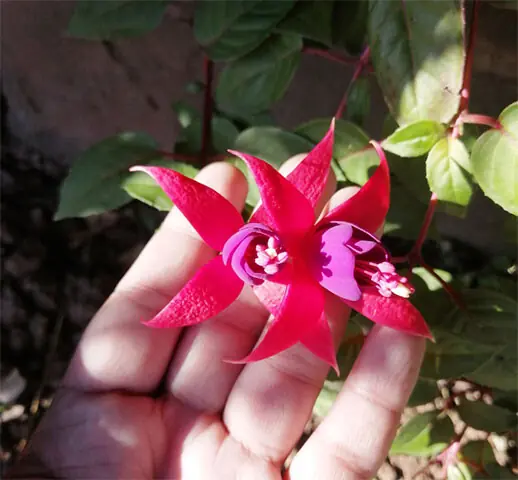
Fuchsia is one of the most attractive flowers, whether in bud or full bloom. The genus Fuchsia was named after German physician and botanist Leonhard Fuchs, who worked extensively on botany during the 16th century.
Fuchsia is also a deep reddish-purple colour named after the bright blossoms of the fuchsia plant. The fuchsia plant, which is primarily native to the tropical and subtropical regions of New Zealand, South America and Central America, comes in several other colour combinations.
Propagating and caring for the fuchsia plant at home requires adherence to gardening guidelines. The plant can be grown from seed, but it is a painstaking process. One major disadvantage of propagating from seed is the uncertainty over the colour of the flower. With dozens of hybrid colour combinations, propagating from seed does not necessarily result in the intended colour of flowers. The preferred method is propagation through stem cuttings. This guarantees that the resulting flowers will have the same colour as those of the parent plant.
The recommended time to prune the plant for cuttings is during spring and early summer. Cuttings can even be propagated during late summer. The cutting should be between three and five inches long, with at least two to three nodes. Barring the top-most leaf, all other leaves should be removed from the cutting.
Fuchsia is relatively easy to propagate through cuttings, while growing it from seed can be a slower but more surprising process
Nursery soil can be used as a potting mix, but it should be free of pebbles and stones. Many gardeners also use a mix comprising equal amounts of sand, perlite and coco peat for sowing and propagation. While preparing the cutting, the bottom end — which will be planted in the soil — should be cut at an angle. When inserting the cutting into the potting mix, ensure at least two nodes are below the topsoil.
The fuchsia plant needs shade, so the cuttings should be planted or kept in an area with ample shade and indirect light, with exposure only to the early morning sun. The soil should always be moist, while the pot should be well drained. Waterlogging can cause the cuttings to rot. One simple trick is to gently spray the topsoil around the planted cuttings with a water gun, instead of using a watering can or pipe.
Under favourable conditions, roots and leaves appear on the cuttings within two to three weeks. The fuchsia plant can be transplanted to its permanent location after four to six weeks.
When grown from seed, germination can take up to two months, or even longer. If one is already growing some classical fuchsia varieties, then the best thing about growing from seed is that there is a chance of the flowers developing new colours.
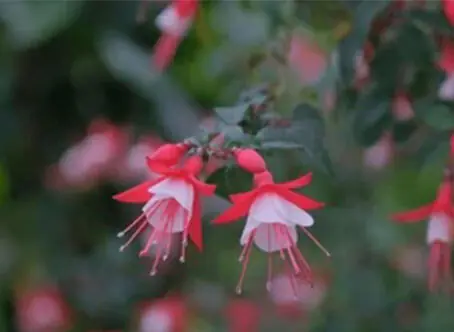
Depending on the variety, fuchsia plants can produce berries in different colours and shades of berries. These berries, or fruits of the fuchsia plant, contain its seeds. When the berries feel soft and squishy to touch, they are ready to be harvested. The berries contain numerous seeds, which can be extracted, dried overnight and sown a couple of days later.
When storing fuchsia plant seeds for later use, they must be dried for a week before being stored in a cool, dry place. But it is challenging to extract the seeds from the fleshy and sticky berry pulp. Sometimes, gardeners dry the entire berry and cut it open during the sowing season to extract the seeds.
Fuchsia seeds are usually light brown and extremely tiny. The minute seeds are lightweight — a few thousand seeds may not even weigh one gramme.
For those who love gardening, the slow but engaging process of growing a fuchsia plant from seeds can itself be a rewarding experience.
Please send your queries and emails to doctree101@hotmail.com. The writer is a physician and a host for the YouTube channel ‘DocTree Gardening’ promoting organic kitchen gardening
Published in Dawn, EOS, September 13th, 2026