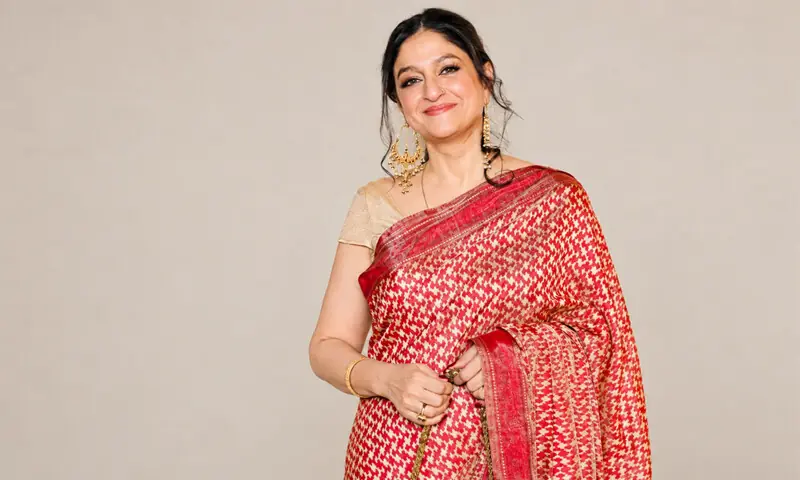

Actress. Activist. Cancer survivor. Abuse survivor. TV drama aficionado. Life coach and trainer. It is impossible to pigeonhole Nadia Jamil into a single category.
Navigating her life’s ups and downs, Nadia has pursued different passions close to her heart. And she has told stories — sometimes on-screen and often off-screen — of resilience, of love and of turning vulnerabilities into strengths. This talent for storytelling, perhaps, best defines her.
On-screen, Nadia’s acting prowess is undeniable. Off-screen, she has consistently been vocal about difficult subjects rather than politely sidestepping them. From bravely admitting to her experiences of being abused as a child to advocating against child sexual abuse to shifting focus to other causes — be it campaigning for women’s rights, education, gender equality, minority rights or animal rights — she uses her voice to support those who may not have one.
Connecting with Nadia in an online session — me, with my questionnaire before me and she, in her lounge, sipping tea and occasionally calling out to her dog, who isn’t particularly invested in our interview — I ask, what would she, at this point in her life, define as her passion?
She may be best known as a brilliant actor, but there are many other facets of her life — as a relentless activist for children’s welfare, as a cancer survivor, as a mental health coach, as a mother and as a wife — that take up as much or more of her time. How does she juggle them all? And why does she now act less and less?
She replies promptly: “I have always had one passion: working for children. It is what saved me when I was 17 and was figuring things out in my life. It is still what I love doing the most.”
ACTING, BUT ON HER OWN TERMS
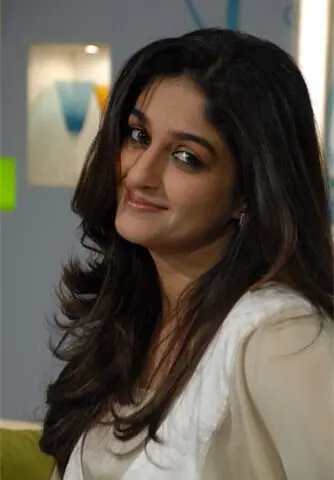
What about acting? For the past few years, her work in TV dramas has been sporadic, though always noticeable.
“Yes. At this point in my life, if I act in a drama, it has to be worth it,” she says. “I have a lot going on. There is my coaching practice and I am on the board of the Punjab Protection Bureau and work as a mental health practitioner with the children there. I have specialised in drama therapy and I am a master coach for Neuro-Linguistic Programming [NLP] and multiple Brain Integration Techniques, a hypnotherapist and a timeline therapist.
“There are times when I have had to miss out on acting projects because of my coaching commitments. I live in a joint family, so I have family commitments. My family is my support system when I am acting, and even now, in my 50s, the project really has to interest me. There are only a few of my dramas that I really like. I was competent in Behadd. I loved Mere Paas Paas because it was so romantic. I liked my work in Jo Bichharr Gaye and Faraar and, to a certain extent, in Khushboo Mein Basay Khat.”
She describes herself as a “director’s actor” and chooses them very carefully. “I see so many dramas in which directors don’t focus on performances or the power of the story, and rely on background music to manipulate audiences instead. A good director stays true to the story and extracts performances from actors. Saife Hasan did this brilliantly in Aap Ki Izzat, and Kashif Nisar does the same in every drama he touches. I am particular about directors because a mediocre one can make my performance fall flat. I credit director Haissam Hussain for some of my finest performances both on stage and on-screen.”
But it’s not just mediocre directors that prevent her from taking on more dramas.
“I regularly have to take anti-cancer medication, which gives me hot flushes and has affected my capacity to shoot in summer,” Nadia says matter-of-factly. “When I was shooting Khushboo Mein Basay Khat, I was blessed to be working with a patient team. I would feel so hot that I would stand on blocks of ice, with ice down my back and in my hands! So, in summer, I usually opt to coach more and come winter, I can take a break from coaching and work in a drama. As it is, the roles being offered aren’t always exciting.”
Does acting still excite her? “Yes. I only take roles that excite me. More than the role itself, I look at the overall story and sometimes it excites me so much that I don’t even ask for a lot of money for being part of the project!” she laughs.
“It is a huge privilege that I am not the sole breadwinner of my home, and if a project comes along that I really want to do, I can accept a reasonable amount for it. I ask for exorbitant amounts only when I want to frighten off an offer. If it still comes through, I have to go ahead and sign on,” she shrugs.
Considering all that she has on her plate, taking on an acting project which requires weeks of commitment must be tricky, I observe. “When I am acting, I am only acting,” she replies. “I usually don’t want to shoot in Lahore, where I live, because when I am acting, I can’t be a mom, wife, daughter and daughter-in-law. My nervous system steps into fifth gear and everything else, other than acting, is out of my mind.”
She is also an avid drama-watcher, often commenting on dramas and applauding performances on Instagram. As someone who is strongly empathetic towards social causes, does she feel that drama storylines need to be similarly conscientious?
“I am very ‘massy’ in my preferences,” she replies. “I love a gripping romance and I want to be thoroughly entertained. And if I really like an actor’s performance, even in just one scene, I want to talk about it on my social media platform.
“As far as socially relevant storylines are concerned, there are all sorts of stories everywhere in the world, good and bad, regressive and progressive. There are dramas, such as Tann Mann Neelo Neel, Udaari and Damsa that have beautifully relayed very important messages.”
She continues: “There are times when TV drama-makers focus too much on the message and the story gets lost. A drama must start conversations on important topics while narrating a story with commercial appeal. For instance, women in Haseena Moin’s dramas would work. While their careers were central parts of their lives, such as in Unkahi, Tanhaiyaan or Dhoop Kinaray, the stories would also delve into their relationships, families and romance. A drama cannot revolve just around a message. This is something a lot of NGOs get wrong when they collaborate with drama producers.”
CANCER, A TURNING POINT
There was a considerable gap in her work after she stepped away from acting when she moved to Cambridge for her sons’ education and worked only occasionally when she returned to Lahore during vacations. Did she miss the lights and glamour of show business during this sabbatical?
“No, I am someone who lives very much in the present. I was on mom duty — nothing else mattered more and it was fun. I was raising two teenage boys and my focus was entirely on making sure they were healthy. They would come home from school with grocery bags and their friends. They would all be ravenous, and I became the quintessential desi mom, making sure everyone was fed properly — and economically — and that there was always enough food in the fridge. Such things just took over,” she says with a smile.
She was then diagnosed with cancer and continued to stay in the UK for her treatment. “I moved to Cambridge in 2017 and, in 2020, I was diagnosed. They say that you have to hit rock-bottom before you come up. Cancer was my rock-bottom. Before cancer, I was a 48-year-old woman who would sometimes be emotionally needy, easily scared or overly vulnerable. Cancer taught me to depend on myself and strengthened my faith in God.”
She continues, “I was stripped of everything — my family, my revenue, my routine. My husband, Ali, was dealing with a family crisis in Pakistan and I was on social welfare. I had no hair, no sense of what was going to happen in my life. My best friend, who I had thought would help me through my treatments, abandoned me and my parents couldn’t come. I didn’t see my elder son for two years due to coronavirus travel restrictions. And I was left thinking, ‘Who is going to be there for me now?’
“I would listen to Surah Rahman on a loop and I remember coming out of my coma and hearing it. I realised that I needed to start living my life in line with the verses’ meaning. I started focusing on my blessings, and everything I saw and experienced suddenly felt like a miracle. It was phenomenal.”
She adds, “Aliyah Mohiuddin [an internationally certified NLP Master Trainer] came into my life and I found new goals. I became a coach, not to save anyone else but myself — all this because of how cancer had brought me down. I feel that we are all powerfully connected to the Divine, but we get distracted by the stories that run in our heads. A lot of people get stuck in what happened to them in the past, and so was I. You have to decide to put down the baggage of the past and be fully alive in the present.
“There is a lot that I practise to stay positive,” she adds. “I take time alone in nature and study the Qur’an and religion. I take bee stings every week to boost my immunity, as do my children. I am also writing a non-fiction book on well-being and faith. I am deep into it, and it will take some more time to write and edit. And next year, after my son’s wedding, I am going to be a student again!”
USING HER VOICE
Nadia has long been an advocate for doing more against child sexual abuse, having made public her own painful experience of abuse in 2015 triggered by the horrific abuse of thousands of children in Kasur and then after the horrific Zainab Ansari incident, also in Kasur, in 2018. Given her past, does she ever get depressed when tragedies continue to surface in the news?
“No, I am more concerned about what I can do and how I can make a difference in my small way,” she responds. “It’s like when surgeons go into surgery: they know they may not succeed, but that doesn’t mean they give up. It’s been many years since I first recounted my own experiences and the same things are still happening.
“Perhaps they aren’t happening more often, but they are reported in the media more frequently now. Even after I am dead and gone, child abuse and child trafficking will continue. But I still have to use my voice. Maybe I will be able to help one child. Maybe I will be able to bring about some awareness.”
Nadia obviously has very strong views on this issue. “We have to remember that using our voices can make a difference,” she says. “There is now a Child Protection Policy in place in Punjab, thanks to Sarah Ahmad, so that if a child is being abused or forced into labour or marriage, it can be reported to the authorities. And can you imagine that, in all the other provinces in Pakistan, there is no such machinery? How can we wake up every day and sleep at night knowing that there is only one province with policies in place for the protection of children? How can anything else be talked about?”
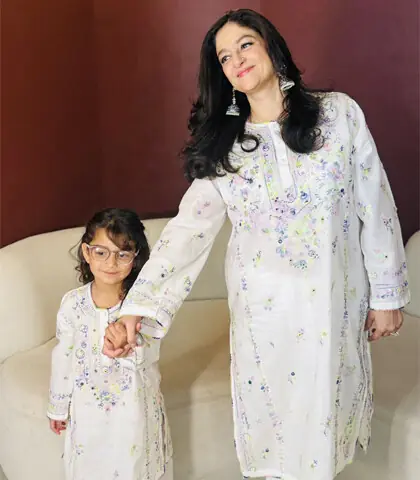
Nadia’s empathy towards children is also apparent in her personal life. She has often spoken fondly on social media about her foster children and Nur, a little girl whom she adopted in 2022.
“I have two biological sons and Nur, who we have adopted,” she tells me. “Nur was born completely blind, but now she can see. I remember being on the set of Jo Bichharr Gaye, and Nur would be there with me. Adoption was a complicated process. I thought I would be able to take her back to the UK with me, but her paperwork didn’t come through in time and the process took eight to nine months. All of a sudden, my husband, Ali, became a single father to this little girl.”
THE OTHER HALF OF HER STORY
This leads our conversation to a relatively quieter story in Nadia’s life: her longstanding marriage with childhood sweetheart Ali Pervaiz.
“We have known each other since I was 13 and he was 14, and the one thing that has never stood between us is our egos,” she says. “We have always been really good friends. I have girlfriends who may have more things in common with me than Ali does, but then some things are just Ali and mine.”
Nadia spoke earlier about not having to be the primary breadwinner in her home. While Ali may shoulder the main financial burdens, does she feel it has always been important that she, too, earn money?
“Absolutely. I think it is essential for a woman’s self-respect that she earns her own money. You never know when an emergency might arise or where a marriage may be headed. May God give Ali a long life, but you never know with life, and it is imperative that I know that, should things get tough, I will be able to support my children and myself.
“Ali does take care of all our major expenses, such as rent or college fees, regardless of whether his business is doing well or not. Still, I am there to help, too. I remember, back in Cambridge, we were both pitching in — he was covering the main expenses, while I would split costs when the boys needed things like cellphones or laptops. He was already doing so much that I wouldn’t ask him for ‘luxury’ money for things like my make-up or clothes. I would rather spend my own money and not nag him.”
She elaborates, “I am lucky that he is heading the financial aspect of the ship, because I can pick and choose between my acting projects. On the other hand, I usually handle the emotional aspect, doing quite a lot of self-parenting to make sure there is a certain kind of aura in our house. There are times, though, when Ali will step in and say that I can communicate something better. In a good team, there is constant juggling of responsibilities.”
This penchant for ‘juggling’ applies not just to her marriage but to Nadia’s life, overall. All through her life, she has juggled identities and responsibilities, gravitating towards stories that move her, causes that hit her heart and a life with purpose rather than one that is merely busy.
And so it continues — Nadia Jamil is still learning, still questioning, still speaking — and always, always still telling her story.
The writer is a fashion and entertainment journalist with over two decades of experience. She can be reached at maliharehman1@gmail.com
Published in Dawn, ICON, September 13th, 2026