PESHAWAR: The elementary and secondary education department has revised the curricula for matriculation and intermediate classes after two decades to ensure greater relevance, coherence, manageability and responsiveness to the emerging educational requirements of learners and the evolving needs of modern society.
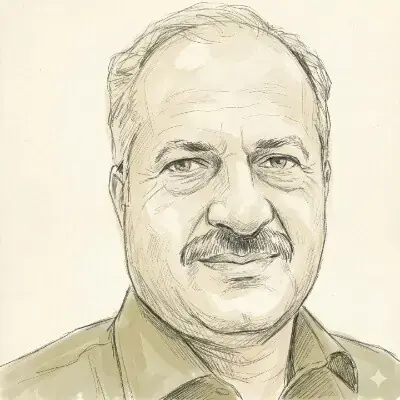
The Curriculum 2026 has been systematically reviewed, rationalised and optimised through the identification, consolidation and appropriate clubbing of related Student Learning Outcomes (SLOs), replacing the curricula of 2006, Directorate of Curriculum and Teacher Education (DCTE) Director Gohar Ali told Dawn.
He said that the Curriculum 2026, notified and developed by the DCTE through a systematic process involving curriculum and subject experts and duly adapted to the educational context and requirements of the province, represents a significant refinement, rationalisation and optimisation of Curriculum 2006. He further said that the revision of curricula for primary classes will start soon.
The director said that the entire process of revising the curricula was focused on bringing closely related and overlapping outcomes together, addressing duplication, improving sequencing and progression, and retaining essential, measurable and grade-appropriate learning outcomes.
Official says move to ensure greater relevance to evolving needs of modern society
Accordingly, the numerical difference in the count of SLOs primarily reflects the optimisation and consolidation of learning outcomes, rather than the deletion of essential curriculum content, he said.
He said that collectively, the subjects from grade 9 to grade 12 comprised 3,851 SLOs under Curriculum 2006, which have been rationalised to 2,264 SLOs under the National Curriculum of Pakistan (NCP) 2026, a net reduction of 1,587 SLOs.
This difference is primarily attributable to the consolidation, clubbing and optimisation of related outcomes, the removal of duplication and unnecessary overlap, and more precise prioritisation of essential learning outcomes, he said. The revised structure consequently provides a more focused and manageable set of learning expectations for both teachers and learners, he added.
Mr Ali said that a significant consideration underlying this rationalisation is the need to minimise unnecessary academic load on learners. The optimisation and consolidation of SLOs is expected to facilitate a corresponding streamlining of textbooks, notebooks and other learning materials. This, in turn, is expected to contribute to a reduction in the physical burden of schoolbags, particularly for students required to carry multiple books and notebooks on a daily basis. The initiative therefore seeks not merely to streamline the written curriculum but also to promote a more manageable and learner-friendly schooling experience, he explained.
The DCTE director said that the Curriculum 2026 also marks a clear movement away from an emphasis on extensive content coverage and rote memorisation, towards understanding, application, analysis, problem-solving and demonstration of learning.
The revised SLO structure provides greater scope for teachers to devote instructional time to meaningful classroom interaction, conceptual understanding and practical application, rather than to the coverage of an unnecessarily fragmented body of learning outcomes, he said.
The curriculum has been rationally optimised to meet the requirements of modern society. In the contemporary educational environment, learners require not only subject knowledge but also the ability to think critically, communicate effectively, solve problems, apply knowledge, use information meaningfully, and respond to changing social and technological circumstances.
The Curriculum 2026 accordingly places greater emphasis on competencies and transferable skills that support learners in further education, employment, responsible citizenship and lifelong learning.
Mr Ali said that the vertical alignment facilitates continuity from one grade to the next, while horizontal alignment ensures greater consistency among related areas within a given grade. This is expected to support teachers in planning instruction and to enable assessment practices that remain more closely aligned with the intended learning outcomes.
Appropriate provincial, cultural, geographical, climatic and contextual considerations have been incorporated where required, while maintaining alignment with the broader national curriculum direction, he said.
The revised curriculum also provides a basis for alignment with the KP Scheme of Studies, available instructional time, textbook development, teacher preparation and assessment practices.
From an implementation perspective, the optimised SLO structure is expected to facilitate greater coherence among curriculum, textbooks, classroom instruction, teacher training and assessment.
The DCTE has also instructed the Khyber Pakhtunkhwa Textbook Board to develop textbooks from grades IX-XII as per National Curricula of Pakistan 2026 in the light of existing rules and policies.
The educational institutions functioning in Khyber Pakhtunkhwa both (public & private) shall follow the NCP 2026, and shall develop, align, revise the textbooks and shall get approval from the DCTE, before circulation into the educational institutions.
The DCTE has also instructed private publishers to obtain prior approval from it for publishing textbooks and supplementary reading materials based on the NCP 2026 for grades IX-XII for circulation in the educational institutions of KP and merged districts.
Published in Dawn, September 14th, 2026