Repeated ‘experiments’ behind crises in Pakistan: Saad Rafique
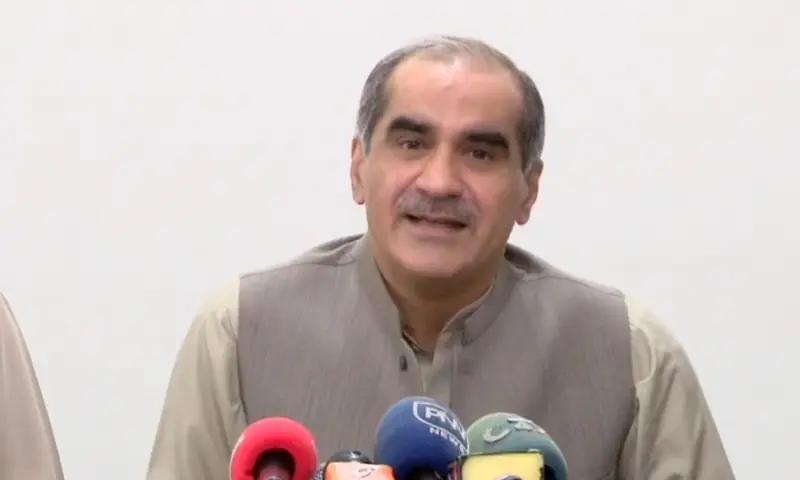

LAHORE: Senior PML-N leader and former federal minister Khawaja Saad Rafique has attributed Pakistan’s governance, economic and political crises to what he called repeated “tampering” with the Constitution, law, judicial system and political order, warning that the situation could eventually slip beyond the control of all stakeholders.
In a detailed social media post on Monday, he said the country’s “biggest problem” was its repeated departure from constitutional and legal principles, which, he argued, had produced a persistent crisis of governance.
He criticised what he described as the power-concentration instinct of the ruling elite and establishment, along with nepotism, dishonesty, self-centredness, arrogance and a “grandeur complex”, saying these tendencies had pushed Pakistan into a quagmire of economic hardship, lawlessness and extremism.
He held several sections of the state and society responsible, including politicians with a “martial-law mindset”, power-hungry political leaders, a judiciary subscribing to the “doctrine of necessity”, religious figures promoting extremism, an authoritarian bureaucracy and a media that, in his words, tended to follow the prevailing direction of power.
Political parties, institutions urged to practise self-accountability
Trust in parties eroding
Mr Rafique also expressed concern over the widening gulf between political parties and the public, saying repeated departures by political forces from their stated ideologies, democratic principles and promises had badly damaged public trust.
“Only cult followers and hard-core supporters” were now prepared to trust political parties, he observed, describing the situation as deeply disturbing.
He warned that terrorism, political anarchy, economic distress and growing injustice could not be overcome through expedient measures, but only through the supremacy of the Constitution and the rule of law.
The PML-N leader called upon state institutions and political forces to undergo a process of self-accountability, make a serious effort to correct the situation and confront the country’s “bitter realities” instead of remaining trapped in what he described as a world of illusions that only pleased themselves.
He cautioned against any institution or individual considering itself indispensable or taking every possible step to impose its own worldview on others.
“Listening to opposing views, engaging in open and reasoned dialogue on Pakistan’s burning issues and making a meaningful effort to resolve conflicts is our collective national responsibility,” he said.
Mr Rafique’s latest remarks come amid his repeated calls in recent months for political reconciliation, constitutional supremacy and a broader national consensus.
In August, he proposed a “Charter of Pakistan” involving the government, opposition and other stakeholders to address the country’s political, economic and security crises. He called for agreement on constitutional governance, transparent elections, economic revival, security and an independent election process.
Earlier this month, he also argued that repeated violations of the Constitution would make no political or administrative arrangement work effectively, whether or not new provinces were created. He called for a strong local government system, an impartial election commission and greater consideration of proportional representation.
He has also recently opposed proposals to weaken elected local governments, calling for constitutional protection, financial autonomy and the restoration of powers devolved from local bodies to provincial-level institutions.
In his latest social media post, Mr Rafique suggested that civil society might now have to take the lead in creating space for a national dialogue. He urged educated and politically conscious citizens to rise above party and group affiliations and establish “thinkers’ forums” and reform groups within their respective spheres of influence.
Such groups, he said, should hold discussions, form informed opinions and make their views public “without prejudice or fear”.
Published in Dawn, September 15th, 2026