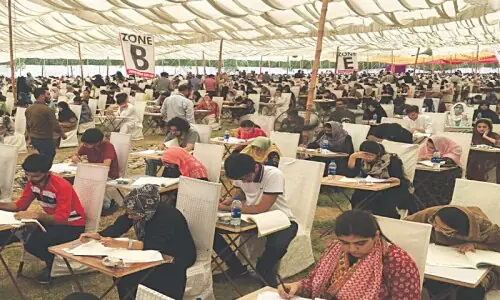
Senate body reviews MDCAT policy, calls for stakeholders consultation
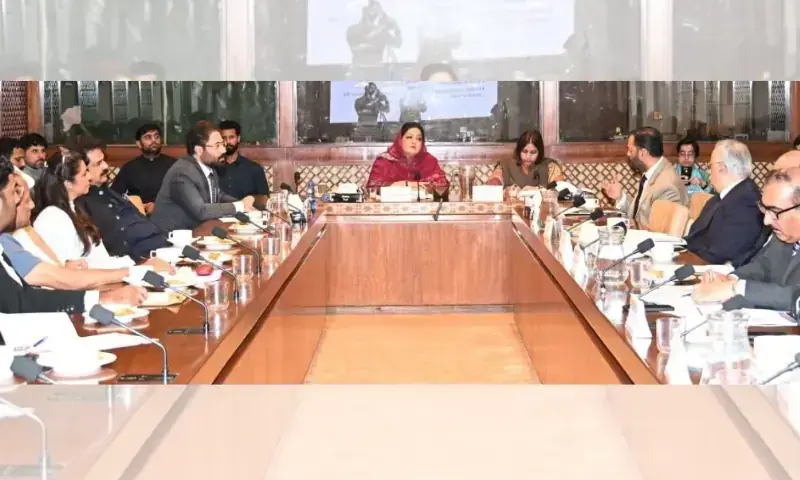

ISLAMABAD: The Senate Standing Committee on National Health Services on Tuesday called for meaningful stakeholder consultation and rational Medical and Dental Colleges Admission Test (MDCAT) weightage.
The committee meeting was chaired by Senator Amir Waliuddin Chishti and attended by Senators Syed Masroor Ahsan, Anusha Rahman, Samina Mumtaz Zehri, Shahzaib Durrani and Saleem Mandviwalla. Convener of the subcommittee, Senator Anusha Rahman, presented a report and briefed the committee on key issues concerning MDCAT and medical education policy.
The report noted that the Pakistan Medical and Dental Council (PMDC) had capped the total number of medical seats at 22,300 annually, which, according to the subcommittee, does not adequately cater to Pakistan’s healthcare needs and may contribute to a shortage of medical professionals in the country.
The subcommittee also raised concerns over the representation of the private medical sector in the policy-making process and questioned the effectiveness of the existing consultation mechanism. It observed that consultations conducted primarily through email were insufficient and stressed the need for structured and meaningful engagement with all relevant stakeholders.
The committee was informed that around 93,000 students who qualified the MDCAT were unable to secure admission to medical colleges, leaving a large number of aspiring students out of the medical education system.
It highlighted the discrepancy in PMDC’s policy requiring MDCAT for students seeking admission to foreign medical institutions. It recommended stronger regulation of substandard foreign medical institutions, including the preparation and public disclosure of a list of institutions that do not meet prescribed standards.
The committee also discussed the mismatch between the FSc and A-Level education systems and the MCQ-based MDCAT examination, observing that the existing pattern may increase students’ dependence on private academies. The subcommittee recommended providing multiple opportunities for candidates to appear in MDCAT each year.
The report recommended reconsidering the cap on medical seats, stating that an increase in the number of seats could create economies of scale and help reduce the cost of medical education. It also called for rationalisation of the 50 per cent weightage currently assigned to MDCAT in the admission process.
The subcommittee emphasised the need for a long-term policy aimed at producing sufficient numbers of qualified doctors not only to meet domestic healthcare requirements but also to enable Pakistan to become a country that exports medical professionals.
The chairman of the committee urged PMDC to ensure meaningful consultation with all stakeholders, particularly private medical colleges, while formulating and revising policies related to medical education and admissions.
The chairman added that expansion of medical education must go hand in hand with strict quality standards and directed that private medical colleges be effectively regulated to ensure the provision of quality medical education.
Published in Dawn, September 16th, 2026