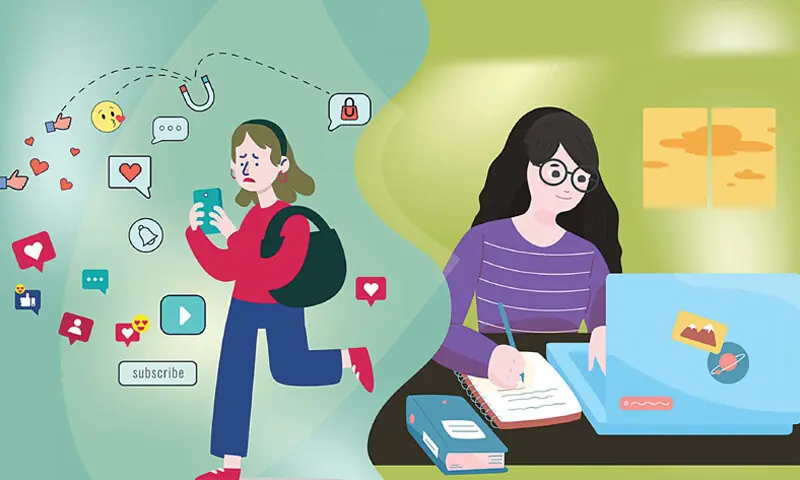

Hania and Falah are two sisters with very different personalities. Falah believes in herself. She does not compare herself with others, is content with what she has and strives to make her parents proud.
Hania, however, is influenced by society and social media. She doubts herself, compares her clothes, home and belongings with those of others, and is never satisfied with her parents’ efforts to fulfil her demands. She frequently buys things online, even when her parents have told her that they don’t have the budget for it.
As a result, Hania is constantly dissatisfied with her personal life. Her parents often encourage her to be more like Falah, hoping she will recognise her sister’s positive qualities and adopt them. Instead, Hania becomes angry with her sister and often fights with her. Their attempts to help her only lead to more comparisons.
So, which one of them are you at home and school?
Ever looked at someone else’s life and wished yours were more like theirs? Learn how to turn comparison into a tool for self-improvement instead of a source of unhappiness
Why do we compare?
One of the most common pieces of psychological advice is: don’t compare yourself with others. But what does this really mean?
To compare is to identify similarities and differences. It is human nature to evaluate ourselves and others based on qualities such as appearance, wealth, intelligence and success. People often judge their own social and personal worth by comparing themselves with those around them.
Positive and negative comparisons — know the difference!
As social beings, we are constantly surrounded by other people and naturally compare our abilities, achievements and attitudes with theirs. Parents may compare their children with others because they want them to improve, but children can perceive these comparisons negatively. Like Hania, they may develop low self-esteem, become envious or experience other negative emotions.
Instead of focusing on what we have achieved, negative comparisons make us focus on what we lack. This can affect our self-esteem, thoughts, feelings and behaviour.
However, comparison can also be useful. It can motivate us to improve when we look at what others are doing and learn from their experiences. The important thing is to use comparison as a source of inspiration rather than as a measure of our worth.
Negative comparison, on the other hand, can lead to feelings of envy, inferiority and dissatisfaction. It may cause people to waste their energy on anger and resentment instead of working towards their own goals. A positive attitude and focus on self-improvement can help us avoid this trap.
Social media dilemma
Social media has made comparison even harder to avoid. We constantly see images of other people’s clothes, homes, holidays, achievements and lifestyles. This can make us feel that our lives are not good enough.
Social media influencers often present carefully selected images of their lives, which can create unrealistic ideas of perfection. Constantly viewing such content may affect self-esteem and contribute to feelings of stress and anxiety.
The reality is that social media shows only a small part of a person’s life. Real life includes happiness and sadness, success and failure, ease and difficulty.
How to stop comparing
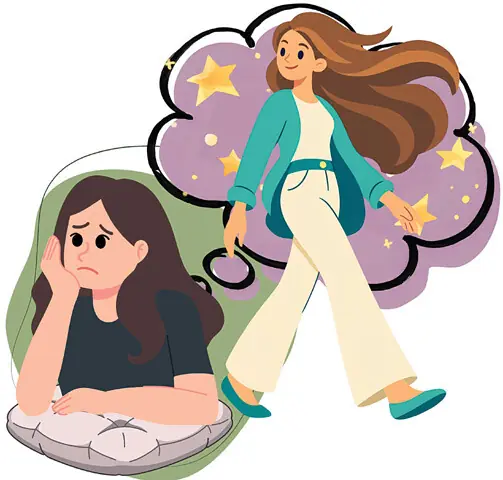
It is largely about how we choose to view things. Instead of treating comparison as a competition, we can use it as inspiration or an opportunity to learn and improve.
Limit your time on social media: To stop unhealthy comparisons, be mindful of how much time you spend looking at other people’s lives online. If certain accounts consistently make you feel inadequate or unhappy, consider unfollowing them or reducing the time you spend on them.
Positive self-talk: The way we speak to ourselves can influence how we feel. When you catch yourself comparing your life with someone else’s, ask yourself, “Why am I feeling this way?”
Instead of thinking, “I’m not good enough,” remind yourself of your own goals and abilities. Focus on what you can improve rather than allowing someone else’s success to make you feel like a failure.
You can also learn from other people’s achievements. If someone is good at something, ask yourself what you can learn from them rather than feeling jealous or inferior.
Practise gratitude: Negative thoughts can make us forget the good things in our lives. When you find yourself comparing yourself with others, think about what you are grateful for.
You could keep a gratitude journal and write down three things you are thankful for each night. Remember that everyone’s life is different and everyone faces their own challenges.
There is nothing wrong with admiring positive qualities in others, such as kindness, generosity or determination. Instead of wishing that you had someone else’s life, think about which qualities you can develop in yourself to help you live the kind of life you desire.
Incorporate mindfulness, exercise and yoga: Many of us spend too much time thinking about the past or worrying about the future. Mindfulness encourages us to focus on the present and appreciate our lives as they are.
One useful reminder is that the fairest comparison is between who you are today and who you were yesterday. Focus on your own progress rather than measuring your worth against other people.
Regular exercise, outdoor activities and yoga can also help reduce stress and improve mental well-being. These activities encourage us to focus on our bodies, surroundings and abilities rather than constantly comparing ourselves with others.
Allah Almighty has created human beings with different abilities and talents. Just as every person has a unique fingerprint, everyone has qualities that make them different. These abilities should be valued and developed, and differences should be embraced.
Parents, too, should avoid constantly comparing their children with others. If someone is skilled at something, that does not mean another child is less capable. Every child has different strengths, and discovering those strengths can help them choose the right skills, interests and career path.
Let go of unhealthy comparisons, appreciate your own abilities and work towards becoming a better version of yourself each day. Parents can also set a good example for the next generation by showing children how to value themselves without measuring their worth against others.
Published in Dawn, Young World, September 19th, 2026