PMDC directive for collecting question paper after MDCAT questioned
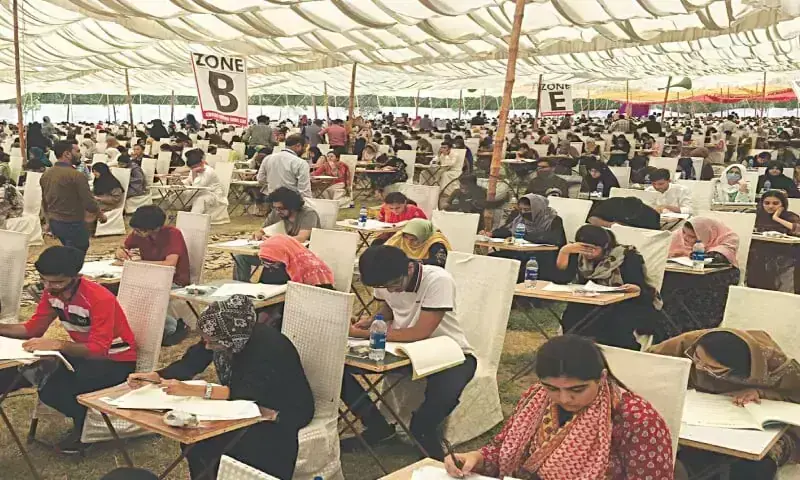

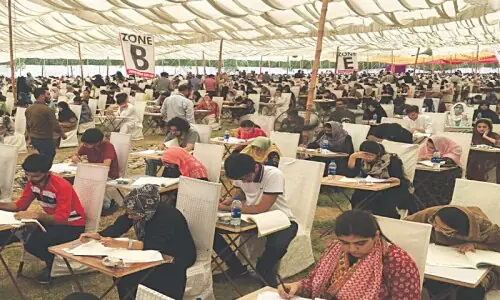
LAHORE: A fresh directive from the Pakistan Medical & Dental Council (PMDC) asking all universities conducting the Medical & Dental College Admission Test (MDCAT) to collect question papers from candidates immediately after the examination, has raised serious questions over transparency and candidates’ right to challenge the disputed questions.
In a letter addressed to the vice chancellors of all the medical universities across the country conducting MDCAT, the PMDC has directed that the question papers must be collected from candidates “immediately after completion of the test scheduled for September 20.”
The letter specifically states “no [question] paper shall be handed over to candidates,” citing the need for the “safe and smooth conduct of the examination”. The PM&DC directive has raised particular concern in Punjab, where the University of Health Sciences (UHS), Lahore, has been handing over the MDCAT question paper to candidates after the examination for years.
According to sources, this practice has been followed in the province since 2017, allowing candidates to retain a copy of the paper and independently examine their attempted questions after leaving the examination centre.
Candidates say it denies them the opportunity for self-assessment
Candidates have questioned the rationale behind abruptly ending the practice, saying if the question paper is taken back immediately after the test, how will a candidate know which question was disputed?
They argue that transparency in a high-stake admission test does not end when the examination concludes. Rather, they argue, the availability of the question paper enables students, teachers and independent experts to examine the test, identify ambiguous or technically incorrect questions and raise objections through the prescribed mechanism.
The new PMDC direction, they fear, could leave candidates dependent entirely on an official answer key or result without having their own complete copy of the examination paper for comparison.
A candidate argues that this directive has also raised a broader question: why should a practice that has existed in Punjab for almost a decade suddenly be abandoned, particularly when no specific allegation of malpractice or security breach has been cited in the letter?
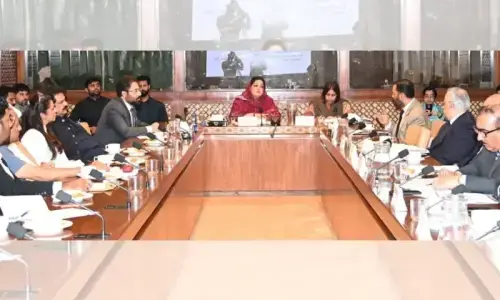
An official familiar with the matter says the decision was discussed during a consultative meeting convened by the PMDC and chaired by the president of the council, with vice-chancellors of MDCAT conducting universities and representatives of provincial health departments in attendance.
He says the representatives from three provinces insisted the question papers should not be handed over to candidates after the test anywhere, including Punjab, where UHS has been following the practice.
The reason, reportedly given by the authorities concerned, was not that handing over the paper had compromised the test conducted in Punjab, but that candidates in other provinces had been approaching courts seeking the same facility, arguing that they were being treated differently from candidates appearing in Punjab.
About the UHS practice followed in Punjab, the official says that the issue is particularly sensitive for the varsity because it has built its MDCAT examination process around several measures intended to strengthen transparency and credibility. “Suppose a candidate believes Question No 87 contains an incorrect key. Under the traditional Punjab practice, he/she can retain the paper, identify the question and seek expert opinion or raise an objection,” says the official.
Under the new arrangement, he says, the candidate will have to rely on memory, handwritten recollection or information circulating after the examination. That may be particularly problematic in a test comprising hundreds of questions, where candidates are expected to remember the wording and options of a disputed question after completing a highly stressful examination.
Candidates in Punjab want to know whether the PMDC considered the legal and academic implications of depriving them of access to their own examination paper before issuing the directive.
The Sept 10 letter provides no detailed explanation for the policy change beyond stating that the question papers are to be collected after the test to ensure the “safe and smooth conduct” of the examination.
The official says in the MDCAT a single disputed question can potentially affect a candidate’s aggregate and even the possibility of securing a medical or dental seat. The PMDC now faces an obvious question: if the examination system is transparent, why should candidates be prevented from retaining the very document against which their performance is ultimately judged? And if there is a genuine security, legal or administrative reason for the change, candidates and universities may reasonably expect to be publicly explained, he says.
Published in Dawn, September 17th, 2026